Love this? Save it for later!
Share the inspiration with your friends
This was supposed to be a light, herb-infused pan sauce for my roasted chicken. I had planned a delicate reduction with thyme and white wine, something elegant for a Tuesday night dinner. But then I remembered the frozen turkey I’d pulled from the freezer three days ago, the one I’d completely forgotten about until yesterday afternoon. The chicken plan was dead. The oven was already at 400 degrees. And I was staring at a roasting pan filled with dark, caramelized drippings that looked nothing like a delicate sauce.
I grabbed the wrong bottle of stock, the one that was slightly past its prime, and I was already panicking because my guests were due in an hour. I tossed in a handful of dried sage by mistake instead of fresh, and I let the butter burn just a fraction too long. What came out was nothing like the plan — and better.
It wasn’t just a sauce. It was this deep, nutty, velvety gravy that tasted like comfort and history all at once. The brown butter added this incredible toasted aroma that the white wine never could. The sage, even dried, gave it that earthy punch that cut through the richness perfectly. I mean, honestly, I was ready to apologize to my guests for the “failed experiment.” Instead, they asked for the recipe before they even finished their second plate.
You know that feeling when you’re sure you’ve ruined dinner, but then you take a spoonful and realize you’ve accidentally invented your new favorite thing? That’s exactly what happened here. I’ve been making this creamy brown butter sage turkey gravy ever since. It’s the kind of dish that saves the day when you’re running on empty. It’s rich, it’s savory, and it turns a simple turkey into a feast. I keep making it because it reminds me that the best meals often come from the messiest moments.
Why You’ll Love This Recipe
This gravy isn’t just another side dish to add to your holiday table. It’s the result of years of testing, tweaking, and learning what actually works when you’re juggling a dozen different dishes at once. I’ve tried dozens of gravy recipes over the years, and most of them end up either too thin, too lumpy, or just plain boring. This one is different because it uses a technique that transforms simple drippings into something luxurious. The key is in the browning of the butter, which adds a depth of flavor that you just can’t get from regular butter or oil.
- Quick & Easy: Once your turkey is resting, this comes together in under 20 minutes. It’s perfect for busy weeknights or last-minute cravings when you want something hearty but don’t have hours to spend in the kitchen.
- Simple Ingredients: No fancy grocery trips needed. You likely already have butter, flour, stock, and sage in your kitchen. It’s pantry-friendly and stress-free.
- Perfect for Holidays: Great for Thanksgiving, Christmas, or any Sunday roast. It elevates the main dish without adding extra work.
- Crowd-Pleaser: Always gets rave reviews from kids and adults alike. The nutty flavor is sophisticated enough for guests but comforting enough for family.
- Unbelievably Delicious: The texture and flavor combo is next-level comfort food. It’s smooth, rich, and packed with savory notes.
What makes this recipe stand out is the balance. Many gravies are just salty liquid, but this one has complexity. The brown butter provides a toasted, almost caramel-like note, while the sage adds an aromatic, earthy finish. It’s not just good—it’s the kind that makes you close your eyes after the first bite. It’s comfort food reimagined, with the same soul-soothing satisfaction as your grandma’s original, but with a modern twist. It’s perfect for impressing guests without stress, or turning a simple meal into something memorable.
What Ingredients You Will Need
This recipe uses simple, wholesome ingredients to deliver bold flavor and satisfying texture without the fuss. The beauty of this gravy lies in its simplicity, but the quality of each component matters. Since the flavor profile is so concentrated, you want the best versions of each ingredient you can find. Most of these are staples, but a few specific choices will make a noticeable difference in the final taste.
- Unsalted Butter: Use high-quality European-style butter if you can find it. I recommend brands like Plugra or Kerrygold for their higher fat content, which browns more evenly and adds a richer flavor. You’ll need about 4 tablespoons.
- All-Purpose Flour: This is your thickening agent. Make sure it’s fresh, as old flour can lose its potency. You’ll need 4 tablespoons to create a roux with the brown butter.
- Chicken or Turkey Stock: Use a low-sodium version so you can control the saltiness yourself. Homemade stock is ideal, but a high-quality store-bought brand like Better Than Bouillon or Imagine Broths works well. You’ll need about 4 cups.
- Dried Sage Leaves: While fresh sage is lovely, dried sage actually has a more concentrated flavor that stands up better to the richness of the brown butter. Look for organic, bright green leaves. Crush them lightly between your fingers before adding to release the oils.
- Heavy Cream: This is what makes the gravy creamy. It adds a velvety texture and balances the savory notes. Half-and-half works in a pinch, but heavy cream gives you that luxurious mouthfeel.
- Pan Drippings: If you’re making this after roasting a turkey or chicken, save those drippings. If not, you can skip this step, but the drippings add an incredible depth of savory flavor. Skim off the excess fat and use about 2 tablespoons of the flavorful liquid.
- Salt and Black Pepper: To taste. Since your stock may vary in salt content, always taste before adding extra salt.
If you need substitutions, you can use olive oil instead of butter for a dairy-free option, though you’ll lose the nutty brown butter flavor. For a gluten-free version, swap the all-purpose flour with a 1:1 gluten-free flour blend or arrowroot powder. In summer, you might swap the sage for rosemary or thyme, which pair beautifully with poultry as well.
Equipment Needed
You don’t need a fancy kitchen to make this gravy. A standard saucepan or a small roasting pan will work just fine. I prefer using a heavy-bottomed saucepan because it distributes heat evenly, which is crucial for browning the butter without burning it. If you don’t have a saucepan, a small skillet works too.
- Medium Saucepan: Look for one with a thick bottom. Thin pans can cause the butter to burn quickly. A stainless steel or enameled cast iron pan is ideal.
- Whisk: A good quality whisk is essential for breaking up lumps in the roux. A balloon whisk works best for this.
- Spatula: A silicone spatula is helpful for scraping the bottom of the pan to deglaze it and incorporate any browned bits.
- Measuring Cups and Spoons: Precision matters when making a roux. Use standard measuring tools for accuracy.
If you’re using a roasting pan to make the gravy, make sure it’s safe to put on the stovetop. Some roasting pans are too large or have handles that aren’t heat-resistant. If that’s the case, transfer the drippings to a saucepan first. For budget-friendly options, a simple stainless steel saucepan from a local kitchen store will last a lifetime and perform beautifully.
Preparation Method
- Prepare Your Base (2 minutes): Start by ensuring your stock is warm. Cold stock added to hot butter can cause the roux to seize up. If you’re using homemade stock, reheat it gently on the stove. If using store-bought, microwave it for a minute or two until it’s hot. Set aside.
- Brown the Butter (3-5 minutes): Place your medium saucepan over medium heat. Add the 4 tablespoons of unsalted butter. Let it melt completely, then continue to cook, swirling the pan occasionally. Watch closely. The butter will foam, then the foam will start to subside. You’ll see brown specks form at the bottom. Smell it—it should smell nutty and toasted, like hazelnuts. This usually takes about 3 to 5 minutes. Do not walk away. Once it reaches that color, immediately remove it from the heat to stop the cooking.
- Make the Roux (2 minutes): While the butter is still hot, immediately add the 4 tablespoons of all-purpose flour. Whisk vigorously to combine. The mixture will look like a thick paste. Cook this roux for about 1-2 minutes, whisking constantly, until it turns a light golden color and smells slightly toasted. This cooks out the raw flour taste.
- Add Sage (30 seconds): Stir in the crushed dried sage leaves. They will bloom in the hot butter and flour mixture, releasing their aroma. Be careful not to burn the sage, as it can turn bitter quickly.
- Whisk in Stock (5 minutes): Slowly pour in the warm stock, about 1 cup at a time, whisking constantly. This is crucial to prevent lumps. Once all the stock is added, continue to whisk and bring the mixture to a gentle simmer. The gravy will start to thicken as it heats up.
- Simmer and Thicken (5-7 minutes): Reduce the heat to low-medium. Let the gravy simmer gently, stirring occasionally. It should thicken to a consistency similar to heavy cream. If it gets too thick, add a splash more stock. If it’s too thin, let it simmer a bit longer. Taste and adjust seasoning with salt and pepper.
- Add Cream (1 minute): Stir in the heavy cream. This will lighten the color and add richness. Let it heat through for about 30 seconds to a minute. Do not let it boil vigorously after adding the cream, or it might curdle.
- Final Adjustments: Taste again. Add more salt or pepper if needed. If you have pan drippings, strain them through a fine-mesh sieve to remove solids, then stir them into the gravy for extra flavor.
Why does my gravy have lumps?
Lumps usually happen when the flour isn’t fully incorporated into the butter before the stock is added, or when the stock is added too quickly. To fix this, simply whisk vigorously or use an immersion blender to smooth it out. Preventing it is key: make sure your roux is smooth before adding any liquid.
Can I make this ahead of time?
Yes, you can make this gravy up to 2 days in advance. Store it in an airtight container in the refrigerator. When reheating, add a splash of stock or water to thin it out, as it will thicken significantly in the fridge. Reheat gently on the stove, stirring frequently.
Cooking Tips & Techniques
Browning butter is a technique that requires attention. The difference between perfect brown butter and burnt butter is seconds. Burnt butter tastes bitter and ruins the gravy. If you’re nervous, you can pull the pan off the heat just before it looks done, as the residual heat will continue to cook it. Trust your nose more than your eyes—if it smells like burnt popcorn, start over.
Another common mistake is using cold stock. Cold stock shock the roux, making it difficult to incorporate smoothly. Always warm your stock before adding it. If you’re in a hurry, you can microwave it for 30-60 seconds.
For the best flavor, use a heavy-bottomed pan. Thin pans hot spots can cause the butter to burn unevenly. If you’re making this in a roasting pan, make sure it’s compatible with stovetop use. If not, transfer the drippings to a saucepan first.
Don’t skip the sage. It’s the star of this recipe. The earthy, slightly peppery flavor of sage pairs perfectly with the nutty brown butter. If you’re not a fan of sage, you can substitute it with thyme or rosemary, but the flavor profile will change.
Finally, taste as you go. Gravies can easily become too salty, especially if you’re using pre-salted stock. Add salt gradually and taste frequently. It’s better to under-salt and adjust at the end than to over-salt and ruin the dish.
Variations & Adaptations
This recipe is versatile and can be adapted to suit different dietary needs and flavor preferences. Here are a few variations I’ve tried:
- Dairy-Free: Substitute the butter with olive oil or vegan butter. Use coconut cream instead of heavy cream for a dairy-free option. The flavor will be slightly different, but still delicious.
- Gluten-Free: Use a gluten-free flour blend or arrowroot powder to make the roux. Arrowroot powder creates a clearer, glossier gravy, while gluten-free flour blends can sometimes be slightly thicker.
- Herb-Free: If you’re not a fan of sage, try using thyme, rosemary, or even a bay leaf. Fresh herbs should be added at the end to preserve their flavor, while dried herbs can be added with the flour.
- Spicy Kick: Add a pinch of red pepper flakes or a dash of hot sauce for a spicy twist. This pairs well with the richness of the brown butter.
I once tried making this with duck fat instead of butter, and it was incredible. The fat from duck fat has a higher smoke point and a richer flavor. If you have leftover duck fat, try it! It’s a game-changer for roasted meats.
Serving & Storage Suggestions
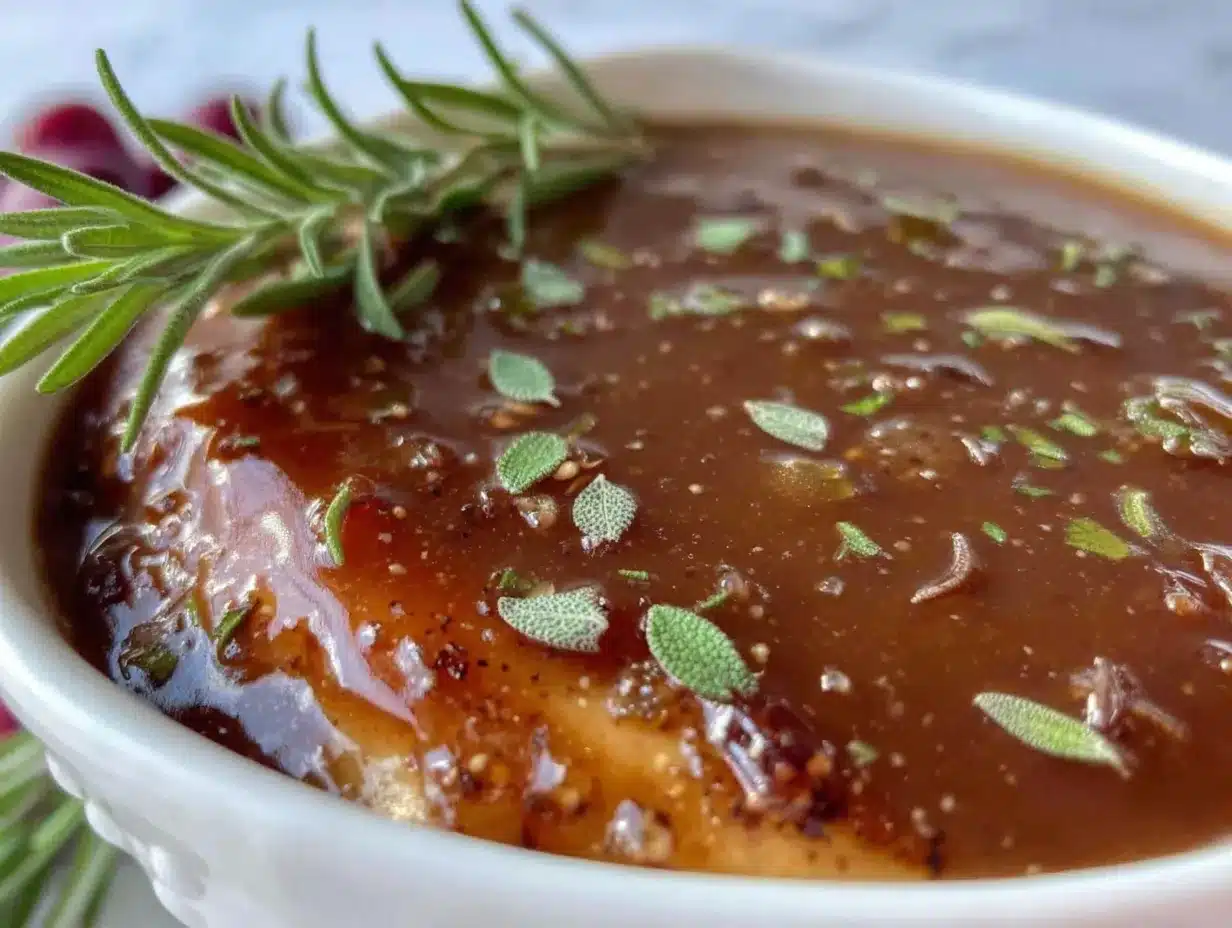
Serve this gravy warm, straight from the stove. It pairs beautifully with roasted turkey, chicken, or even mashed potatoes. For presentation, pour it into a gravy boat and garnish with a few fresh sage leaves if you have them. It looks elegant and invites guests to help themselves.
Store leftovers in an airtight container in the refrigerator for up to 3 days. You can also freeze it for up to 3 months. To freeze, let it cool completely, then transfer to a freezer-safe container. Leave some headspace for expansion.
When reheating, do so gently on the stove over low heat. Add a splash of stock or water to thin it out, as it will thicken in the fridge. Stir frequently to prevent scorching. If you’re reheating from frozen, thaw it in the refrigerator overnight before reheating.
The flavors of this gravy actually improve over time. The sage mellows out, and the brown butter flavor becomes more integrated. If you’re making it for a holiday, consider making it a day ahead and reheating it. It will taste even better.
Nutritional Information & Benefits
This creamy brown butter sage turkey gravy is rich in calories due to the butter and cream, but it’s also a good source of protein from the stock and turkey drippings. Sage contains antioxidants and has anti-inflammatory properties, which add a health benefit to the indulgence. However, due to the high fat content, it should be enjoyed in moderation.
For those watching their sodium intake, use low-sodium stock and control the amount of salt added. The natural flavors of the brown butter and sage provide plenty of taste without needing excessive salt. This gravy is not gluten-free unless you use a gluten-free flour, and it is not dairy-free unless you substitute the butter and cream.
Personally, I find this gravy to be a comforting and satisfying addition to any meal. It’s not a health food, but it’s a treat that brings joy to the table. Enjoy it as part of a balanced meal, and don’t feel guilty about indulging.
Conclusion
This creamy brown butter sage turkey gravy is more than just a sauce; it’s a celebration of simple ingredients and clever techniques. It’s the kind of recipe that turns a stressful holiday into a joyful one. I hope you try it and find it as comforting and delicious as I do. Feel free to customize it with your favorite herbs or spices to make it your own.
Don’t forget to share your results! I love seeing how you adapt this recipe. Leave a comment below with your thoughts, or tag me on social media if you post a photo. Happy cooking, and enjoy every bite!
FAQs
Can I use fresh sage instead of dried sage?
Yes, you can. Use about 1 tablespoon of fresh sage, chopped, and add it with the butter when it starts to brown. Fresh sage has a milder flavor, so you may need to use a bit more than dried.
What if I don’t have pan drippings?
You can skip the pan drippings. The gravy will still be delicious thanks to the brown butter and sage. However, if you have any chicken or turkey stock, use that instead of water or plain stock for extra flavor.
Can I make this in a slow cooker?
It’s not recommended. The roux needs to be cooked on the stovetop to achieve the right texture and flavor. A slow cooker won’t get hot enough to brown the butter properly.
How do I fix a gravy that’s too thick?
Simply whisk in more stock or water, a little at a time, until it reaches your desired consistency. Heat it through gently.
Can I freeze this gravy?
Yes, you can freeze it for up to 3 months. Thaw it in the refrigerator overnight and reheat gently on the stove, adding a splash of stock if needed.
Pin This Recipe!

Creamy Brown Butter Sage Turkey Gravy

A rich, velvety gravy made with browned butter, dried sage, and heavy cream. This recipe transforms simple pan drippings into a luxurious, nutty, and savory side dish perfect for holidays.
- Prep Time: 5 minutes
- Cook Time: 15 minutes
- Total Time: 20 minutes
- Yield: 4 servings 1x
- Category: Side Dish
- Cuisine: American
Ingredients
- 4 tablespoons unsalted butter
- 4 tablespoons all-purpose flour
- 4 cups chicken or turkey stock (low-sodium)
- 1–2 tablespoons dried sage leaves, crushed
- 1/2 cup heavy cream
- 2 tablespoons pan drippings (optional)
- Salt and black pepper to taste
Instructions
- Warm the stock gently on the stove or in the microwave until hot.
- Melt the butter in a medium heavy-bottomed saucepan over medium heat.
- Cook the butter, swirling occasionally, until it foams, subsides, and forms brown specks with a nutty aroma (3-5 minutes). Remove from heat immediately.
- Whisk in the flour vigorously to form a roux. Cook for 1-2 minutes until light golden and toasted.
- Stir in the crushed dried sage leaves.
- Slowly whisk in the warm stock, about 1 cup at a time, to prevent lumps.
- Bring to a gentle simmer and cook for 5-7 minutes, stirring occasionally, until thickened to the consistency of heavy cream.
- Stir in the heavy cream and heat through for 30-60 seconds without boiling.
- Add pan drippings if using, and season with salt and pepper to taste.
Notes
Ensure stock is warm before adding to prevent the roux from seizing. Brown butter carefully as it can burn quickly; trust your nose for the nutty aroma. For a gluten-free version, substitute flour with a 1:1 gluten-free blend or arrowroot powder. For dairy-free, use olive oil and coconut cream.
Nutrition
- Serving Size: Approximately 1/2 cu
- Calories: 350
- Sugar: 1
- Sodium: 600
- Fat: 28
- Saturated Fat: 16
- Carbohydrates: 12
- Fiber: 0.5
- Protein: 4
Keywords: brown butter gravy, sage gravy, turkey gravy, holiday sides, creamy gravy, easy gravy, Thanksgiving gravy