Love this? Save it for later!
Share the inspiration with your friends
My neighbor Leo swore he hated meatloaf. For fifteen years. The man would visibly wince at potlucks, sliding past the sliced loaf on the platter like it might bite him. “It’s just,” he’d say, searching for the polite word, “a brick of sadness.” I always nodded, because honestly, I got it. Dry, ketchup-slathered meatloaf has ruined many a Tuesday night. Then last November, on a particularly gray Sunday when the wind was rattling my windows, I made this brown sugar glazed version purely for myself. I was testing it for a holiday gathering, you know, something cozy and a little different. I set the pan on the counter to rest and walked away for exactly four minutes to answer my phone. When I came back, Leo was standing in my kitchen, fork in hand, mid-bite. He had let himself in through the back door—he does that, we have a deal about borrowing sugar—and there he was, caught red-handed. He didn’t even look guilty. He just pointed the fork at the loaf and said, “What is this sorcery?” I mean, that’s the moment you know you’ve got something special.
This isn’t just another meatloaf recipe, let me tell you. This is the one that changes minds. It is the one that makes Sunday supper feel like a hug. Maybe you’ve been there—you want something hearty and comforting, but you also want it to feel a little bit special, a little bit like you put in effort even though the ingredients are as simple as can be. That is exactly what this brown sugar glazed meatloaf delivers. It is tender, almost impossibly moist, with a sweet and tangy glaze that caramelizes into this sticky, gorgeous crust. The first time I made it, I ate two slices standing at the counter. No shame. It stayed with me because it proved something I secretly love proving: that the most dismissed dishes, the ones people love to hate, just haven’t met the right version yet.
Why You’ll Love This Recipe
Look, I have tested a lot of meatloaf recipes. A lot. Some were too dense, some fell apart, and some were just… boring. This brown sugar glazed meatloaf is the one I keep coming back to, and here is exactly why it works:
- Incredibly Moist & Tender: The secret is a combination of grated onion and a panade (that’s just a fancy word for breadcrumbs soaked in milk). It keeps every single bite juicy without being greasy. Chef-tested, I promise.
- Simple Pantry Ingredients: You probably have 90% of these items in your kitchen right now. No fancy grocery store trips for obscure spices or hard-to-find meats. Just good, honest food.
- Perfect for Sunday Supper: This is the dish that fills your house with that incredible, nostalgic smell. It is made for a lazy afternoon, served with mashed potatoes and a simple green vegetable. It is comfort food at its finest.
- A Total Crowd-Pleaser: I have served this to picky kids, skeptical in-laws, and even that one friend who claims they don’t eat red meat. Every single person goes back for seconds. It is family-approved through and through.
- Unbelievably Delicious Glaze: The brown sugar glaze is the real star here. It is sweet, a little tangy from the mustard and vinegar, and it bakes into this sticky, caramelized crust that is honestly the best part. You will want to put it on everything.
What makes this recipe different from the rest is that it doesn’t rely on gimmicks. It is not loaded with weird ingredients or complicated techniques. It is simply a perfectly balanced meatloaf with a glaze that steals the show. It is the kind of meal that makes you close your eyes after the first bite, not because it is fancy, but because it tastes exactly like home. It is comfort food reimagined—familiar, but somehow better than you remembered.
What Ingredients You Will Need
This recipe uses simple, wholesome ingredients to deliver bold flavor and a satisfying texture. Nothing complicated here, just smart choices that work together beautifully.
For the Meatloaf
- Ground beef (80/20): 2 pounds. I prefer 80/20 for the perfect balance of flavor and moisture. Too lean and your meatloaf will be dry. (Trust me on this one.)
- Yellow onion: 1 medium, grated on a box grater. Grating the onion releases all its juice, which adds incredible moisture without leaving chunks of raw onion. You can use a food processor if you prefer.
- Garlic cloves: 3, minced. Fresh garlic is non-negotiable here. The jarred stuff just doesn’t have the same punch.
- Large eggs: 2, lightly beaten. They act as a binder, holding everything together.
- Whole milk: 1/2 cup. This soaks into the breadcrumbs to create a panade, which is the secret to a tender meatloaf.
- Plain breadcrumbs: 1 cup. I use plain, unseasoned breadcrumbs so I can control the seasoning myself. Panko works too, but the texture will be a little lighter.
- Ketchup: 1/4 cup. It adds a touch of sweetness and acidity to the meat mixture.
- Worcestershire sauce: 2 tablespoons. This is for that deep, umami flavor. Lea & Perrins is my go-to brand.
- Dijon mustard: 1 tablespoon. It adds a subtle tang that cuts through the richness of the beef.
- Dried thyme: 1 teaspoon. Earthy and warm, it pairs beautifully with beef.
- Smoked paprika: 1 teaspoon. This gives a subtle smokiness that makes the meatloaf taste like it cooked for hours over a fire.
- Salt: 1 1/2 teaspoons. I use fine sea salt.
- Black pepper: 1/2 teaspoon, freshly ground.
- Fresh parsley: 2 tablespoons, chopped (optional, for garnish).
For the Brown Sugar Glaze
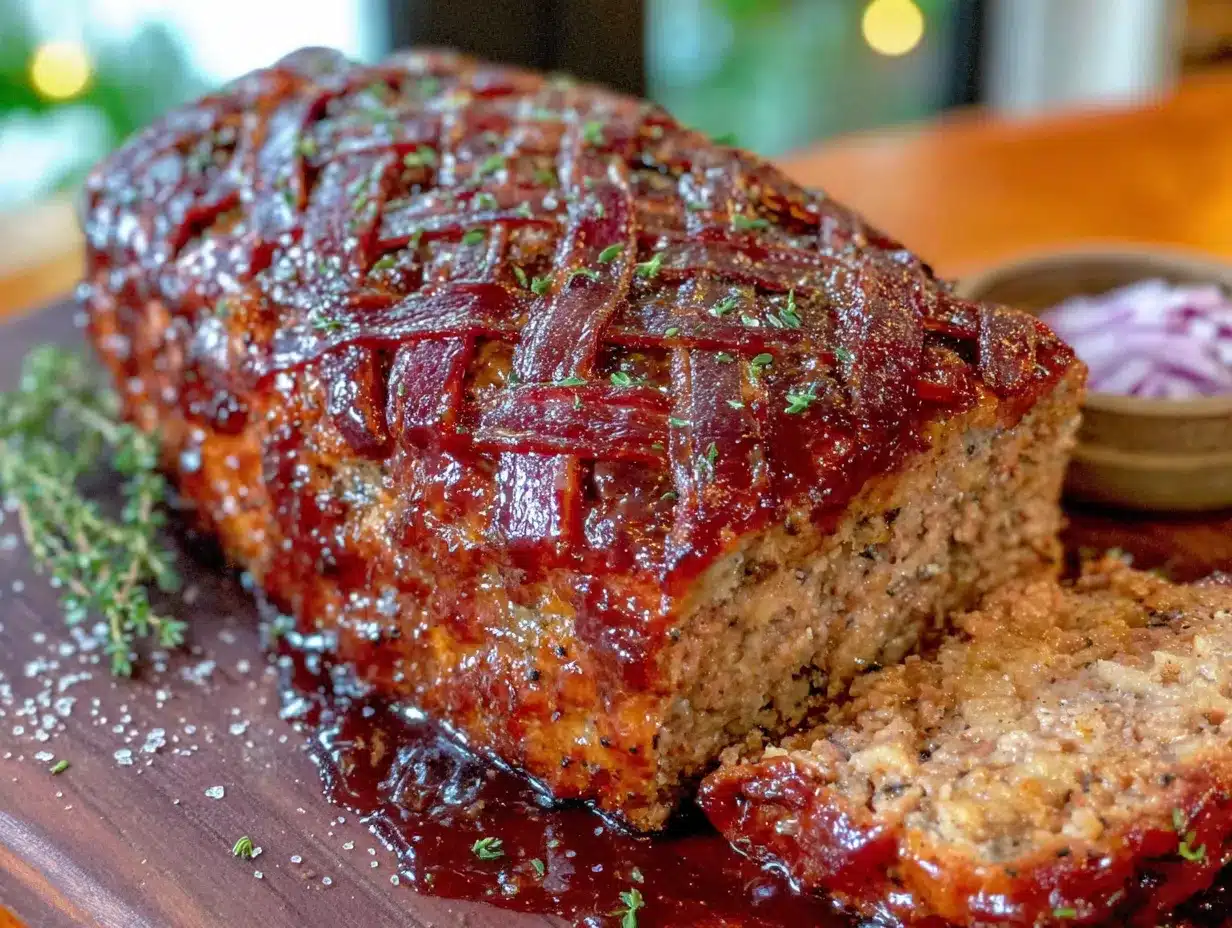
- Light brown sugar: 1/2 cup, packed. This is the heart of the glaze. It caramelizes beautifully in the oven.
- Ketchup: 1/3 cup. It gives the glaze its base and a little tang.
- Apple cider vinegar: 1 tablespoon. It cuts the sweetness and balances the flavor.
- Dijon mustard: 1 teaspoon. Adds a little bite.
- Garlic powder: 1/2 teaspoon. Because everything is better with a little garlic.
Ingredient Selection Tips: For the best texture, I recommend using 80/20 ground beef. If you want to use a leaner blend, like 90/10, add a tablespoon of olive oil to the mixture to compensate for the lost fat. For the brown sugar, make sure it is packed firmly into the measuring cup—this is not the time to be gentle.
Substitution Guidance: You can substitute ground turkey or chicken for the beef, but the texture will be a bit different and you will absolutely need that panade. For a gluten-free option, use gluten-free breadcrumbs or crushed pork rinds. If you don’t have whole milk, 2% or even oat milk works fine.
Equipment Needed
You do not need a lot of fancy equipment for this recipe, which is part of its charm. Here is what you will need:
- Large mixing bowl: For combining all the meatloaf ingredients. A glass or stainless steel bowl works perfectly.
- Box grater or food processor: For grating the onion. A box grater is my preference because it is easy to clean, but a food processor with a grating disc works in seconds.
- Measuring cups and spoons: For accurate measurements. Baking is science, and even though this is cooking, the glaze needs precision.
- Small bowl: For mixing the brown sugar glaze.
- Whisk or fork: For combining the glaze ingredients.
- 9×5-inch loaf pan: The classic shape. I love my ceramic loaf pan because it heats evenly, but a metal one works just fine. If you don’t have a loaf pan, you can shape the meatloaf free-form on a lined baking sheet—it will cook a little faster, so keep an eye on it.
- Parchment paper: Lining the pan makes cleanup a breeze. You can also use aluminum foil, but parchment is non-stick.
- Meat thermometer: This is non-negotiable for me. An instant-read thermometer takes the guesswork out of cooking. You want the center to reach 160°F (71°C).
- Cooling rack: For letting the meatloaf rest after it comes out of the oven. This allows the juices to redistribute.
Budget-Friendly Options: If you don’t have a meat thermometer, you can test for doneness by inserting a knife into the center—if the juices run clear and the meatloaf feels firm to the touch, it is likely done. But honestly, a thermometer is a ten-dollar investment that will save you from dry meatloaf forever.
Preparation Method
Let’s get cooking. I’ll walk you through every step so you get a perfect, tender, glazed meatloaf every single time.
- Preheat and Prep: Preheat your oven to 350°F (175°C). Line your 9×5-inch loaf pan with parchment paper, leaving a little overhang on the long sides—this will help you lift the meatloaf out later. Set it aside.
- Make the Panade: In your large mixing bowl, combine the 1/2 cup of whole milk and 1 cup of plain breadcrumbs. Stir them together with a fork until the breadcrumbs are fully saturated. Let this sit for 5 minutes. This is the panade, and it is your secret weapon against dry meatloaf. The breadcrumbs absorb the milk and release it during cooking, keeping everything moist. (I learned this trick from a chef friend years ago, and I have never looked back.)
- Grate the Onion: While the panade rests, grate your onion using the large holes of a box grater. You will have a pile of onion pulp and a lot of juice—do not drain the juice. That liquid is pure flavor and moisture. Add the grated onion and all its juice to the bowl with the panade.
- Combine the Aromatics and Seasonings: To the bowl, add the 3 minced garlic cloves, 2 lightly beaten eggs, 1/4 cup ketchup, 2 tablespoons Worcestershire sauce, 1 tablespoon Dijon mustard, 1 teaspoon dried thyme, 1 teaspoon smoked paprika, 1 1/2 teaspoons salt, and 1/2 teaspoon black pepper. Stir everything together with a fork until it forms a thick, wet paste. It will look a little weird—that is perfect.
- Add the Beef: Add the 2 pounds of ground beef to the bowl. Now, here is the important part: use your hands to gently mix everything together. Do not overmix. You want to combine the ingredients until they are just incorporated—if you squeeze and knead the meat too much, you will end up with a dense, tough meatloaf. I use a light, claw-like motion, folding the meat over the mixture. Stop when you no longer see streaks of pink and tan. It should take about 30 seconds.
- Shape the Loaf: Transfer the meat mixture to your prepared loaf pan. Gently press it into an even shape, making sure there are no air pockets. Do not pack it down hard—just a light, even press. Smooth the top with your hands or a spatula.
- Make the Brown Sugar Glaze: In a small bowl, whisk together the 1/2 cup packed light brown sugar, 1/3 cup ketchup, 1 tablespoon apple cider vinegar, 1 teaspoon Dijon mustard, and 1/2 teaspoon garlic powder. Whisk until the sugar is mostly dissolved and the glaze is smooth. It will be thick and glossy.
- Apply the First Layer of Glaze: Spread about half of the brown sugar glaze evenly over the top of the meatloaf. Reserve the remaining glaze for later. Use a spoon or a small offset spatula to get it into an even layer.
- Bake: Place the loaf pan on a baking sheet (just in case any glaze bubbles over) and bake for 45 minutes at 350°F (175°C).
- Apply the Second Layer of Glaze: After 45 minutes, carefully remove the pan from the oven. Spoon the remaining glaze over the top of the meatloaf, spreading it gently. Return the pan to the oven and bake for another 15 to 20 minutes. The total baking time should be about 60 to 65 minutes.
- Check for Doneness: The meatloaf is done when an instant-read thermometer inserted into the center registers 160°F (71°C). The glaze should be dark, sticky, and bubbling around the edges. If the top is browning too quickly, you can tent the pan loosely with foil for the last 10 minutes of baking.
- Rest: This is the hardest step: let the meatloaf rest in the pan for 10 to 15 minutes. Do not skip this. The resting time allows the juices to redistribute throughout the loaf, so every slice is moist. If you cut into it immediately, the juices will run out onto the cutting board, leaving you with a dry meatloaf. Use the parchment paper overhang to lift the meatloaf out of the pan and transfer it to a cutting board or serving platter.
- Slice and Serve: Slice the meatloaf into 1-inch thick slices. Spoon any remaining glaze from the pan over the slices. Garnish with fresh chopped parsley if you like, and serve warm.
Cooking Tips & Techniques
Over the years, I have made every mistake you can imagine with meatloaf. I have made it too dry, too wet, too salty, and once, I forgot the eggs entirely (it crumbled into a sad pile of beef). Here is what I have learned so you do not have to repeat my failures.
The Panade is Non-Negotiable: I know I keep saying this, but it is because it matters that much. The milk-soaked breadcrumbs act like little sponges, trapping moisture inside the meatloaf as it cooks. Without it, you are basically baking a block of ground beef. Do not skip it, and do not substitute dry breadcrumbs without the milk—it is the combination that works.
Do Not Overmix: This is the number one mistake home cooks make. When you overmix ground meat, you develop the proteins too much, and the final result is dense and tough. Mix gently, with your hands, and stop as soon as everything is combined. Your meatloaf should be tender, not chewy.
Grate, Don’t Chop: Grating the onion instead of chopping it is a game-changer. It releases all the onion juice, which adds moisture and flavor without leaving those little crunchy bits of raw onion that some people find off-putting. If you hate washing your box grater (I do), you can pulse the onion in a food processor until it is almost a paste.
Let It Rest: I know you are hungry. I know the smell is driving you crazy. But cutting into a meatloaf straight out of the oven is like opening a floodgate—all the juices will run out, and you will be left with dry slices. Ten minutes. Set a timer if you have to. It is worth it.
Timing and Multitasking: While the meatloaf is baking, you have a solid hour to make your sides. Mash some potatoes, roast some green beans, or toss a simple salad. The meatloaf does not need your attention until the glaze goes on, so use that time wisely.
Consistency is Key: Every oven runs a little differently. Your meatloaf might be done at 55 minutes or it might take 70. The best way to guarantee success is to use that meat thermometer. 160°F (71°C) is the magic number. Do not guess.
Variations & Adaptations
One of the best things about this brown sugar glazed meatloaf is how adaptable it is. Here are a few ways to make it your own.
Spicy Kick: If you like a little heat, add 1 to 2 teaspoons of sriracha or a pinch of cayenne pepper to the meat mixture. You can also stir a teaspoon of chipotle powder into the brown sugar glaze for a smoky, spicy twist. I tried this once on a whim and it was fantastic—the sweetness of the brown sugar balances the heat perfectly.
Cheese-Stuffed Meatloaf: For an indulgent variation, make a well in the center of the meatloaf mixture before baking and stuff it with 1/2 cup of shredded cheddar or mozzarella cheese. Press the meat back around the cheese to seal it, then bake as directed. You will get a molten, cheesy center that is absolutely decadent. Just be careful when slicing—the cheese will be hot.
Turkey or Chicken Version: Swap the ground beef for ground turkey or chicken. Because poultry is leaner, I recommend adding an extra tablespoon of olive oil to the mixture and using dark meat ground turkey if you can find it. The cooking time will be roughly the same, but check the temperature a few minutes early. Poultry needs to reach 165°F (74°C).
Gluten-Free Adaptation: Use gluten-free breadcrumbs or crushed pork rinds in place of regular breadcrumbs. Oat flour also works in a pinch. The texture will be slightly different, but the flavor will still be there.
Mini Meatloaves: For faster cooking and built-in portion control, divide the mixture into 6 to 8 mini loaves and bake them in a muffin tin. Reduce the baking time to about 25 to 30 minutes, and brush the glaze on during the last 10 minutes. They are perfect for meal prep or for kids who love anything that looks like a cupcake.
Serving & Storage Suggestions
This brown sugar glazed meatloaf is a star on its own, but it truly shines when paired with the right sides.
Serving Temperature and Presentation: Serve the meatloaf warm, straight from the oven. Slice it neatly and arrange the slices on a platter, spooning any extra glaze from the pan over the top. A sprinkle of fresh parsley adds a pop of color. For a classic Sunday supper, serve it alongside creamy mashed potatoes and roasted green beans or a simple steamed vegetable like peas or carrots.
Complementary Dishes and Beverages: Mashed potatoes are the classic pairing, but this meatloaf is also wonderful with roasted sweet potatoes, buttered egg noodles, or a crisp coleslaw for a little crunch. A simple side salad with a tangy vinaigrette cuts through the richness beautifully. For drinks, a full-bodied red wine like a Merlot or Zinfandel is a lovely match. If you prefer beer, a brown ale or a malty amber lager is perfect.
Storage Instructions: Leftover meatloaf is a gift. Store it in an airtight container in the refrigerator for up to 4 days. The flavors actually meld and deepen overnight, so leftovers might taste even better than the first serving. You can also freeze the meatloaf—either whole or in slices—for up to 3 months. Wrap it tightly in plastic wrap and then in foil, or use a freezer-safe container.
Reheating Methods: To reheat, place slices in a skillet over medium-low heat with a splash of water or beef broth. Cover the skillet and let the meatloaf steam for 3 to 4 minutes until warmed through. You can also reheat individual slices in the microwave, but the texture will be a bit softer. For a whole meatloaf, reheat it in a 300°F (150°C) oven, covered with foil, for about 20 minutes.
How Flavors Develop: As I mentioned, this meatloaf is fantastic the next day. The glaze seeps into the edges of the meat, and the flavors become more cohesive. I have been known to make it a day ahead of time on purpose, just for the superior leftovers. Cold meatloaf sandwiches on white bread with a little extra ketchup are also a thing of beauty.
Nutritional Information & Benefits
While this is definitely a comfort food recipe, it does have some redeeming qualities. Here is a rough estimate of the nutritional values per serving (based on 8 servings):
- Calories: Approximately 450-500
- Protein: 30-35g
- Fat: 25-30g
- Carbohydrates: 25-30g
- Fiber: 1-2g
- Sugar: 18-22g
Health Benefits of Key Ingredients: Ground beef is an excellent source of iron, zinc, and B vitamins, which are essential for energy metabolism and immune function. Onions and garlic are packed with antioxidants and have anti-inflammatory properties. The eggs provide high-quality protein and choline, which supports brain health.
Dietary Considerations: This recipe contains gluten (from the breadcrumbs) and dairy (from the milk). As noted in the variations section, both can be easily substituted. It is not low-carb or keto-friendly due to the brown sugar and breadcrumbs, but you can reduce the sugar in the glaze or use a sugar substitute if needed.
Potential Allergens: This recipe contains gluten, dairy, and eggs. Please adjust accordingly for your dietary needs.
My Personal Wellness Perspective: Look, I am not a nutritionist, and I do not pretend this is a health food. But I believe that a balanced life includes room for dishes like this. It is made with real, whole ingredients, and it is meant to be shared with people you love. That has its own kind of nutritional value, if you ask me.
Conclusion
So there you have it—a cozy brown sugar glazed meatloaf that is perfect for Sunday supper and honestly, any day of the week. It is the recipe that turned my neighbor Leo into a believer, and I am pretty sure it will do the same for anyone who tries it. It is tender, flavorful, and topped with that incredible sticky-sweet glaze that makes every bite feel special.
I hope you make this and make it your own. Maybe you will add a little more spice, or stuff it with cheese, or serve it with your grandmother’s famous mashed potatoes. That is the beauty of a recipe like this—it is a starting point, not a rulebook. The best version is the one that tastes like home to you.
When you do make it, I would love to hear about it. Leave a comment below and tell me how it turned out, or share your own twist on it. Did you change the glaze? Add a secret ingredient? Did you have a Leo moment where someone who swore they hated meatloaf asked for seconds? I want to know. Until then, happy cooking, and may your Sunday suppers always be warm and full of good food.
Frequently Asked Questions
Can I make this meatloaf ahead of time?
Absolutely. You can assemble the meatloaf completely (minus the glaze) up to 24 hours in advance. Cover it tightly and store it in the refrigerator. When you are ready to bake, add the glaze and follow the baking instructions. You may need to add 10 to 15 minutes to the cooking time since the meat will be cold from the fridge.
Why did my meatloaf turn out dry?
The most common reason for dry meatloaf is using meat that is too lean. Stick with 80/20 ground beef. Another culprit is overmixing the meat, which can make it tough. Finally, make sure you are not overcooking it—use a meat thermometer to pull it out at exactly 160°F (71°C).
Can I use a different type of ground meat?
Yes! Ground turkey, chicken, or pork all work well. Just keep in mind that leaner meats will need a little extra moisture. Adding an extra tablespoon of olive oil or using dark meat ground turkey will help. Always cook poultry to an internal temperature of 165°F (74°C).
How do I prevent the glaze from burning?
The brown sugar in the glaze can burn if it is exposed to high heat for too long. This is why we apply the glaze in two stages—the first half goes on early in the baking process, and the second half goes on during the last 15 to 20 minutes. If you notice the top browning too quickly, tent the loaf pan loosely with aluminum foil.
Can I freeze this meatloaf?
Yes, and it freezes beautifully. You can freeze the meatloaf either before or after baking. To freeze it unbaked, assemble the meatloaf in the pan, wrap it tightly in plastic wrap and then foil, and freeze for up to 3 months. Thaw it in the refrigerator overnight before baking. To freeze it after baking, let it cool completely, then wrap it tightly and freeze. Reheat slices as needed.
Pin This Recipe!
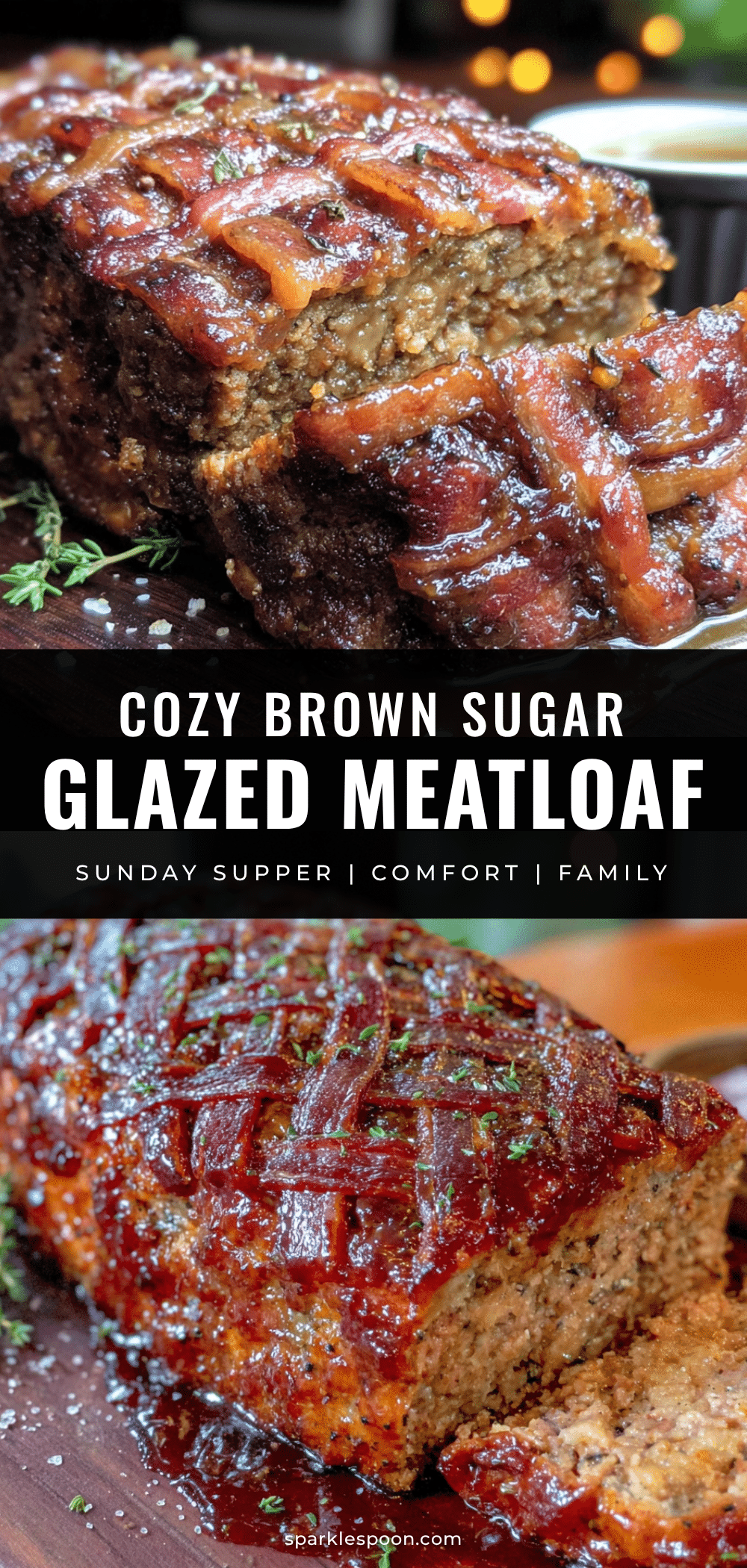
Cozy Brown Sugar Glazed Meatloaf for Sunday Supper
This brown sugar glazed meatloaf is tender, moist, and topped with a sweet and tangy glaze that caramelizes into a sticky, gorgeous crust. It’s the perfect comfort food for a Sunday supper, made with simple pantry ingredients.
- Prep Time: 15 minutes
- Cook Time: 60 minutes
- Total Time: 1 hour 15 minutes
- Yield: 8 servings 1x
- Category: Main Course
- Cuisine: American
Ingredients
- 2 pounds ground beef (80/20)
- 1 medium yellow onion, grated
- 3 garlic cloves, minced
- 2 large eggs, lightly beaten
- 1/2 cup whole milk
- 1 cup plain breadcrumbs
- 1/4 cup ketchup
- 2 tablespoons Worcestershire sauce
- 1 tablespoon Dijon mustard
- 1 teaspoon dried thyme
- 1 teaspoon smoked paprika
- 1 1/2 teaspoons fine sea salt
- 1/2 teaspoon freshly ground black pepper
- 2 tablespoons fresh parsley, chopped (optional, for garnish)
- 1/2 cup light brown sugar, packed
- 1/3 cup ketchup
- 1 tablespoon apple cider vinegar
- 1 teaspoon Dijon mustard
- 1/2 teaspoon garlic powder
Instructions
- Preheat your oven to 350°F (175°C). Line a 9×5-inch loaf pan with parchment paper, leaving overhang on the long sides.
- In a large mixing bowl, combine 1/2 cup whole milk and 1 cup plain breadcrumbs. Stir with a fork until the breadcrumbs are fully saturated. Let sit for 5 minutes to make a panade.
- Grate the onion using the large holes of a box grater. Do not drain the juice. Add the grated onion and all its juice to the bowl with the panade.
- Add 3 minced garlic cloves, 2 lightly beaten eggs, 1/4 cup ketchup, 2 tablespoons Worcestershire sauce, 1 tablespoon Dijon mustard, 1 teaspoon dried thyme, 1 teaspoon smoked paprika, 1 1/2 teaspoons salt, and 1/2 teaspoon black pepper to the bowl. Stir until it forms a thick, wet paste.
- Add 2 pounds ground beef to the bowl. Use your hands to gently mix until just combined. Do not overmix.
- Transfer the meat mixture to the prepared loaf pan. Gently press into an even shape, avoiding air pockets. Do not pack down hard.
- In a small bowl, whisk together 1/2 cup packed light brown sugar, 1/3 cup ketchup, 1 tablespoon apple cider vinegar, 1 teaspoon Dijon mustard, and 1/2 teaspoon garlic powder until smooth.
- Spread about half of the glaze evenly over the top of the meatloaf. Reserve the remaining glaze.
- Place the loaf pan on a baking sheet and bake for 45 minutes at 350°F (175°C).
- After 45 minutes, carefully remove the pan from the oven. Spoon the remaining glaze over the top. Return to the oven and bake for another 15 to 20 minutes, until an instant-read thermometer inserted into the center registers 160°F (71°C).
- Let the meatloaf rest in the pan for 10 to 15 minutes. Use the parchment paper overhang to lift it out and transfer to a cutting board or platter.
- Slice into 1-inch thick slices. Spoon any remaining glaze from the pan over the slices. Garnish with fresh parsley if desired, and serve warm.
Notes
For best results, use 80/20 ground beef. Do not overmix the meat. Let the meatloaf rest for 10-15 minutes before slicing to keep it moist. If the top browns too quickly, tent with foil during the last 10 minutes of baking.
Nutrition
- Serving Size: 1 slice (1/8 of reci
- Calories: 475
- Sugar: 20
- Sodium: 780
- Fat: 28
- Saturated Fat: 10
- Carbohydrates: 28
- Fiber: 1
- Protein: 32
Keywords: meatloaf, brown sugar glaze, Sunday supper, comfort food, ground beef, easy dinner