Love this? Save it for later!
Share the inspiration with your friends
The neighborhood spring potluck was in three hours and I’d completely forgotten. Everyone else would be bringing their showstopper dishes—the kind that take two days of prep and a handwritten recipe card passed down from a great-grandmother. I had a piece of salmon in the fridge, a bunch of dill that was starting to wilt, and honestly, a mild panic setting in. My neighbor Karen always brings this incredible lemon tart that makes people close their eyes when they eat it. I was not about to show up with takeout.
I mean, I’ve been cooking long enough to know you can’t fake it with salmon. It’s one of those ingredients that either sings or sinks, you know? Overcook it by even a minute and you’re serving dry, sad fish that needs a gallon of sauce to be edible. Under-season it and everyone’s reaching for the salt shaker, which is basically a culinary insult. So there I was, staring at the salmon, the dill, a lemon that had seen better days, and a stick of butter that felt like my last hope. I remember thinking, “This is either going to be a disaster or the thing that saves me.”
Let me tell you, it was the thing that saved me. The smell of that lemon dill butter melting in the oven started filling my kitchen, and I actually stopped to breathe for a second. By the time I pulled that salmon out—flaky, golden, glistening with that herby butter—I knew I had something special. I brought it to the potluck feeling like I was smuggling a secret weapon. And honestly? People went crazy for it. Karen asked for the recipe, which is basically the highest compliment a neighbor can pay you. This Spring Baked Salmon with Lemon Dill Butter became my go-to for any last-minute gathering, and I think you’re going to love it just as much.
Why You’ll Love This Spring Baked Salmon with Lemon Dill Butter
Let me tell you why this Spring Baked Salmon with Lemon Dill Butter is going to become your new favorite weeknight dinner and your secret weapon for entertaining. I’ve tested this recipe at least a dozen times, tweaking the butter-to-lemon ratio, adjusting the bake time, and experimenting with different salmon thicknesses. This version is the one that works every single time, no matter what.
- Quick & Easy: This comes together in under 25 minutes from start to finish. Seriously, you can have dinner on the table faster than you can order takeout and have it delivered.
- Simple Ingredients: You probably already have everything you need in your kitchen right now. No fancy grocery trips, no obscure spices, no hunting down specialty items.
- Perfect for Spring: This dish was made for those first warm evenings when you want something light but satisfying. It’s bright, fresh, and tastes like the season itself.
- Crowd-Pleaser: Even people who “don’t like fish” have asked me for seconds of this salmon. The lemon dill butter is that good.
- Unbelievably Delicious: The texture is what gets me every time—flaky, moist, with that gorgeous buttery crust on top that just melts in your mouth.
What makes this recipe different from the dozens of other baked salmon recipes out there is the technique. Instead of just pouring melted butter over the fish, I create a compound butter that bastes the salmon as it cooks, keeping it incredibly moist while developing this rich, flavorful crust. The lemon and dill aren’t just tossed on top—they’re infused into the butter, so every single bite has that bright, herbaceous flavor. It’s not just another salmon recipe; it’s the best version I’ve ever made.
This is the kind of recipe that makes you close your eyes after the first bite. It’s comfort food for spring—lighter than a winter stew, more satisfying than a salad, and somehow both elegant and effortless. Perfect for impressing guests without the stress, or turning a regular Tuesday night into something special.
What Ingredients You Will Need
This recipe uses simple, wholesome ingredients that work together to create something truly special. Most of these are pantry staples, especially if you cook fish regularly, and substitutions are easy if you need them.
For the Salmon
- 4 salmon fillets (6 ounces each, skin-on or skinless—I prefer skin-on for extra moisture and crispy skin if you sear it first)
- 1 tablespoon olive oil (for drizzling; I use extra virgin for flavor)
- Salt and freshly ground black pepper (to taste; don’t be shy with the salt—it makes a difference)
For the Lemon Dill Butter
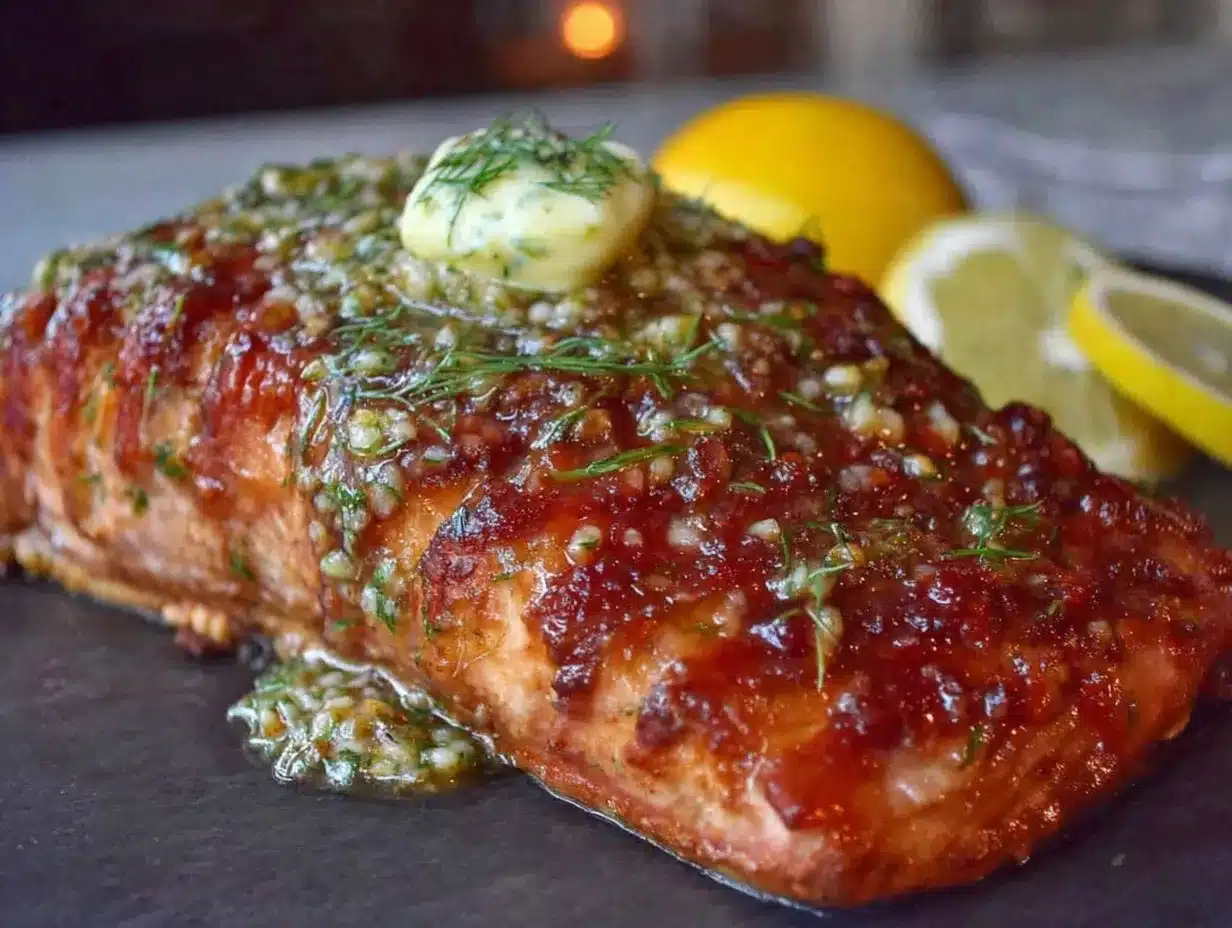
- 4 tablespoons unsalted butter (softened to room temperature; I recommend Kerrygold for its rich, creamy texture)
- 2 tablespoons fresh dill (finely chopped; don’t even think about using dried dill here—fresh is non-negotiable for that bright spring flavor)
- 1 tablespoon lemon zest (from about 1 large lemon; make sure you zest before you juice)
- 2 tablespoons fresh lemon juice (about half a lemon; Meyer lemons are amazing if you can find them in spring)
- 2 cloves garlic (minced; use a microplane for the finest texture that melts right into the butter)
- 1/2 teaspoon sea salt (flaky sea salt like Maldon is perfect here)
- 1/4 teaspoon black pepper (freshly cracked)
For Garnish (Optional but Recommended)
- Fresh dill sprigs (for that gorgeous presentation)
- Lemon slices (thinly sliced, for serving)
- Flaky sea salt (a final sprinkle right before serving)
When choosing your salmon, look for fillets that are bright in color, firm to the touch, and smell fresh like the ocean—not fishy. I prefer wild-caught Alaskan salmon when it’s in season, but farm-raised Atlantic salmon works beautifully too and is usually more affordable. Just make sure the fillets are similar in thickness so they cook evenly. If you’re using frozen salmon, thaw it completely in the refrigerator overnight and pat it very dry before cooking—excess moisture is the enemy of a good crust.
For the dill, fresh is absolutely essential. I know dried herbs are convenient, but dill loses almost all its flavor when dried. Look for dill that’s bright green, perky, and not at all wilted. If you’re growing your own (which I highly recommend—it’s one of the easiest herbs to grow), cut it right before you start cooking for the best flavor.
Equipment Needed
You don’t need much for this recipe, which is part of its beauty. Here’s what you’ll need:
- Baking sheet or oven-safe dish (a rimmed baking sheet works perfectly; I use a half-sheet pan because it gives the salmon room to breathe)
- Parchment paper or aluminum foil (for easy cleanup—trust me on this one)
- Small bowl (for mixing the compound butter)
- Chef’s knife and cutting board (for chopping dill and mincing garlic)
- Microplane or zester (for getting that perfect lemon zest without the bitter white pith)
- Citrus juicer or reamer (or just use your hands—I’ve done it a thousand times)
- Instant-read thermometer (optional but highly recommended for perfect doneness every time)
If you don’t have a microplane, you can use the smallest holes on a box grater. And if you don’t have an instant-read thermometer, don’t worry—I’ll give you visual cues to know when the salmon is perfectly cooked. I’ve made this recipe with and without one, and while the thermometer takes the guesswork out, you can absolutely nail it by sight and touch alone.
Preparation Method
Alright, let’s get cooking. This Spring Baked Salmon with Lemon Dill Butter comes together in about 25 minutes, and most of that is hands-off oven time. Here’s exactly how to do it.
- Preheat your oven to 400°F (200°C). Position the rack in the center of the oven. While it’s heating, line your baking sheet with parchment paper or foil. This makes cleanup so much easier—I learned this the hard way after scrubbing baked-on salmon residue off a pan.
- Make the lemon dill butter. In a small bowl, combine the softened butter, chopped dill, lemon zest, lemon juice, minced garlic, salt, and pepper. Mash it all together with a fork until everything is evenly distributed. The butter should be soft and spreadable—if it’s too firm, let it sit at room temperature for another 5-10 minutes. Taste it (yes, raw butter—it’s safe and delicious) and adjust the salt or lemon if needed.
- Prepare the salmon. Pat the salmon fillets dry with paper towels. This is crucial—wet salmon won’t brown properly and will steam instead of bake. Place the fillets on the prepared baking sheet, skin-side down if they have skin. Drizzle with olive oil and season generously with salt and pepper. Don’t be shy here; salmon can handle a good amount of seasoning.
- Top with the lemon dill butter. Divide the compound butter evenly among the four fillets. Spread it on top, pressing it gently so it adheres. Don’t worry if some butter slides off the sides—it will melt and baste the fish as it cooks. This is where the magic happens.
- Bake the salmon. Place the baking sheet in the preheated oven and bake for 12-15 minutes, depending on the thickness of your fillets. For fillets that are about 1 inch thick, 12 minutes will give you medium-rare (translucent in the center), and 15 minutes will give you fully cooked, flaky salmon. I usually aim for 13 minutes—it’s the sweet spot.
- Check for doneness. The salmon is done when it flakes easily with a fork and the internal temperature reaches 145°F (63°C) at the thickest part. If you don’t have a thermometer, look for these signs: the flesh turns from translucent to opaque, and a white protein (albumin) starts to appear on the surface. A little bit of albumin is normal—it’s just protein coagulating—but if there’s a lot, the salmon is overcooked.
- Rest and serve. Remove the salmon from the oven and let it rest for 2-3 minutes. This allows the juices to redistribute and the butter to settle. Spoon any butter from the pan over the top of each fillet. Garnish with fresh dill sprigs and lemon slices, sprinkle with a little flaky sea salt, and serve immediately.
A quick note on timing: start checking your salmon at the 10-minute mark if your fillets are on the thinner side. I’ve made the mistake of walking away and ending up with overcooked salmon more times than I care to admit. Set a timer and keep an eye on it—salmon goes from perfect to overdone in about 60 seconds.
Cooking Tips & Techniques
After making this Spring Baked Salmon with Lemon Dill Butter more times than I can count, I’ve picked up a few tricks that make a real difference. Let me share them with you.
Bring your salmon to room temperature. This is one of those tips that sounds fussy but actually matters. Take the salmon out of the fridge 15-20 minutes before cooking. Cold salmon cooks unevenly—the outside will be done while the center is still raw. Room-temperature salmon cooks more evenly and gives you that perfect flaky texture throughout.
Don’t overcrowd the pan. Leave at least an inch of space between each fillet. If they’re too close together, they’ll steam instead of bake, and you’ll lose that beautiful golden crust. If you’re cooking for a crowd, use two baking sheets or cook in batches. I learned this lesson when I tried to cram six fillets onto one pan for a dinner party—the salmon was cooked, but it was pale and sad-looking.
Use room-temperature butter. Cold butter won’t spread evenly over the salmon, and it won’t mix well with the herbs and lemon. Let your butter sit out for at least 30 minutes before you start. If you’re in a hurry (and let’s face it, who isn’t?), cut the butter into small cubes—they’ll soften much faster.
Watch the lemon. Too much lemon juice can actually “cook” the salmon in a ceviche-like way and make the texture mushy. Stick to the measurements I’ve given you. The lemon zest provides plenty of bright, citrusy flavor without the acidity overload. I once got carried away with a particularly juicy lemon and ended up with salmon that had a weird, slightly pickled texture. Not my finest moment.
Let it rest. I know it’s tempting to dig in right away, but that 2-3 minute rest is important. The carryover heat continues cooking the salmon slightly, and the butter has time to settle into the flakes. Plus, the salmon will hold together better when you transfer it to plates.
Variations & Adaptations
One of the things I love about this recipe is how versatile it is. Here are some ways to make it your own.
Herb swap. Not a dill fan? No problem. Fresh parsley, chives, tarragon, or basil all work beautifully with the lemon butter. I’ve made a version with equal parts dill and chives that was absolutely divine. In the summer, I sometimes use fresh thyme and oregano for a more Mediterranean vibe.
Citrus variations. Lemon is classic, but lime or orange zest and juice create entirely different flavor profiles. Lime and dill is surprisingly good—it gives the salmon a bright, almost tropical feel. Orange and tarragon is another combination I’ve fallen in love with; it’s elegant and unexpected.
Dietary adaptations. To make this dairy-free, substitute the butter with a high-quality vegan butter or use olive oil mixed with a little nutritional yeast for that savory depth. For a low-carb or keto option, this recipe is already perfect as written—it’s naturally low in carbs and high in healthy fats.
Different cooking methods. This lemon dill butter works beautifully on the grill too. Just place the salmon on a piece of foil, top with the butter, and grill over medium heat for 10-12 minutes. The smoky flavor from the grill adds another dimension. You can also cook it in an air fryer at 375°F (190°C) for 8-10 minutes—it gets an incredible crust.
Spice it up. Add a pinch of red pepper flakes or a drizzle of sriracha to the butter for a spicy kick. I made this for a friend who loves heat, and she said it was the best salmon she’d ever had. A little cayenne pepper works too—just a tiny pinch so it doesn’t overwhelm the delicate fish.
Serving & Storage Suggestions
This Spring Baked Salmon with Lemon Dill Butter is incredibly versatile when it comes to serving. Here’s how I like to enjoy it.
Serving temperature. Serve the salmon hot, straight from the oven, with all that gorgeous butter spooned over the top. It’s also delicious at room temperature—I’ve served it at spring brunches and picnics, and it holds up beautifully. Just let it cool slightly after baking and serve within an hour or two.
What to serve with it. This salmon pairs perfectly with so many spring sides. I love it with roasted asparagus (tossed in olive oil, salt, and pepper, roasted alongside the salmon for the last 10 minutes), a simple arugula salad with lemon vinaigrette, or creamy mashed potatoes to soak up all that lemon dill butter. For a lighter option, try it over a bed of mixed greens with cherry tomatoes and cucumber. And if you’re feeling indulgent, serve it with crusty bread to mop up every last drop of that butter sauce.
Storage. Leftover salmon keeps in an airtight container in the refrigerator for up to 3 days. The flavor actually develops overnight—the dill and lemon meld together even more. I’ve been known to make extra on purpose just for leftovers.
Reheating. The best way to reheat salmon is low and slow. Place it in a 300°F (150°C) oven for about 10 minutes, or until just warmed through. You can also reheat it in a skillet over medium-low heat with a splash of water or lemon juice, covered, for 3-4 minutes. Whatever you do, avoid the microwave—it will turn your beautiful, flaky salmon into a rubbery mess. Trust me, I’ve made that mistake more than once.
Leftover ideas. Cold salmon is amazing flaked over salads, mixed into pasta with a little olive oil and capers, or turned into salmon cakes with some breadcrumbs and an egg. I’ve even used leftovers to make salmon tacos with avocado and a drizzle of crema—absolutely incredible.
Nutritional Information & Benefits
This Spring Baked Salmon with Lemon Dill Butter isn’t just delicious—it’s packed with nutrients that make it a smart choice for any meal.
Estimated nutritional values per serving (1 fillet with butter):
- Calories: 380-420
- Protein: 35-40g
- Fat: 25-28g (mostly healthy unsaturated fats)
- Carbohydrates: 1-2g
- Fiber: 0g
- Sugar: 0g
- Sodium: 400-500mg (varies with salt added)
Health benefits: Salmon is one of the best sources of omega-3 fatty acids, which are essential for brain health, reducing inflammation, and supporting heart health. It’s also rich in high-quality protein, B vitamins (especially B12), selenium, and vitamin D. Dill is packed with antioxidants and has been used for centuries to aid digestion. Lemon provides a good dose of vitamin C, which supports immune function and helps your body absorb iron from the salmon.
Dietary considerations: This recipe is naturally gluten-free, low-carb, keto-friendly, and pescatarian. If you’re dairy-free, simply substitute the butter with a plant-based alternative. It’s also suitable for those following a Mediterranean diet, which emphasizes healthy fats, lean proteins, and fresh herbs.
Allergen note: This recipe contains fish (salmon) and dairy (butter). For a dairy-free version, use vegan butter or olive oil as suggested in the variations section.
Conclusion
This Spring Baked Salmon with Lemon Dill Butter is one of those recipes that proves you don’t need complicated techniques or a long list of ingredients to create something truly special. It’s bright, fresh, and tastes like the season itself—exactly what you want when those first warm days start calling you outside.
I love this recipe because it’s forgiving enough for a busy weeknight but elegant enough for company. It’s the dish I turn to when I want to feel like I have my life together, even when I’m scrambling at the last minute. And honestly, that’s the kind of recipe everyone needs in their back pocket.
I’d love to hear how yours turns out! Leave a comment below and let me know if you tried any variations or served it with something delicious. Don’t forget to share this recipe with a friend who needs a quick, impressive dinner idea. Happy cooking, and here’s to spring on a plate!
Frequently Asked Questions
Can I use frozen salmon for this recipe?
Absolutely! Just make sure to thaw it completely in the refrigerator overnight. Pat it very dry with paper towels before seasoning—frozen salmon tends to hold more moisture, and you want to remove as much as possible for the best texture.
How do I know when the salmon is perfectly cooked?
The most reliable way is with an instant-read thermometer—145°F (63°C) at the thickest part. Without a thermometer, look for the flesh to turn from translucent to opaque and flake easily with a fork. The salmon should still be moist and slightly translucent in the center if you prefer it medium-rare.
Can I make the lemon dill butter ahead of time?
Yes! You can make the compound butter up to 3 days in advance. Roll it into a log in plastic wrap or parchment paper and refrigerate. When you’re ready to cook, just slice off rounds and place them on the salmon. You can even freeze it for up to 3 months.
What if I don’t have fresh dill?
Fresh dill really is best for this recipe, but if you absolutely can’t find it, try fresh parsley, chives, or tarragon instead. Dried dill won’t give you the same bright flavor, so I’d recommend using a different fresh herb rather than dried dill.
Can I cook this on the grill instead of the oven?
Definitely! Place the salmon on a piece of heavy-duty foil, top with the lemon dill butter, and grill over medium heat (about 375-400°F) with the lid closed for 10-12 minutes. The smoky flavor adds another layer of deliciousness. Just be careful not to overcook it—grill temperatures can vary widely.
Pin This Recipe!
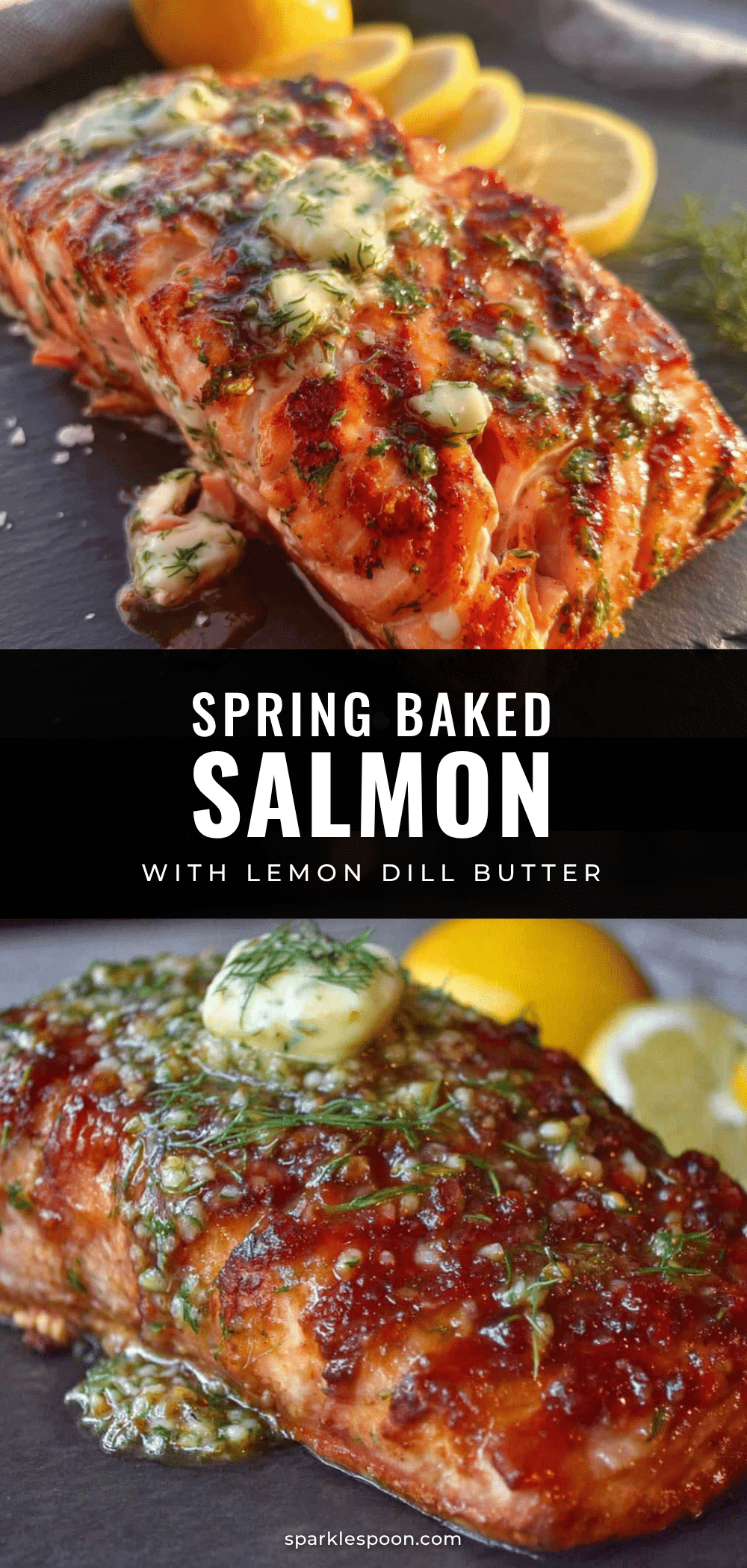
Spring Baked Salmon with Lemon Dill Butter
This Spring Baked Salmon with Lemon Dill Butter is a quick, easy, and elegant dish perfect for weeknights or entertaining. Flaky salmon is topped with a bright, herby compound butter and baked to perfection in under 25 minutes.
- Prep Time: 10 minutes
- Cook Time: 15 minutes
- Total Time: 25 minutes
- Yield: 4 servings 1x
- Category: Main Course
- Cuisine: American
Ingredients
- 4 salmon fillets (6 ounces each, skin-on or skinless)
- 1 tablespoon olive oil (extra virgin)
- Salt and freshly ground black pepper (to taste)
- 4 tablespoons unsalted butter (softened to room temperature)
- 2 tablespoons fresh dill (finely chopped)
- 1 tablespoon lemon zest (from about 1 large lemon)
- 2 tablespoons fresh lemon juice (about half a lemon)
- 2 cloves garlic (minced)
- 1/2 teaspoon sea salt (flaky sea salt like Maldon)
- 1/4 teaspoon black pepper (freshly cracked)
- Fresh dill sprigs (for garnish, optional)
- Lemon slices (thinly sliced, for serving, optional)
- Flaky sea salt (for final sprinkle, optional)
Instructions
- Preheat your oven to 400°F (200°C). Position the rack in the center of the oven. Line a baking sheet with parchment paper or foil.
- Make the lemon dill butter: In a small bowl, combine the softened butter, chopped dill, lemon zest, lemon juice, minced garlic, salt, and pepper. Mash together with a fork until evenly distributed. Taste and adjust seasoning if needed.
- Prepare the salmon: Pat the salmon fillets dry with paper towels. Place them on the prepared baking sheet, skin-side down if they have skin. Drizzle with olive oil and season generously with salt and pepper.
- Top with the lemon dill butter: Divide the compound butter evenly among the four fillets. Spread it on top, pressing gently so it adheres.
- Bake the salmon: Place the baking sheet in the preheated oven and bake for 12-15 minutes, depending on thickness. For 1-inch thick fillets, 12 minutes gives medium-rare, 15 minutes gives fully cooked.
- Check for doneness: The salmon is done when it flakes easily with a fork and the internal temperature reaches 145°F (63°C) at the thickest part. Look for the flesh to turn from translucent to opaque.
- Rest and serve: Remove from the oven and let rest for 2-3 minutes. Spoon any butter from the pan over the top. Garnish with fresh dill sprigs and lemon slices, sprinkle with flaky sea salt, and serve immediately.
Notes
Bring salmon to room temperature 15-20 minutes before cooking for even cooking. Don’t overcrowd the pan; leave at least an inch between fillets. Use room-temperature butter for easy spreading. Watch the lemon—too much juice can make the texture mushy. Let the salmon rest 2-3 minutes after baking. For thinner fillets, start checking at 10 minutes. Leftover salmon keeps in the refrigerator for up to 3 days. Reheat in a 300°F oven for about 10 minutes or in a skillet over medium-low heat with a splash of water or lemon juice.
Nutrition
- Serving Size: 1 fillet with butter
- Calories: 400
- Sodium: 450
- Fat: 26
- Saturated Fat: 10
- Carbohydrates: 2
- Protein: 38
Keywords: baked salmon, lemon dill butter, spring salmon, easy salmon recipe, quick dinner, healthy salmon, salmon fillet, compound butter salmon