Love this? Save it for later!
Share the inspiration with your friends
My neighbor, a retired baker named Frank, had been hoarding a sourdough starter for fifteen years. He’d named it “Bertha” and treated it like a temperamental houseplant. Every few weeks, he’d knock on my door with a mason jar full of discard, a look of mild panic on his face. “She’s growing too fast,” he’d say. “Make something.”
I’ll be honest—I had a complicated relationship with sourdough discard. I’d tried the crackers (boring), the pancakes (dense), and the biscuits (brick-like). The stuff always felt like a chore, a byproduct of someone else’s hobby that I was now responsible for. But Frank kept showing up, and I kept accepting jars of the cloudy, tangy goo, feeling a little guilty every time I tossed it down the sink.
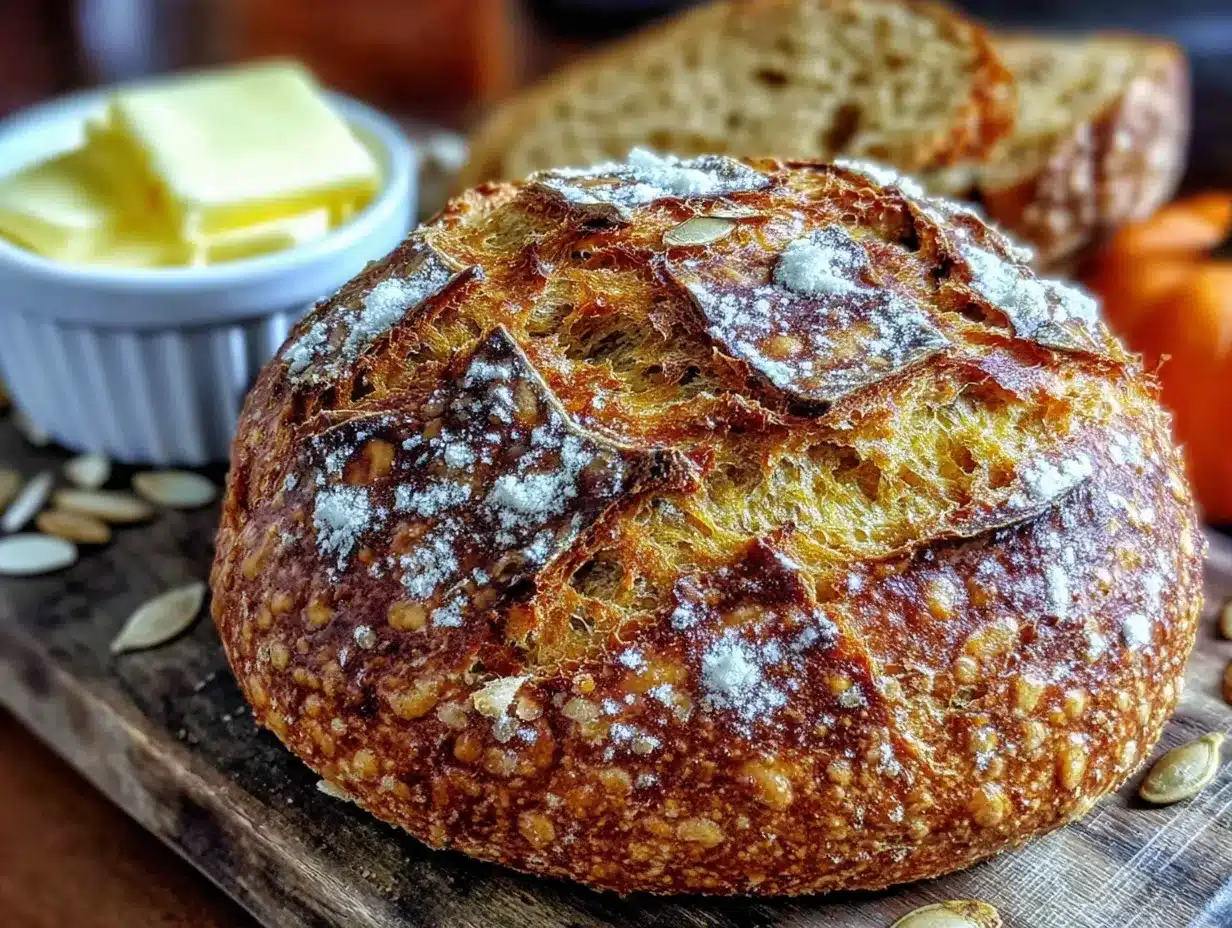
Then came the Tuesday last October when the air turned crisp and my kitchen smelled like cinnamon and nutmeg from a batch of pumpkin puree I’d made the night before. I looked at the jar of discard on my counter, then at the pumpkin, and something clicked. I mean, sourdough is tangy and pumpkin is sweet—maybe they were meant to balance each other out? I threw together a quick batter, more out of desperation than inspiration, and slid it into the oven. Forty-five minutes later, I pulled out a loaf that was golden-brown, impossibly tender, and smelled like fall had moved into my kitchen permanently. I stood there, fork in hand, eating slice after slice while it was still warm. That was the moment my sourdough discard problem became my favorite baking secret.
This Easy Pumpkin Sourdough Discard Bread is the recipe that finally made me stop feeling like I was wasting good ingredients. It’s the kind of bread that makes you wonder why you ever bothered with complicated sourdough techniques in the first place. The discard adds a subtle tang that cuts through the sweetness of the pumpkin, creating a loaf that’s moist, flavorful, and honestly, better than any pumpkin bread I’ve ever had from a bakery. Maybe you’ve been staring at a jar of discard in your fridge, wondering what to do with it. Or maybe you just want a fall bread that doesn’t require a PhD in bread science. Either way, this one’s for you.
Why You’ll Love This Recipe
Let me tell you why this Easy Pumpkin Sourdough Discard Bread has become my go-to fall bake, and why I think it’ll become yours too.
- Quick & Easy: This comes together in under 15 minutes of active prep time. No kneading, no waiting for dough to rise, no complicated folding techniques. Just mix, pour, and bake. Perfect for those days when you want fresh bread but don’t have hours to spend in the kitchen.
- Simple Ingredients: You probably have everything you need already. Pumpkin puree, flour, sugar, eggs, oil, and your sourdough discard. No fancy grocery store runs required. I’ve made this with ingredients from my pantry on a rainy Sunday when I didn’t want to leave the house.
- Perfect for Fall Gatherings: This bread is a showstopper at Thanksgiving, Halloween parties, or cozy weekend brunches. It’s the kind of thing you bring to a potluck and watch disappear in minutes. I brought a loaf to my book club last month, and three people asked for the recipe before I’d even finished my first glass of wine.
- Crowd-Pleaser: Kids love it, adults love it, even people who claim they don’t like sourdough love it. The tang is subtle enough that it doesn’t overwhelm, but present enough to make the flavor interesting. It’s the perfect middle ground.
- Unbelievably Delicious: The texture is where this bread really shines. It’s incredibly moist—almost like a pound cake—with a tender crumb that’s not too dense and not too airy. The pumpkin and sourdough create a flavor combo that’s complex and satisfying. It’s comfort food that actually delivers.
What makes this recipe different from the hundreds of other pumpkin breads out there? It’s the sourdough discard. That little bit of fermented flour and water adds a depth of flavor that you just can’t get from baking soda and powder alone. It gives the bread a subtle tanginess that balances the sweetness of the pumpkin and sugar, creating a loaf that’s not cloying or one-dimensional. Plus, the discard acts as a natural tenderizer, making the crumb softer and more delicate than traditional quick breads.
This recipe isn’t just good—it’s the kind that makes you close your eyes after the first bite. It’s the bread you’ll make for yourself on a quiet fall morning with a cup of coffee, and then immediately wish you’d made two loaves. It’s comfort food reimagined—simpler, more flavorful, and with that little bit of sourdough magic that makes everything better.
What Ingredients You Will Need
This recipe uses simple, wholesome ingredients to deliver bold flavor and satisfying texture without the fuss. Most of these are pantry staples, which is exactly how I like my baking to be.
For the Bread Batter
- 1 cup (240g) pumpkin puree (not pumpkin pie filling—make sure you get the plain stuff. I prefer Libby’s for consistent texture, but any brand works fine. If you’re feeling ambitious, homemade puree from a sugar pumpkin is amazing here)
- 1 cup (200g) granulated sugar (adds sweetness and helps with browning. You can reduce this to 3/4 cup if you prefer a less sweet bread, but I wouldn’t go lower than that)
- 1/2 cup (100g) brown sugar, packed (light or dark both work. Dark brown sugar adds more molasses flavor, which pairs beautifully with the pumpkin and sourdough)
- 1/2 cup (120ml) vegetable oil (or any neutral oil like canola or avocado. Melted coconut oil works too, but make sure it’s cooled slightly before adding)
- 2 large eggs, room temperature (room temperature eggs incorporate more evenly into the batter. If you forget to take them out ahead of time, place them in a bowl of warm water for 5 minutes)
- 1 teaspoon vanilla extract (pure vanilla extract is best, but imitation works in a pinch. I’ve even used vanilla bean paste when I’m feeling fancy)
- 1 cup (240g) sourdough discard, unfed and at room temperature (this is the star of the show. Use discard that’s been sitting in your fridge for up to a week—older discard has a stronger tang, which I personally love. If your discard is very thick, you might need to stir in a tablespoon of water to loosen it)
For the Dry Ingredients
- 1 3/4 cups (220g) all-purpose flour (spoon and level your flour—don’t scoop directly from the bag. Too much flour makes the bread dense. I’ve also made this with half whole wheat pastry flour for a nuttier flavor)
- 1 teaspoon baking soda (this reacts with the acidity of the sourdough discard to help the bread rise. Make sure your baking soda is fresh—test it by dropping a bit into vinegar; it should fizz immediately)
- 1/2 teaspoon baking powder (adds extra lift. I’ve forgotten this before and the bread still turned out okay, but it was a bit flatter)
- 1/2 teaspoon salt (balances the sweetness and enhances all the flavors. I use fine sea salt, but table salt works too)
- 2 teaspoons pumpkin pie spice (or make your own: 1 teaspoon cinnamon, 1/2 teaspoon ginger, 1/4 teaspoon nutmeg, 1/4 teaspoon cloves. I actually prefer making my own blend because I can adjust the ratios—more cinnamon, less clove)
- 1 teaspoon ground cinnamon (because you can never have too much cinnamon in a fall recipe. I use Ceylon cinnamon for a milder, sweeter flavor, but Cassia works fine)
Optional Add-Ins
- 1/2 cup (60g) chopped pecans or walnuts (toasted for extra flavor. Toast them in a dry pan over medium heat for 3-4 minutes until fragrant, then let them cool before adding to the batter)
- 1/2 cup (90g) chocolate chips (dark or semi-sweet. The chocolate pairs surprisingly well with the tangy sourdough and sweet pumpkin. I use Ghirardelli 60% cacao chips)
- 1/4 cup (30g) dried cranberries or raisins (adds a chewy texture and tartness that cuts through the richness)
Equipment Needed
You don’t need much for this recipe, which is part of its charm. Here’s what you’ll need:
- 9×5-inch loaf pan (a standard size works best. If your pan is slightly smaller, your bread will take a few minutes longer to bake and will have a higher dome. If it’s larger, the bread will be flatter and bake faster)
- Parchment paper (for lining the pan. This makes removal so much easier. I fold the paper so it hangs over the long sides of the pan, creating “handles” to lift the bread out)
- Two large mixing bowls (one for wet ingredients, one for dry. I use glass or stainless steel bowls because they don’t retain odors)
- Whisk (for mixing dry ingredients and for combining wet ingredients. A balloon whisk works best for aerating the flour mixture)
- Rubber spatula (for folding the wet and dry ingredients together. Use a gentle hand—overmixing is the enemy of tender bread)
- Measuring cups and spoons (for accuracy. I recommend using a kitchen scale for the flour and pumpkin for the most consistent results, but cups work fine)
- Cooling rack (for cooling the bread after baking. This prevents the bottom from getting soggy. If you don’t have one, you can use the oven rack turned upside down)
- Toothpick or cake tester (for checking doneness. A wooden skewer works too)
I’ve made this bread in a glass loaf pan and a metal one, and both work fine. The metal pan gives a slightly crisper crust, while the glass pan takes a few minutes longer to bake. If you’re using a dark non-stick pan, reduce the oven temperature by 25°F to prevent over-browning. And honestly, I’ve even made this in a 9-inch round cake pan when my loaf pan was in the dishwasher—it just bakes faster and looks a bit different, but tastes just as good.
Preparation Method
Alright, let’s get baking. This Easy Pumpkin Sourdough Discard Bread comes together quickly, so make sure you have all your ingredients measured and ready before you start. Trust me, it makes the process so much smoother.
- Preheat your oven to 350°F (175°C). Position the rack in the center of the oven. While the oven is heating, line your 9×5-inch loaf pan with parchment paper, leaving some overhang on the long sides. This will make lifting the bread out so much easier later. Lightly spray the exposed sides of the pan with non-stick spray.
- In a large bowl, whisk together the dry ingredients: flour, baking soda, baking powder, salt, pumpkin pie spice, and cinnamon. Whisk for about 20 seconds to aerate the flour and distribute the leavening agents evenly. Set this bowl aside. I like to make a little well in the center of the dry ingredients—it makes pouring in the wet mixture easier later.
- In another large bowl, combine the wet ingredients. Start by whisking together the pumpkin puree, granulated sugar, and brown sugar until smooth. The mixture should look like a thick, glossy paste. Then add the vegetable oil, eggs (one at a time, whisking well after each), and vanilla extract. Whisk until everything is fully combined and the mixture is smooth and uniform. It should be a beautiful deep orange color at this point.
- Add the sourdough discard to the wet ingredients. Whisk it in gently until just combined. Don’t overmix here—you just want the discard to be incorporated. The batter will look a bit looser than a typical quick bread batter, which is exactly what we want. If your discard was very thick and left lumps, use your whisk to break them up gently.
- Pour the wet ingredients into the dry ingredients. Use a rubber spatula to fold everything together. And I mean fold—not stir vigorously. Use a gentle cutting motion, scraping the bottom and sides of the bowl, until you see just a few streaks of flour remaining. The batter should be thick but pourable, with no dry patches. A few small lumps are totally fine. Overmixing at this stage will develop the gluten too much and make your bread tough.
- If you’re using any add-ins, fold them in now. Gently fold in the chopped nuts, chocolate chips, or dried fruit until they’re evenly distributed. Don’t overmix—just a few folds should do it.
- Pour the batter into the prepared loaf pan. Use your spatula to spread it evenly into the corners. Give the pan a gentle tap on the counter to release any air bubbles. The batter should come about two-thirds of the way up the sides of the pan. If it’s higher, your pan might be too small—consider putting a baking sheet under the pan in case it overflows (speaking from experience here).
- Bake for 50-60 minutes. Place the pan in the preheated oven and bake until a toothpick inserted into the center comes out clean or with just a few moist crumbs attached. The top should be golden brown and cracked in a few places—that’s the sourdough discard doing its thing. Start checking at the 50-minute mark. Every oven is different, so your baking time might vary. My old oven took exactly 55 minutes, but my new one runs hotter and finishes at 50.
- Cool in the pan for 10 minutes. Place the loaf pan on a wire rack and let it cool for exactly 10 minutes. Don’t skip this step—the bread needs this time to set up so it doesn’t fall apart when you remove it. After 10 minutes, use the parchment paper handles to lift the bread out of the pan and transfer it to the wire rack to cool completely.
- Let it cool completely before slicing. I know, I know—the smell is incredible and you want to dig in immediately. But if you slice this bread while it’s still warm, it will crumble and fall apart. The texture firms up as it cools, giving you those perfect, clean slices. If you absolutely can’t wait (and I’ve been there), at least let it cool for 30 minutes. The flavor is actually better the next day anyway, after the sourdough tang has had time to develop.
Cooking Tips & Techniques
After making this Easy Pumpkin Sourdough Discard Bread more times than I can count (and messing it up plenty along the way), here are the tips I’ve learned that make a real difference.
Room temperature ingredients matter. I learned this the hard way when I used cold eggs straight from the fridge and ended up with a lumpy batter that baked unevenly. Cold ingredients don’t emulsify properly, which means your bread might have a weird texture. Take your eggs, sourdough discard, and even your pumpkin puree out of the fridge about 30 minutes before you start baking. If you’re in a hurry, place the eggs in a bowl of warm water for 5 minutes and microwave the discard in 10-second bursts until it’s no longer cold.
Don’t overmix the batter. This is probably the most common mistake people make with quick breads. Once you combine the wet and dry ingredients, you want to mix just until everything comes together. Overmixing develops the gluten in the flour, which will make your bread tough and dense instead of tender and fluffy. I’ve done it before—I got distracted by my phone and kept mixing, and the resulting bread was so tough I could have used it as a doorstop. Fold gently, stop when you still see a few streaks of flour, and trust the process.
Check your sourdough discard temperature. If your discard is straight from the fridge and very cold, it can shock the batter and affect how the bread rises. I’ve found that letting it come to room temperature gives the best results. Also, if your discard has a layer of liquid on top (that’s the “hooch”), just stir it back in before measuring. That liquid is full of flavor and adds to the tanginess of the bread.
Use the toothpick test correctly. Insert a toothpick into the center of the bread—if it comes out clean, the bread is done. But here’s the thing: if you hit a pocket of melted chocolate chips or a piece of fruit, the toothpick will come out wet even if the bread is fully baked. Test in a few different spots to be sure. Also, the bread is done when the internal temperature reaches about 200°F (93°C) on an instant-read thermometer. This is the most reliable method I’ve found.
Let it cool completely. I cannot stress this enough. I’ve ruined so many loaves by cutting into them too early. The bread needs time to set up and firm up. If you cut it while it’s still warm, you’ll end up with a crumbly mess. I once served warm slices to my family and they were delicious, but they looked like a disaster. Now I wait until the bread is completely cool, and the slices come out perfect every time.
Variations & Adaptations
One of the best things about this Easy Pumpkin Sourdough Discard Bread is how adaptable it is. Here are some variations I’ve tried and loved:
Gluten-Free Version
Swap the all-purpose flour for a 1:1 gluten-free baking blend that contains xanthan gum. I’ve used King Arthur Measure for Measure and Bob’s Red Mill 1-to-1 with great results. The texture will be slightly more crumbly, but the flavor is still fantastic. Add an extra tablespoon of pumpkin puree to help with moisture since gluten-free flours tend to absorb more liquid.
Vegan Adaptation
Replace the eggs with two flax eggs (2 tablespoons ground flaxseed mixed with 6 tablespoons water, let sit for 5 minutes until gel-like). Use a plant-based milk yogurt or applesauce in place of the eggs if you prefer. The bread will be slightly denser but still delicious. I made this for a vegan friend last Thanksgiving and she couldn’t stop eating it.
Spice It Up
If you like things spicy, add 1/4 teaspoon of cayenne pepper or a pinch of black pepper to the dry ingredients. The heat plays beautifully with the sweet pumpkin and tangy sourdough. I tried this on a whim and now I can’t go back to the original—it adds this warmth that’s perfect for chilly fall evenings.
Chocolate Pumpkin Swirl
Reserve 1/4 cup of the batter and mix it with 2 tablespoons of cocoa powder and 1 tablespoon of milk. Drop spoonfuls of the chocolate batter into the loaf pan before baking, then use a knife to swirl it through the pumpkin batter. The result is a marbled loaf that’s as beautiful as it is delicious. I did this for a Halloween party and it was the first thing to disappear.
Mini Loaves or Muffins
Divide the batter among mini loaf pans or a muffin tin. For mini loaves, bake for 25-30 minutes. For muffins, bake for 18-22 minutes. This is perfect for gifting or for portion control (if that’s your thing). I’ve made mini loaves as Christmas gifts wrapped in cellophane with a ribbon—they’re always a hit.
Serving & Storage Suggestions
This bread is incredibly versatile when it comes to serving. Here’s how I like to enjoy it and how to keep it fresh.
Serving Temperature: This bread is fantastic at room temperature, but I also love it slightly warm. If you’re serving it the next day, pop individual slices in the microwave for 10-15 seconds or in a toaster oven at 300°F for a few minutes. The warmth brings out the pumpkin and spice flavors even more.
Pairings: A slice of this bread with a pat of salted butter is pure heaven. For a more indulgent treat, spread it with cream cheese frosting or honey butter. It’s also amazing with a cup of coffee, chai tea, or a glass of cold milk. For a dessert twist, toast a slice and top it with vanilla ice cream and a drizzle of caramel sauce—trust me on this one.
Storage Instructions: Store the bread tightly wrapped in plastic wrap or in an airtight container at room temperature for up to 4 days. The moisture from the pumpkin actually helps keep this bread soft longer than regular quick breads. If you live in a humid climate, you might want to store it in the refrigerator to prevent mold, but note that refrigeration can dry out the bread slightly.
Freezing: This bread freezes beautifully. Wrap the completely cooled loaf (or individual slices) tightly in plastic wrap, then in aluminum foil, and freeze for up to 3 months. To thaw, leave it at room temperature for a few hours or pop individual slices in the microwave for 20-30 seconds. I always make a double batch and freeze one loaf for later—it’s like finding a little gift from your past self.
Flavor Development: Here’s something interesting: the flavor of this bread actually improves after a day or two. The sourdough tang becomes more pronounced, and the spices meld together in a way that’s just magical. So if you can resist eating it all on day one, you’re in for a treat on day two. I’ve had slices on day four that were somehow even better than the day I baked them.
Nutritional Information & Benefits
While I wouldn’t call this bread health food, it does have some redeeming qualities. Here’s a rough nutritional breakdown per slice (assuming 10 slices per loaf):
Per Slice: Approximately 280 calories, 12g fat, 40g carbohydrates, 3g fiber, 20g sugar, 5g protein. These values will vary based on your specific ingredients and any add-ins you use.
Health Benefits: Pumpkin is packed with vitamin A (from beta-carotene), which is great for eye health and immune function. It’s also a good source of fiber, which helps with digestion and keeps you feeling full. The sourdough discard adds a small amount of probiotics (though most are killed during baking), and the fermentation process can make the bread easier to digest for some people. The spices—cinnamon, ginger, nutmeg—are all anti-inflammatory and add antioxidants to the mix.
Dietary Considerations: This recipe is vegetarian as written. For a vegan version, see the variations section above. For a gluten-free version, use a 1:1 gluten-free flour blend. The bread is relatively low in saturated fat (especially if you use a neutral oil instead of butter), and you can reduce the sugar to 1 cup total if you prefer a less sweet bread.
Potential Allergens: This recipe contains wheat (gluten), eggs, and depending on your add-ins, possibly tree nuts and dairy (if using chocolate chips that contain milk solids). Always check your ingredient labels if you’re serving someone with allergies.
I personally love that this bread feels indulgent but isn’t loaded with butter or excessive sugar. It’s the kind of treat you can feel good about eating for breakfast, as a snack, or even as a lighter dessert option. Plus, using sourdough discard means you’re not wasting food, which always feels good.
Conclusion
This Easy Pumpkin Sourdough Discard Bread is more than just a recipe—it’s a solution to two common kitchen problems: what to do with leftover sourdough discard and how to make a quick, delicious fall bread without a lot of fuss. It’s the kind of recipe that makes you feel clever and resourceful, like you’ve discovered a secret that no one else knows about.
What I love most about this bread is how forgiving it is. You can use different flours, adjust the spices, throw in whatever add-ins you have on hand, and it still turns out beautifully. It’s a recipe that invites experimentation and rewards creativity. I’ve made it with whole wheat flour, with extra ginger, with dried cherries instead of cranberries, and every version has been delicious in its own way.
So go ahead and give it a try. Pull that jar of sourdough discard out of your fridge, open a can of pumpkin, and treat yourself to a loaf of bread that tastes like fall in every single bite. And when you do, I’d love to hear about it. Leave a comment below and tell me how it turned out—what add-ins did you use? Did you make any substitutions? Did your family love it as much as mine does? Your feedback helps other readers and inspires me to keep creating recipes like this one.
Happy baking, friends. May your kitchen smell like cinnamon and your bread turn out perfectly golden every time.
Frequently Asked Questions
Can I use active sourdough starter instead of discard?
Yes, you absolutely can. If you use active, bubbly starter, your bread will rise a bit more and have a slightly milder tang. The texture might be a touch airier, but it will still be delicious. Just make sure your starter is at room temperature before adding it to the batter.
Why did my bread sink in the middle?
This usually happens for one of three reasons: the bread was underbaked, the oven temperature was too low, or you opened the oven door too early. Make sure your oven is fully preheated to 350°F and avoid opening the door during the first 40 minutes of baking. If your bread sinks, it’s still safe to eat—it just won’t look as pretty.
Can I make this bread without a loaf pan?
Absolutely. You can bake this batter in a 9-inch round cake pan, an 8×8 square pan, or even as muffins. Just adjust the baking time accordingly—muffins take about 18-22 minutes, a round cake pan takes 35-40 minutes. The flavor will be the same, just a different shape.
How do I know when my sourdough discard is too old to use?
If your discard has been sitting in the fridge for more than two weeks and has developed a pink or orange tint, or if it smells like nail polish remover or cheese, it’s time to toss it and start fresh. Healthy discard should smell pleasantly sour, like yogurt or sourdough bread. If it smells bad, it probably is bad.
Can I add a streusel topping to this bread?
Yes, and I highly recommend it. Mix together 1/4 cup flour, 1/4 cup brown sugar, 1/4 cup cold butter (cut into small pieces), and 1/2 teaspoon cinnamon until crumbly. Sprinkle it over the batter before baking. The streusel adds a lovely crunchy texture that contrasts beautifully with the soft bread. Just keep an eye on the top during baking—if it’s browning too quickly, tent the pan with foil.
Pin This Recipe!
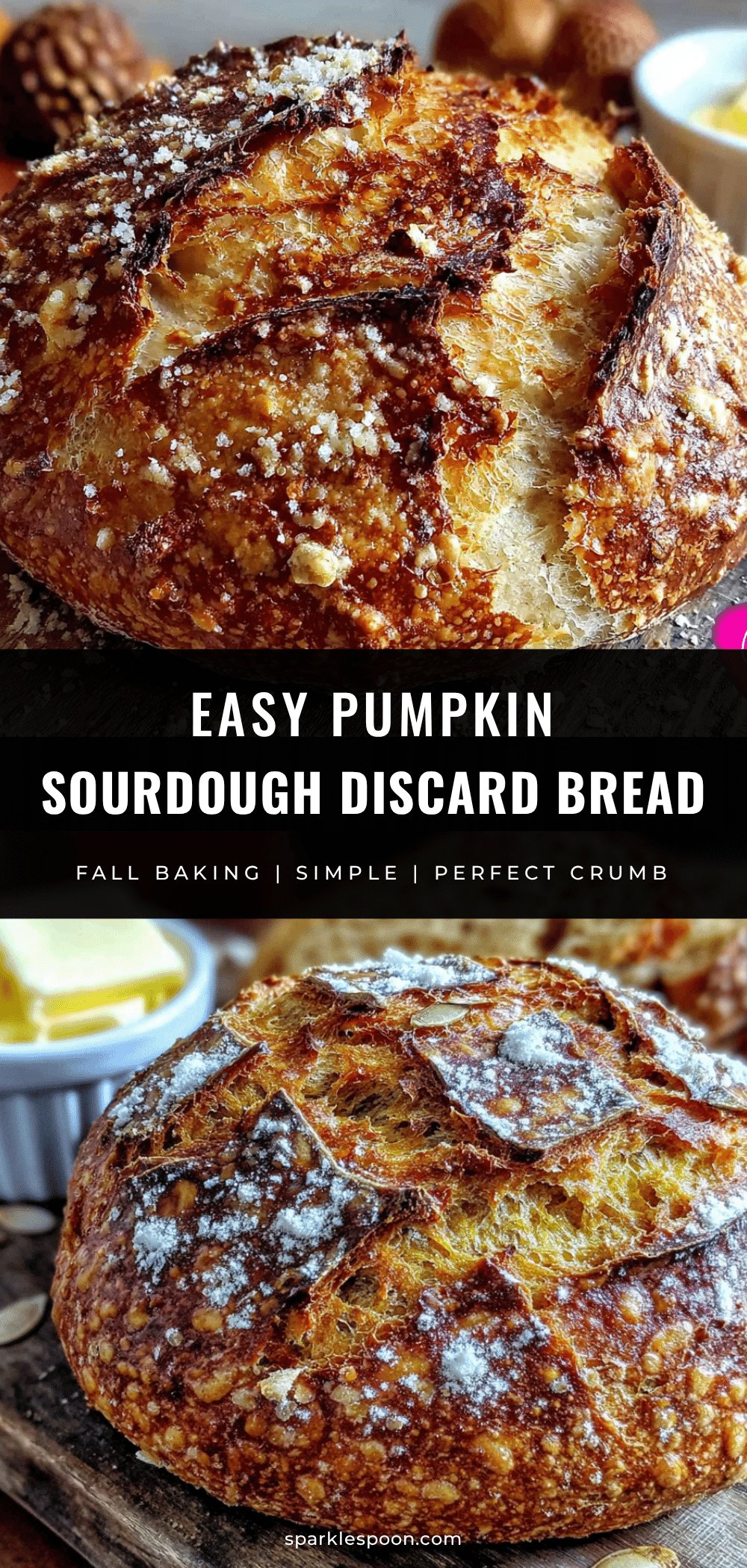
Easy Pumpkin Sourdough Discard Bread: The Best Fall Recipe

This Easy Pumpkin Sourdough Discard Bread is a quick, moist, and flavorful fall loaf that uses sourdough discard for a subtle tang, balancing the sweetness of pumpkin. It’s a simple, no-knead recipe perfect for using up discard and creating a delicious treat for any fall gathering.
- Prep Time: 15 minutes
- Cook Time: 55 minutes
- Total Time: 1 hour 10 minutes
- Yield: 10 servings 1x
- Category: Bread
- Cuisine: American
Ingredients
- 1 cup (240g) pumpkin puree (not pumpkin pie filling)
- 1 cup (200g) granulated sugar
- 1/2 cup (100g) brown sugar, packed
- 1/2 cup (120ml) vegetable oil (or other neutral oil)
- 2 large eggs, room temperature
- 1 teaspoon vanilla extract
- 1 cup (240g) sourdough discard, unfed and at room temperature
- 1 3/4 cups (220g) all-purpose flour (spooned and leveled)
- 1 teaspoon baking soda
- 1/2 teaspoon baking powder
- 1/2 teaspoon salt
- 2 teaspoons pumpkin pie spice
- 1 teaspoon ground cinnamon
- 1/2 cup (60g) chopped pecans or walnuts (optional)
- 1/2 cup (90g) chocolate chips (optional)
- 1/4 cup (30g) dried cranberries or raisins (optional)
Instructions
- Preheat your oven to 350°F (175°C). Position the rack in the center. Line a 9×5-inch loaf pan with parchment paper, leaving overhang on the long sides. Lightly spray exposed sides with non-stick spray.
- In a large bowl, whisk together the dry ingredients: flour, baking soda, baking powder, salt, pumpkin pie spice, and cinnamon. Whisk for about 20 seconds to aerate. Set aside.
- In another large bowl, combine the wet ingredients: whisk together pumpkin puree, granulated sugar, and brown sugar until smooth. Add vegetable oil, eggs (one at a time, whisking well after each), and vanilla extract. Whisk until fully combined and smooth.
- Add the sourdough discard to the wet ingredients and whisk gently until just combined. The batter will be slightly looser than typical quick bread batter.
- Pour the wet ingredients into the dry ingredients. Use a rubber spatula to fold together gently, using a cutting motion, until just a few streaks of flour remain. Do not overmix.
- If using add-ins (nuts, chocolate chips, dried fruit), fold them in gently until evenly distributed.
- Pour the batter into the prepared loaf pan. Spread evenly and tap the pan gently on the counter to release air bubbles.
- Bake for 50-60 minutes, until a toothpick inserted into the center comes out clean or with a few moist crumbs. The top should be golden brown and cracked.
- Cool in the pan on a wire rack for exactly 10 minutes. Then use the parchment paper handles to lift the bread out and transfer to the wire rack to cool completely.
- Let the bread cool completely before slicing (at least 30 minutes if you can’t wait). The flavor improves the next day.
Notes
Room temperature ingredients matter for proper emulsification. Don’t overmix the batter to avoid tough bread. Let the bread cool completely before slicing for clean slices. The flavor improves after a day or two. For a gluten-free version, use a 1:1 gluten-free baking blend. For a vegan version, replace eggs with flax eggs.
Nutrition
- Serving Size: 1 slice
- Calories: 280
- Sugar: 20
- Sodium: 280
- Fat: 12
- Saturated Fat: 2
- Carbohydrates: 40
- Fiber: 3
- Protein: 5
Keywords: pumpkin bread, sourdough discard, fall recipe, quick bread, easy pumpkin bread, sourdough discard recipe