Love this? Save it for later!
Share the inspiration with your friends
My neighbor across the hall, a retired schoolteacher named Mrs. Kowalski, watched me wrestling a wobbly grocery bag up the stairs one Saturday morning. She didn’t say anything at first. Then she just smiled, shook her head, and said, “You’re working too hard for a weekend, dear. Come here.”
I followed her into her tiny, perfectly organized kitchen, where the smell of something savory and warm was already hanging in the air. She pulled a glass dish from the oven, and I swear, the top was this gorgeous shade of golden-brown, puffed up like a proud pillow. “It’s just a breakfast casserole,” she said, waving her hand like it was nothing. “But it saves my Sunday every single week.”
She told me she’d been making it since her boys were little—back when Saturday mornings meant soccer games and sleepovers and zero time for standing over a stove. Honestly, that idea of having a hot, hearty breakfast ready without any morning chaos? It blew my mind. I mean, I’d always thought breakfast casseroles were complicated, fancy brunch things you only made for company. But this was just… smart.
I made her version that next weekend, tweaking it just a little—adding a bit more cheese, swapping in my favorite breakfast sausage. The first time I pulled it out of the fridge the next morning and slid it into the oven, I felt like I had discovered some kind of life hack. Maybe you’ve been there, standing in your kitchen at 7 a.m., already tired, wondering how you’re going to get everyone fed and out the door. This casserole became my answer. It’s the recipe that made me believe you can have a real, sit-down breakfast on a Tuesday morning without losing your mind. And honestly, that’s a pretty special thing.
Why You’ll Love This Recipe
Let’s be real for a second—mornings are hard. Whether you’re wrangling kids, rushing to get out the door, or just not a “morning person,” the last thing you want to do is cook a big breakfast from scratch. That’s where this Easy Make-Ahead Sausage Breakfast Casserole comes in. It’s the kind of recipe that feels like a secret weapon in your weekly meal plan.
- Quick & Easy: The active prep time is about 15 minutes. You throw it together the night before, and the oven does the hard work the next morning. It’s perfect for busy weeknights when you’re already thinking about tomorrow.
- Simple Ingredients: No fancy grocery trips needed. You likely already have eggs, milk, bread, and cheese in your kitchen. The sausage is the star, but it’s a humble, affordable star.
- Perfect for Family Mornings: This isn’t just a holiday brunch dish. It’s for regular Tuesday mornings, lazy Saturdays, or when you have a house full of hungry kids (and adults) who all want something different. This casserole pleases everyone.
- Crowd-Pleaser: I’ve made this for my family, for neighbors, and for holiday mornings. It always gets rave reviews. Kids love the cheesy, sausage-filled bites, and adults appreciate the hearty, satisfying flavor.
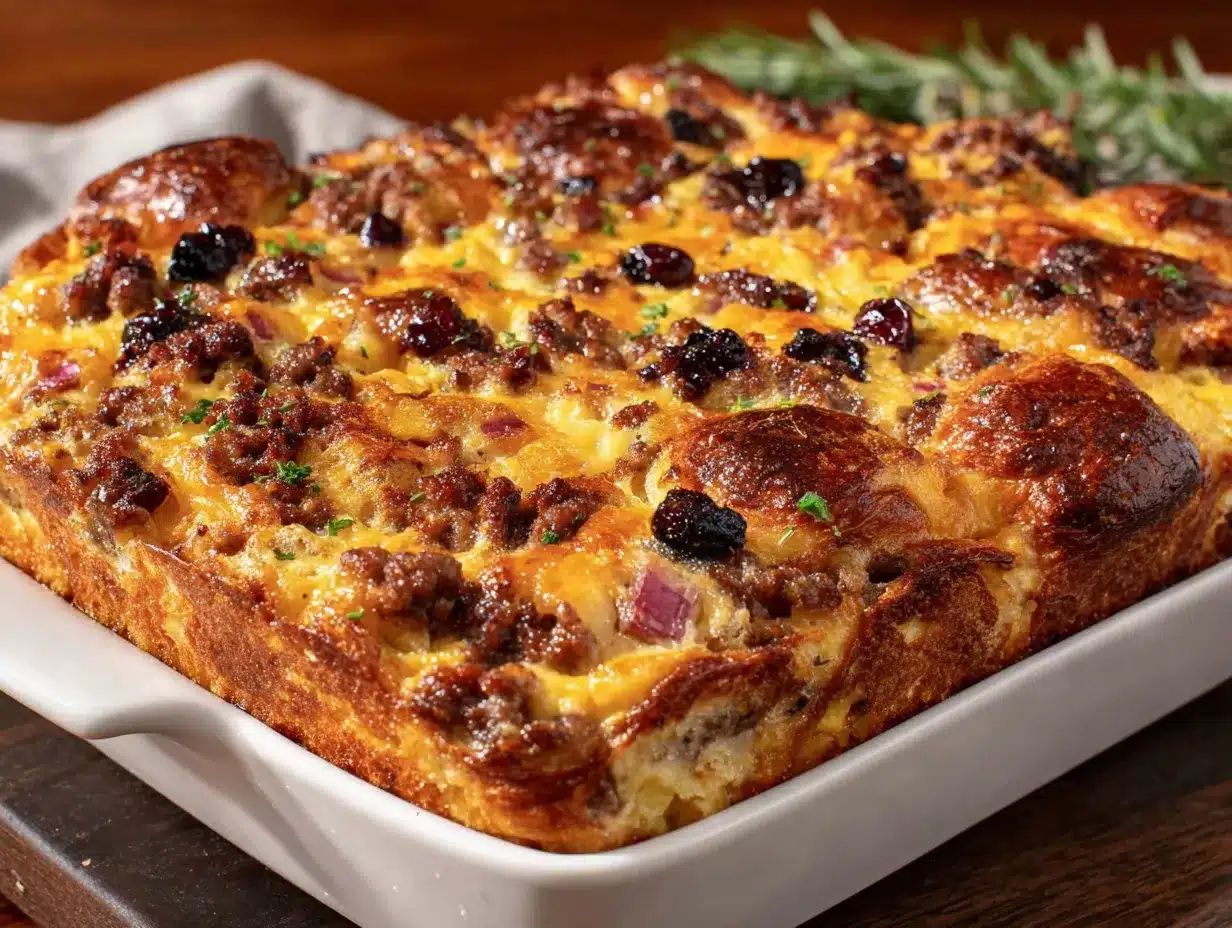
- Unbelievably Delicious: The texture is what gets me—soft, custardy bread on the inside, with a slightly crispy, golden top. The sausage adds a savory punch that makes every bite feel like comfort food.
What makes this recipe different from the rest? It’s the balance. It’s not too eggy, not too bready, and not a greasy mess. The trick is letting it sit overnight so the bread soaks up all that egg mixture, creating a texture that’s almost like a savory bread pudding. It’s comfort food reimagined—faster, simpler, but with the same soul-soothing satisfaction. Perfect for impressing guests without stress, or turning a simple family breakfast into something memorable.
What Ingredients You Will Need
This recipe uses simple, wholesome ingredients to deliver bold flavor and satisfying texture without the fuss. Most of these are pantry staples, which makes it even easier to whip together on a whim.
- 1 lb (450g) breakfast sausage – I prefer a mild or regular pork sausage, but you can use spicy or turkey sausage if you like. Look for a good-quality brand; it makes a difference in flavor.
- 8 large eggs – Room temperature eggs blend more smoothly into the custard. If you’re in a hurry, place them in a bowl of warm water for 5 minutes.
- 2 cups (480ml) whole milk – Whole milk gives the richest, creamiest texture. You can use 2% or even a dairy-free milk like unsweetened oat milk, but the texture will be slightly less rich.
- 1 teaspoon (5g) Dijon mustard – This is my secret ingredient. It doesn’t make the casserole taste like mustard; it just adds a tiny tang that brightens all the other flavors.
- ½ teaspoon (2g) salt – I use fine sea salt. You can adjust based on how salty your sausage and cheese are.
- ¼ teaspoon (1g) black pepper – Freshly ground is always best.
- ¼ teaspoon (1g) garlic powder – Optional, but I love the subtle savory boost it gives.
- 6 cups (about 300g) stale bread cubes – A hearty bread like French bread, sourdough, or Texas toast works best. Day-old bread is ideal because it soaks up the egg mixture without turning to mush. If your bread is fresh, cube it and let it sit out for an hour or toast it lightly.
- 2 cups (200g) shredded cheddar cheese – Sharp cheddar adds the most flavor. You can also use a mix of mozzarella and Monterey Jack for a milder taste. Shred your own cheese from a block if you can—it melts much better than pre-shredded.
- 2 tablespoons (28g) unsalted butter – For greasing the dish and for a little richness.
- Optional: ¼ cup (15g) chopped fresh parsley – For garnish. It adds a pop of color and freshness.
Ingredient Selection Tips: For the sausage, I personally like the Johnsonville brand for its consistent flavor and low grease content. If you’re using a leaner sausage, you might need to add a tablespoon of oil when browning it. For the bread, avoid anything too soft like sandwich bread—it can get gummy. A crusty loaf holds up much better.
Equipment Needed
You don’t need a lot of fancy tools for this recipe, which is part of its charm. Here’s what you’ll need:
- 9×13-inch (23×33 cm) baking dish – This is the standard size for a family-sized casserole. A glass or ceramic dish works best for even baking.
- Large skillet or frying pan – For browning the sausage. A non-stick skillet makes cleanup easier.
- Large mixing bowl – For whisking the eggs and milk together.
- Whisk – To get the eggs smooth and frothy.
- Measuring cups and spoons – For accuracy.
- Cutting board and knife – For cubing the bread if it’s not pre-cut.
- Spatula or wooden spoon – For stirring the sausage as it cooks.
- Aluminum foil – To cover the casserole if the top browns too quickly.
Budget-Friendly Tip: If you don’t have a 9×13 dish, you can use two 8×8 square dishes or even a large cast-iron skillet. Just adjust the baking time slightly—smaller dishes may cook a little faster. I’ve used a cheap glass baking dish from the grocery store for years, and it works perfectly. No need to spend a lot.
Preparation Method
This is the fun part. Follow these steps, and you’ll have a breakfast that feels like a warm hug.
- Brown the sausage: Place a large skillet over medium-high heat. Add the sausage and cook, breaking it up with a spatula, until it’s browned and cooked through—about 6-8 minutes. Don’t drain all the fat; a little bit adds flavor. Set it aside to cool slightly.
- Prepare the bread: While the sausage cooks, cut your bread into 1-inch cubes. If your bread is fresh, spread the cubes on a baking sheet and toast them in a 300°F (150°C) oven for about 10 minutes. This helps them hold their shape. Let them cool.
- Whisk the custard: In a large bowl, crack the eggs and whisk them until they’re light and frothy. Add the milk, Dijon mustard, salt, pepper, and garlic powder. Whisk until everything is well combined. The mustard will seem weird, I promise it’s not.
- Layer the casserole: Grease your 9×13 baking dish with the butter. Spread half of the bread cubes in an even layer. Sprinkle half of the cooked sausage over the bread. Top with half of the shredded cheese. Repeat the layers with the remaining bread, sausage, and cheese.
- Pour the custard: Slowly pour the egg mixture evenly over the entire casserole. Use a fork to gently press down on the bread so it soaks up the liquid. Don’t worry if some bread sticks up—it will get crispy on top.
- Rest and refrigerate: Cover the dish tightly with plastic wrap or aluminum foil and place it in the refrigerator. Let it rest for at least 4 hours, but overnight is best (8-12 hours). This is the magic step that makes it so good.
- Bake the casserole: The next morning, preheat your oven to 350°F (175°C). Remove the casserole from the fridge while the oven heats up—about 15 minutes. Bake, uncovered, for 45-55 minutes. The top should be golden brown and puffed, and the center should be set (a knife inserted in the middle should come out clean). If the top is browning too fast, loosely cover it with foil for the last 15 minutes.
- Rest before serving: Let the casserole sit for 5-10 minutes after you take it out of the oven. This helps it set up so you can cut clean squares. Sprinkle with fresh parsley if you’re using it.
Sensory Cues: At step 5, the bread should look like it’s swimming in the custard—soggy but not drowning. When it’s done baking, the edges will be dark golden and pulling away from the dish just a little. The smell is incredible—like a cozy diner breakfast.
Cooking Tips & Techniques
I’ve made this casserole more times than I can count, and I’ve learned a few things the hard way. Here are my best tips:
- Don’t skip the overnight rest. I know, sometimes you want to make it right away. But the overnight soak is what makes the bread soft and custard-like instead of dry and separate. Trust the process.
- Use day-old bread. Fresh bread can get mushy. If you only have fresh bread, cube it and let it sit out on the counter for a few hours, or toast it lightly. It makes a huge difference.
- Don’t over-brown the sausage. You want it cooked through but still juicy. Overcooked sausage can get dry and crumbly in the casserole.
- Shred your own cheese. Pre-shredded cheese has anti-caking agents that prevent it from melting smoothly. A block of cheddar that you shred yourself will melt into a creamy, dreamy layer.
- Watch the baking time. Every oven is different. Start checking at 40 minutes. If the top is golden but the center still jiggles, give it 5 more minutes. If the top is getting too dark, tent it with foil.
- Let it rest. I once cut into a casserole right out of the oven, and it fell apart into a soupy mess. Letting it rest for 5-10 minutes allows the custard to firm up, making it much easier to serve.
My biggest failure: The first time I made this, I used skim milk and pre-shredded cheese. It was watery and the cheese didn’t melt right. It was edible, but not the glorious dish it should have been. Learn from my mistake—go for the good stuff.
Variations & Adaptations
This casserole is incredibly forgiving. Here are a few ways to change it up:
- Vegetarian Version: Skip the sausage and add a cup of sautéed mushrooms, bell peppers, and onions. You can also add a can of drained and rinsed black beans for protein.
- Spicy Kick: Use hot Italian sausage or chorizo instead of breakfast sausage. Add a pinch of red pepper flakes to the egg mixture. Top with some pepper jack cheese instead of cheddar.
- Add Veggies: Sauté a cup of chopped spinach, kale, or zucchini along with the sausage. Just make sure to squeeze out any excess water from the greens so the casserole doesn’t get soggy.
- Different Cheeses: Try a mix of Gruyère, Swiss, or gouda for a more sophisticated flavor. A little bit of parmesan on top adds a nice salty crunch.
- Gluten-Free Option: Use gluten-free bread. It works surprisingly well! Just make sure the bread is sturdy—some gluten-free breads are too soft and will turn to mush. Toasting it first helps.
- Dairy-Free: Use unsweetened almond or oat milk and a dairy-free cheese alternative. The texture will be slightly less creamy, but it’s still delicious. I’ve done this for a friend who’s lactose intolerant, and she loved it.
Personal Variation: I once added a layer of caramelized onions and a little bit of fresh thyme. It was incredible. Don’t be afraid to experiment—half the fun is making it your own.
Serving & Storage Suggestions
This casserole is a star on its own, but here’s how to make it a full meal.
Serving: Serve it warm, straight from the oven. Cut it into squares and place them on a platter. It pairs beautifully with a side of fresh fruit (like sliced oranges or berries), a dollop of sour cream or Greek yogurt, and a drizzle of hot sauce if you like a kick. For a bigger brunch spread, add some crispy bacon or a simple green salad. A glass of fresh orange juice or a hot cup of coffee is the perfect drink companion.
Storage: Leftovers are a gift. Let the casserole cool completely, then cover the dish tightly with plastic wrap or transfer individual portions to airtight containers. It will keep in the refrigerator for up to 4 days. The flavors actually meld and get even better the next day.
Freezing: This casserole freezes beautifully. You can freeze it before baking (just assemble, don’t bake, wrap tightly in plastic wrap and foil, and freeze for up to 3 months). Thaw it in the fridge overnight before baking. You can also freeze baked leftovers. Wrap individual squares in plastic wrap and then foil. To reheat, just pop them in the microwave for 1-2 minutes or in a 350°F oven for 10-15 minutes.
Reheating: The best way to reheat is in the oven or toaster oven to keep the top crispy. If you’re in a rush, the microwave works fine, but the texture will be a little softer. If reheating from frozen, let it thaw in the fridge first for best results.
Nutritional Information & Benefits
Here’s an approximate breakdown per serving (based on 8 servings):
- Calories: 385
- Fat: 24g
- Carbohydrates: 18g
- Protein: 24g
- Fiber: 1g
- Sugar: 5g
Health Benefits: This casserole is a great source of protein from the eggs and sausage, which helps keep you full and energized throughout the morning. Eggs are also packed with choline, which is great for brain health. The calcium from the milk and cheese supports strong bones. If you use whole-grain bread, you’ll add a little extra fiber.
Dietary Considerations: This recipe is not gluten-free or dairy-free in its standard form, but as mentioned above, it’s easy to adapt. It’s naturally low in sugar (no added sugar at all!), which is a nice bonus for a breakfast dish. If you’re watching your sodium, use a low-sodium sausage and reduce the added salt.
Personal Note: I love that this casserole feels indulgent but is actually pretty balanced. It’s not a “health food,” but it’s real food made from real ingredients. And honestly, that’s what matters most to me.
Conclusion
This Easy Make-Ahead Sausage Breakfast Casserole is more than just a recipe—it’s a morning game-changer. It’s the kind of dish that makes you feel like you have your life together, even on the craziest of days. The best part? It’s totally forgiving. You can swap ingredients, add your favorites, and it always turns out delicious.
I hope you give it a try. Maybe you’ll make it for a holiday brunch, or maybe you’ll do what I do and make it for a regular Tuesday morning just because you can. Either way, I’d love to hear how it goes. Did you add any fun variations? Did your kids go back for seconds? Let me know in the comments below—I read every single one!
Happy cooking, friends. And remember, a good breakfast makes everything better.
Frequently Asked Questions
Can I make this casserole without the overnight rest?
Technically yes, but I really don’t recommend it. The overnight rest allows the bread to fully absorb the egg custard, which creates that soft, pudding-like texture. If you bake it right away, the bread will be drier and the casserole won’t be as cohesive. If you’re in a real pinch, let it sit at room temperature for at least 30 minutes before baking.
Can I use a different type of meat?
Absolutely! Cooked and crumbled bacon, diced ham, or even leftover cooked ground beef or turkey work great. Just make sure whatever meat you use is fully cooked before adding it to the casserole. For a lighter option, try chicken or turkey sausage.
How do I know when the casserole is fully baked?
The top should be golden brown and puffed up. The center should be set—not jiggly. The best test is to insert a knife or toothpick into the center; if it comes out clean, it’s done. You can also use an instant-read thermometer; the center should be at least 160°F (71°C).
Can I add vegetables to the casserole?
Yes! Sautéed mushrooms, bell peppers, onions, spinach, or even roasted sweet potatoes are all excellent additions. Just make sure to cook them first to remove excess moisture, which can make the casserole watery. Squeeze out any liquid from cooked spinach before adding it.
How do I prevent the casserole from sticking to the dish?
Grease your baking dish generously with butter or non-stick cooking spray. I like to use butter because it adds a little flavor to the edges. If you’re worried about sticking, you can also line the dish with parchment paper, leaving some overhang to lift the casserole out easily.
Pin This Recipe!
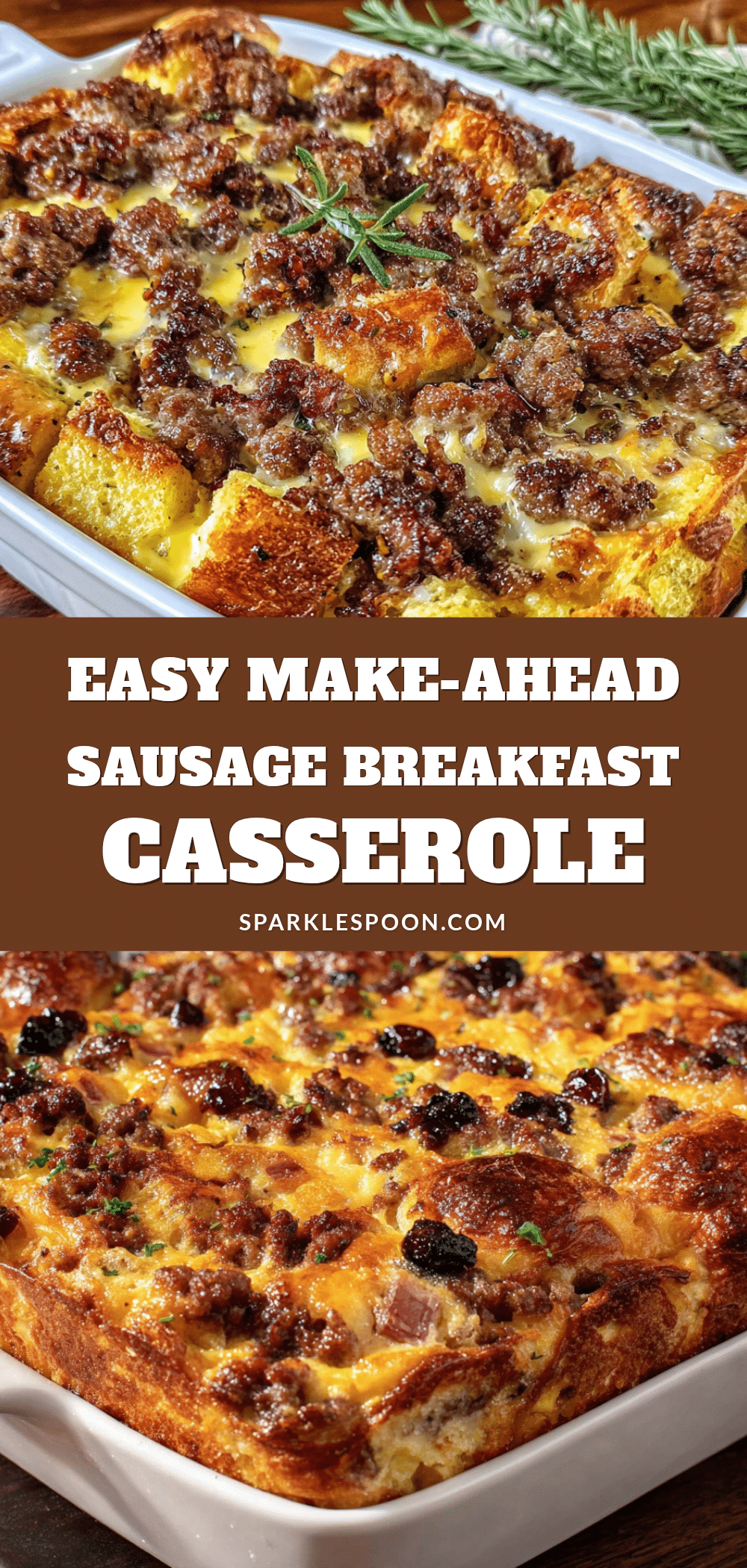
Easy Make-Ahead Sausage Breakfast Casserole

A hearty, make-ahead breakfast casserole with savory sausage, eggs, cheese, and bread that soaks overnight for a perfect custard-like texture. Ideal for busy mornings, holiday brunches, or feeding a crowd with minimal effort.
- Prep Time: 15 minutes
- Cook Time: 50 minutes
- Total Time: 8 hours 5 minutes (includes overnight rest)
- Yield: 8 servings 1x
- Category: Breakfast / Brunch
- Cuisine: American
Ingredients
- 1 lb (450g) breakfast sausage
- 8 large eggs
- 2 cups (480ml) whole milk
- 1 teaspoon (5g) Dijon mustard
- ½ teaspoon (2g) fine sea salt
- ¼ teaspoon (1g) black pepper, freshly ground
- ¼ teaspoon (1g) garlic powder (optional)
- 6 cups (about 300g) stale bread cubes (French bread, sourdough, or Texas toast)
- 2 cups (200g) shredded sharp cheddar cheese
- 2 tablespoons (28g) unsalted butter
- Optional: ¼ cup (15g) chopped fresh parsley for garnish
Instructions
- Brown the sausage: Place a large skillet over medium-high heat. Add the sausage and cook, breaking it up with a spatula, until browned and cooked through—about 6-8 minutes. Set aside to cool slightly.
- Prepare the bread: Cut bread into 1-inch cubes. If bread is fresh, spread on a baking sheet and toast in a 300°F (150°C) oven for about 10 minutes. Let cool.
- Whisk the custard: In a large bowl, whisk eggs until light and frothy. Add milk, Dijon mustard, salt, pepper, and garlic powder. Whisk until well combined.
- Layer the casserole: Grease a 9×13-inch baking dish with butter. Spread half of the bread cubes in an even layer. Sprinkle half of the cooked sausage over the bread. Top with half of the shredded cheese. Repeat layers with remaining bread, sausage, and cheese.
- Pour the custard: Slowly pour the egg mixture evenly over the casserole. Gently press down on the bread with a fork to help it soak up the liquid.
- Rest and refrigerate: Cover tightly with plastic wrap or foil and refrigerate for at least 4 hours, preferably overnight (8-12 hours).
- Bake: Preheat oven to 350°F (175°C). Remove casserole from fridge and let sit for 15 minutes. Bake uncovered for 45-55 minutes, until golden brown and puffed, and a knife inserted in the center comes out clean. If top browns too quickly, cover loosely with foil for the last 15 minutes.
- Rest before serving: Let casserole sit for 5-10 minutes before cutting. Garnish with fresh parsley if desired.
Notes
The overnight rest is crucial for the bread to absorb the custard, creating a soft, pudding-like texture. Use day-old bread for best results. Shred your own cheese for better melting. Let the casserole rest after baking for cleaner slices. For a vegetarian version, omit sausage and add sautéed mushrooms, bell peppers, and onions. For a spicy kick, use hot Italian sausage or chorizo and add red pepper flakes.
Nutrition
- Serving Size: 1 square (1/8 of cas
- Calories: 385
- Sugar: 5
- Fat: 24
- Carbohydrates: 18
- Fiber: 1
- Protein: 24
Keywords: breakfast casserole, make-ahead breakfast, sausage casserole, egg casserole, overnight casserole, holiday brunch, family breakfast