Love this? Save it for later!
Share the inspiration with your friends
My neighbor Marco asked why I couldn’t just throw fresh tomatoes in the pot and let them break down on their own. I started to explain why that wouldn’t work — something about acidity needing to be tamed, about the science of sweating aromatics first. Then I stopped. I had no real reason, honestly. I just always did it the way my grandmother had, starting with canned tomatoes in the dead of winter when fresh ones tasted like cardboard.
So I tried it his way. I picked up a basket of ugly-but-perfect Roma tomatoes from the farmer’s market on a Thursday — the ones with little cracks near the stem, the sweetest ones they almost didn’t sell. I washed them, quartered them roughly, and tossed them into a pot with nothing but olive oil, garlic, and basil from my windowsill. No cream. No stock. No roux. I let them do their thing, stirring maybe twice, and I’ll be honest — I walked away to fold laundry and forgot about them for a solid twenty minutes.
When I came back, the kitchen smelled like August. That specific, almost sweet tomato smell that makes you close your eyes. I blended it with my immersion blender — the cheap one with the scratched-up wand — and added a pinch of salt. That first spoonful stopped me mid-thought. It was bright and silky and tasted like the tomato itself, not like a recipe. Not like work.
Maybe you’ve been there — stuck in a method you learned without ever questioning it. This soup taught me that sometimes the simplest path is the right one. No cream needed. No complicated steps. Just good tomatoes and a little trust. I’ve made it every week since that Thursday, and it still surprises me.
Why You’ll Love This Recipe
This fresh tomato basil soup is the kind of recipe that makes you feel like you’ve been keeping a secret. It’s deceptively simple — five main ingredients, one pot, and about thirty minutes — but it tastes like something you’d order at a fancy little café with mismatched chairs and a chalkboard menu.
- No Cream, No Guilt : The texture comes entirely from the tomatoes themselves. You get that velvety mouthfeel without a drop of heavy cream, which means it’s naturally dairy-free and lighter on the stomach.
- Five Main Ingredients : Tomatoes, garlic, basil, olive oil, salt. That’s it. No running to the store for something obscure you’ll never use again.
- Ready in 30 Minutes : From counter to bowl in about half an hour. Perfect for those evenings when you need something warm and satisfying but don’t want to spend your whole evening in the kitchen.
- Freezer-Friendly : Make a double batch and stash some for later. It actually tastes better after a week in the freezer — the flavors settle into something deeper.
- Crowd-Pleaser : I’ve served this to picky kids, vegan friends, and my uncle who swears he doesn’t like soup. Everyone goes back for seconds.
What makes this different from every other tomato soup recipe out there is the technique — or lack thereof. Most recipes have you roasting tomatoes separately, or building a complicated base with onions and carrots and celery. This one trusts the tomato. You let it be the star, and it rewards you with something genuinely surprising.
I’m not going to tell you this soup changed my life, but I will tell you this: the first time I made it, I ate three bowls. Standing up. Over the sink. And I wasn’t even embarrassed.
What Ingredients You Will Need
This recipe leans hard on the quality of your ingredients because there’s nowhere to hide. No cream to mask dull tomatoes, no heavy seasoning to cover up lackluster basil. But that’s also what makes it so freeing — you don’t need much, you just need what you have to be good.
Core Ingredients
- Fresh tomatoes (2.5 pounds / about 1.1 kg) — Roma or San Marzano work best for their low water content and intense flavor. If you’re using beefsteak or heirloom, just know the soup will be a bit thinner and you might need to simmer it longer to concentrate the flavor. I’ve had great luck with the ugly tomatoes from the farmer’s market — the ones with scars and cracks are often the sweetest.
- Garlic (6-8 cloves, smashed) — Fresh garlic only here. The pre-minced stuff in the jar will taste flat and slightly sour. Smash each clove with the side of your knife so it releases its oils into the soup without needing to be chopped fine.
- Fresh basil (1 cup, loosely packed, plus more for garnish) — This is non-negotiable. Dried basil has its place, but it’s not here. You want the bright, almost peppery sweetness of fresh basil. If your basil looks a little wilted, it’s fine — it’s going to get cooked anyway.
- Extra virgin olive oil (3 tablespoons) — Use a good one here since it’s a primary flavor. I like California Olive Ranch for everyday cooking — it’s reasonably priced and has a nice grassy note that works well with tomatoes.
- Salt (1.5 teaspoons, plus more to taste) — Start with less and adjust at the end. Different salts have different salinity levels, so trust your taste buds over the measurement.
- Optional: Red pepper flakes (¼ teaspoon) — Not traditional, but I love the little warmth it adds. Leave it out if you’re serving kids or sensitive palates.
- Optional: Balsamic vinegar (1 teaspoon) — A tiny splash at the end brightens everything up without tasting like vinegar. I add this about half the time, depending on my mood.
Ingredient Selection Tips
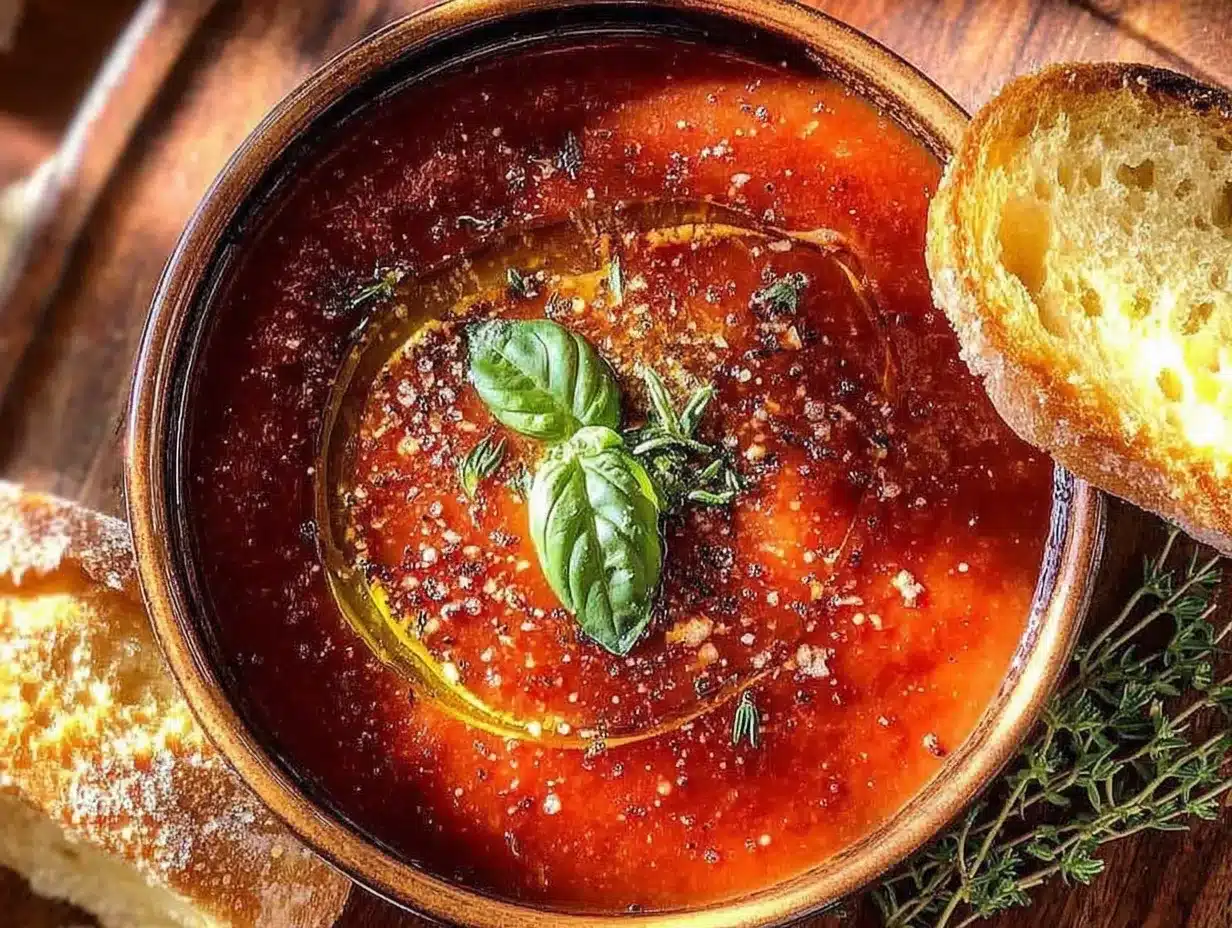
If you can’t find good fresh tomatoes, wait. Seriously. Winter tomatoes from the grocery store are pale, mealy, and taste like disappointment. In that case, use a can of whole San Marzano tomatoes — they’re actually better than bad fresh ones. Just crush them with your hands before adding them to the pot.
For the basil, look for leaves that are bright green without black spots or yellowing. If your grocery store’s basil looks sad, check the herb section for hydroponic basil that still has roots attached — it lasts longer and has better flavor.
Equipment Needed
- Large heavy-bottomed pot or Dutch oven — A 5-quart pot is ideal. The heavy bottom prevents the tomatoes from scorching before they release their liquid. I use my trusty Lodge enameled Dutch oven that has a small chip on the rim — it’s ugly but reliable.
- Immersion blender — This is the easiest way to get a smooth soup without transferring hot liquid to a countertop blender. If you don’t have one, you can use a regular blender in batches — just let the soup cool slightly first and hold the lid down with a kitchen towel.
- Chef’s knife and cutting board — A sharp knife makes quick work of quartering tomatoes. Dull knives squish them and you lose juice.
- Wooden spoon or spatula — For stirring. Metal can scratch enameled pots.
- Measuring cups and spoons — Though honestly, I eyeball most of this now. But for your first time, measure so you know what it should look like.
If you don’t have an immersion blender, don’t run out and buy one just for this. A regular blender works fine — just be careful with the hot liquid and work in small batches. I used my grandmother’s old Oster blender for years before I got my immersion blender, and it made perfectly smooth soup every time.
Preparation Method
- Wash and quarter the tomatoes (5 minutes). Rinse your tomatoes under cool water and pat them dry. Cut out the core — that little greenish-white part at the top where the stem attaches. Then cut each tomato in half through the equator, then each half into quarters. Don’t worry about making them uniform. They’re going to get blended anyway. Leave the skins on — they contain tons of flavor and fiber, and the blender will take care of them.
- Smash the garlic (1 minute). Take each clove and lay the flat side of your chef’s knife on top. Give it a firm smack with your palm. The skin will loosen and you can peel it off easily. Leave the cloves whole — just smashed open. You want them to release flavor without turning into tiny bits that might not blend completely.
- Heat the olive oil (2 minutes). Place your pot over medium heat and add the olive oil. Let it warm up for about a minute — you should see it shimmer slightly but not smoke. If it starts smoking, your heat is too high.
- Cook the garlic (3 minutes). Add the smashed garlic cloves to the warm oil. Let them sizzle gently for about 2-3 minutes, stirring once. You want them to soften and become fragrant, not brown. If they start to take on color, turn the heat down. Burnt garlic tastes bitter and will ruin your soup.
- Add the tomatoes (1 minute). Dump all the quartered tomatoes into the pot. They’ll hiss and sputter a bit — that’s normal. Stir everything together so the garlic gets distributed. Add the salt and stir again.
- Add the basil (30 seconds). Toss in the whole basil leaves — stems and all. The stems have lots of flavor, and they’ll soften during cooking. Don’t chop the basil first; whole leaves are easier to blend later.
- Simmer (20-25 minutes). Bring the mixture to a gentle simmer — you should see small bubbles breaking the surface, not a rolling boil. Reduce the heat to medium-low and let it cook uncovered. Stir every 5 minutes or so, scraping the bottom to make sure nothing is sticking. The tomatoes will break down and release their liquid, creating a chunky sauce. After about 20 minutes, the tomatoes should be completely soft and falling apart. The liquid should have reduced slightly, concentrating the flavor.
- Blend (2 minutes). Remove the pot from the heat. If using an immersion blender, submerge it fully and blend until smooth — about 60-90 seconds. Move the blender in slow circles to catch any missed chunks. If using a countertop blender, let the soup cool for 10 minutes first, then blend in batches, filling the blender no more than halfway. Hold the lid down with a folded kitchen towel to prevent hot soup from erupting.
- Taste and adjust (1 minute). Ladle a small amount into a spoon and taste it. Does it need more salt? A pinch of sugar to balance acidity? A tiny splash of balsamic vinegar? Adjust in small increments — you can always add more, but you can’t take it out.
- Serve (2 minutes). Ladle into bowls and garnish with fresh basil leaves and a drizzle of good olive oil. If you’re feeling fancy, a swirl of balsamic reduction looks beautiful and adds a touch of sweetness.
Sensory cues at each stage: When the garlic hits the oil, you should smell it immediately — that warm, savory aroma. When the tomatoes go in, the sound should be a gentle sizzle, not a aggressive hiss. By the time the soup is ready to blend, the kitchen should smell like summer in a jar — sweet, herbal, and deeply tomato-y. The finished soup should coat the back of a spoon without being thick like a sauce. It should be silky, not watery.
Cooking Tips & Techniques
Don’t rush the simmer. I know it’s tempting to crank the heat and get dinner on the table faster, but tomatoes need time to break down properly. The difference between a 15-minute simmer and a 25-minute simmer is the difference between okay soup and memorable soup. The longer simmer concentrates the flavor and allows the tomatoes to release their natural pectin, which gives the soup body without any cream.
Salt at the beginning and end. This is something I learned after making flat soup for years. Salt draws out moisture from the tomatoes early on, helping them break down faster. But you also need a final pinch at the end because salt loses its brightness during cooking. Season in layers, not all at once.
Watch your heat. I burned my first batch of this soup because I walked away to take a phone call and the heat was too high. The bottom scorched and the whole pot tasted like a campfire. Keep it at a gentle simmer — you should see lazy bubbles, not frantic ones. If you’re not sure, err on the side of lower heat. You can always simmer longer to thicken it.
Blend carefully. Hot soup in a blender is genuinely dangerous. The steam builds pressure and can blow the lid off, sending hot liquid everywhere. If you’re using a countertop blender, let the soup cool for at least 10 minutes, remove the center cap from the lid, and cover the opening with a kitchen towel. This allows steam to escape while you blend.
Taste as you go. I cannot stress this enough. Your tomatoes might be sweeter or more acidic than mine. Your salt might be finer or coarser. Your garlic might be more pungent. The only way to know if your soup is balanced is to taste it. I taste at the beginning, halfway through, right after blending, and right before serving. It takes five seconds and saves you from serving something disappointing.
One mistake I still make: Adding too much basil. I love basil, so I always want to add more. But too much basil makes the soup taste like pesto, not tomato soup. Stick to about one cup loosely packed, and you’ll get that perfect herbal note without it taking over.
Variations & Adaptations
Roasted Tomato Version : For a deeper, smokier flavor, roast the quartered tomatoes at 400°F for 25 minutes before adding them to the pot. Toss them with olive oil, salt, and the smashed garlic first. The roasting caramelizes the natural sugars and adds a complexity that’s fantastic for fall. This version works beautifully if your tomatoes are slightly underripe.
Spicy Tomato Basil Soup : Add ½ teaspoon of red pepper flakes along with the garlic, or throw in a whole dried chile de árbol. The heat builds slowly and stays in the background — it won’t make your soup spicy in an obvious way, just warm and interesting. I do this when I’m serving the soup with grilled cheese and want a little contrast.
Herb Variation : Swap half the basil for fresh oregano or thyme. Oregano gives the soup a more Mediterranean feel, while thyme adds an earthy, almost woodsy note. Both work especially well if you’re serving the soup with crusty bread and olive oil for dipping.
Vegan and Whole30 Compliant : This recipe is naturally vegan and Whole30-friendly as written. No modifications needed. Just skip the optional sugar and you’re good to go. It’s also paleo-friendly since there are no grains or legumes involved.
Thicker Soup : If you prefer a heartier texture, add a peeled and diced potato along with the tomatoes. The potato will break down during cooking and add body without changing the flavor. I tried this once when I had a potato that needed using up, and it was surprisingly good — though purists might argue it’s not the same soup.
Make It a Meal : Stir in a cup of cooked white beans or chickpeas after blending for added protein and fiber. The beans blend right in and make the soup more substantial without changing the texture much. I do this when I want a one-bowl dinner that will keep me full until breakfast.
Serving & Storage Suggestions
This soup is best served hot, right after blending, when the flavors are brightest and the texture is silkiest. Ladle it into warmed bowls — just run them under hot water for a few seconds and dry them off — so the soup stays hot longer. Top with fresh basil leaves, a drizzle of good olive oil, and maybe some cracked black pepper.
What to serve with it: A classic grilled cheese sandwich is the obvious pairing, and for good reason. The crispy, buttery bread and melted cheese are perfect for dipping. If you want something lighter, try a simple green salad with lemon vinaigrette, or crusty bread rubbed with garlic and toasted in the oven. I’ve also served this soup with a side of roasted vegetables for a low-carb meal that feels completely satisfying.
Storage: Let the soup cool completely to room temperature before storing. Transfer it to an airtight container and refrigerate for up to 5 days. The flavors actually meld and deepen overnight, so day-old soup is often better than fresh. Don’t leave it on the counter for more than 2 hours — tomatoes are acidic but they can still spoil.
Freezing: This soup freezes beautifully. Pour cooled soup into freezer-safe containers or zip-top bags, leaving an inch of headroom for expansion. Freeze flat in bags for easy stacking. It will keep for up to 3 months. Thaw overnight in the refrigerator and reheat gently on the stovetop.
Reheating: Warm the soup over medium-low heat, stirring occasionally. If it thickened during storage — which it will, especially if you used Roma tomatoes — add a splash of water or vegetable broth to thin it back to your preferred consistency. Don’t microwave it if you can avoid it; the texture gets weird and the flavor loses its brightness.
Flavor development note: I’ve noticed this soup tastes best on day two or three. The garlic mellows out, the basil integrates more fully, and the tomato flavor becomes rounder and less sharp. If you’re making it for a dinner party, make it a day ahead and thank yourself later.
Nutritional Information & Benefits
This soup is as healthy as it is delicious. One serving (about 1.5 cups) contains approximately:
- Calories: 145
- Fat: 8g (mostly from olive oil)
- Carbohydrates: 18g
- Fiber: 5g
- Protein: 4g
- Vitamin C: 45% of daily value
- Vitamin A: 35% of daily value
- Potassium: 600mg
Health highlights: Tomatoes are packed with lycopene, a powerful antioxidant that’s been linked to heart health and reduced inflammation. Cooking tomatoes actually increases the bioavailability of lycopene, so this soup is an excellent way to get that benefit. The olive oil adds healthy monounsaturated fats, which help your body absorb the lycopene more effectively. Garlic has immune-boosting properties, and basil provides vitamin K and anti-inflammatory compounds.
Dietary considerations: This recipe is naturally gluten-free, dairy-free, vegan, and Whole30-compliant. It contains no nuts, soy, or eggs. The only potential allergen is garlic, which some people with FODMAP sensitivities may need to avoid. If that’s you, try using garlic-infused olive oil instead of whole cloves — you’ll get the flavor without the FODMAPs.
I love that this soup feels indulgent but is genuinely good for you. It’s the kind of meal that nourishes without weighing you down, perfect for when you want something comforting that doesn’t put you in a food coma.
Conclusion
This fresh tomato basil soup has become my go-to for so many reasons. It’s fast enough for a weeknight, fancy enough for company, and simple enough that I can make it without thinking. The fact that it doesn’t need cream still feels like a small miracle — a reminder that good ingredients don’t need much help to shine.
I hope you’ll try it and make it your own. Maybe you’ll add a pinch of smoked paprika, or swirl in some pesto at the end, or serve it with a mountain of croutons. That’s the beauty of a simple recipe — it leaves room for your personality to come through.
If you make this soup, I’d love to hear about it. Drop a comment below and tell me how it turned out, or share your own twist on it. And if you’re looking for another simple, comforting recipe, you might enjoy this rustic crusty bread that’s perfect for dipping. Happy cooking, friends — may your tomatoes be sweet and your soup be silky.
Frequently Asked Questions
Can I use canned tomatoes instead of fresh?
Absolutely. If fresh tomatoes aren’t in season, a 28-ounce can of whole San Marzano tomatoes works beautifully. Drain them and crush them with your hands before adding. The soup will be slightly less bright but still delicious.
Why does my tomato soup taste acidic?
Tomatoes vary in acidity depending on variety and ripeness. If your soup tastes sharp, add a pinch of sugar or a splash of balsamic vinegar. The sugar balances acidity, and the vinegar adds complexity that masks the sharpness. Start with ½ teaspoon of sugar and adjust from there.
Can I make this soup in advance?
Yes, and I actually recommend it. The flavors deepen overnight and the texture improves. Make it a day ahead, refrigerate, and reheat gently. It’s one of those rare recipes that’s better on day two.
How do I make the soup thicker?
Simmer it longer to reduce the liquid, or add a peeled potato along with the tomatoes. The potato breaks down and adds body without changing the flavor. You can also blend in a tablespoon of tomato paste for extra thickness and concentrated tomato flavor.
Can I freeze this soup?
Yes, it freezes wonderfully. Cool completely, transfer to freezer-safe containers, and freeze for up to 3 months. Thaw overnight in the refrigerator and reheat on the stovetop. The texture may be slightly different after freezing, but the flavor will still be excellent.
Pin This Recipe!
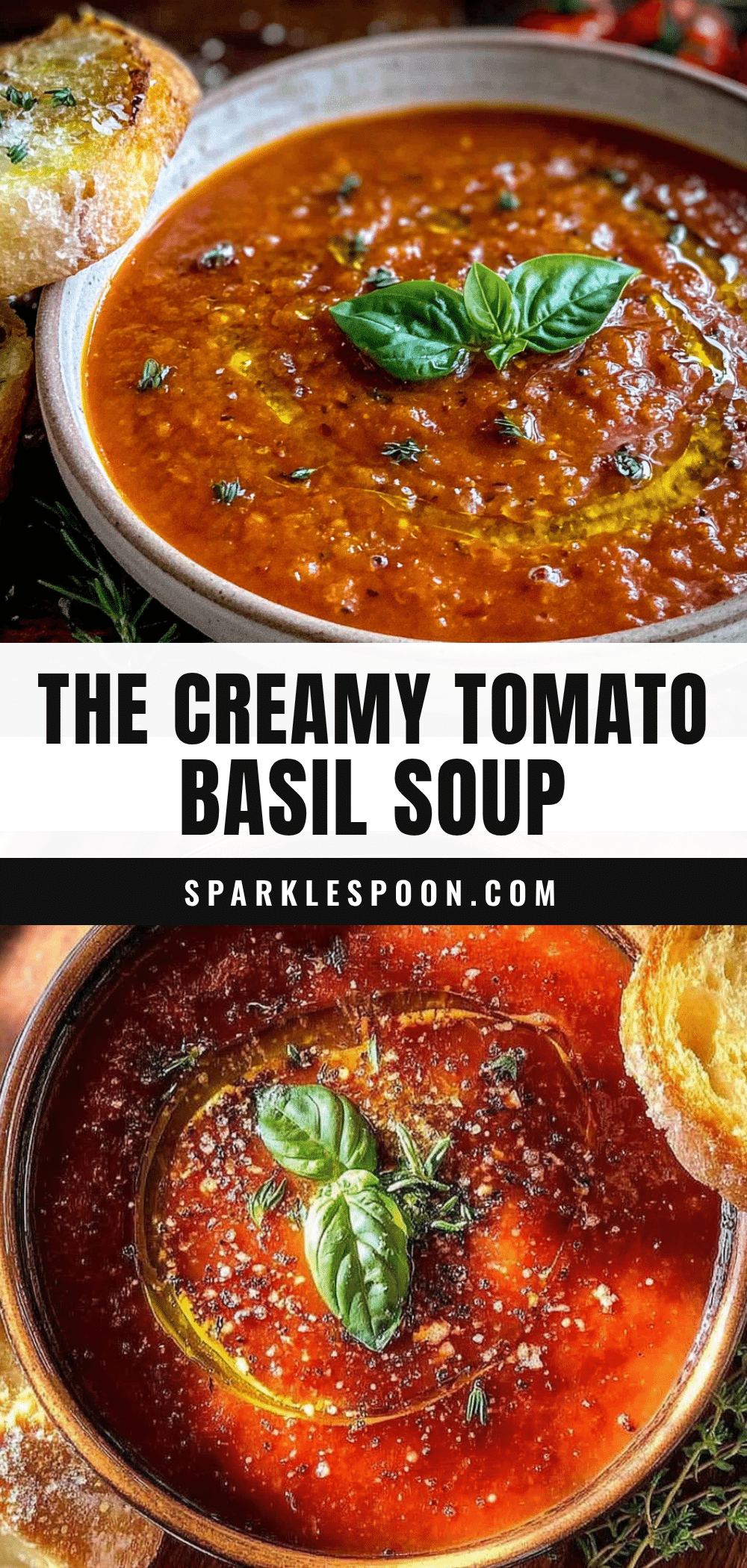
Easy Fresh Tomato Basil Soup (Best No-Cream Recipe)
This fresh tomato basil soup is deceptively simple — five main ingredients, one pot, and about thirty minutes — but it tastes like something you’d order at a fancy little café. No cream needed, just good tomatoes and a little trust.
- Prep Time: 10 minutes
- Cook Time: 25 minutes
- Total Time: 35 minutes
- Yield: 4 servings 1x
- Category: Soup
- Cuisine: Italian
Ingredients
- 2.5 pounds (about 1.1 kg) fresh Roma or San Marzano tomatoes, quartered
- 6–8 cloves garlic, smashed
- 1 cup fresh basil leaves, loosely packed, plus more for garnish
- 3 tablespoons extra virgin olive oil
- 1.5 teaspoons salt, plus more to taste
- ¼ teaspoon red pepper flakes (optional)
- 1 teaspoon balsamic vinegar (optional)
Instructions
- Wash and quarter the tomatoes. Rinse tomatoes under cool water and pat dry. Cut out the core, then cut each tomato in half through the equator, then each half into quarters. Leave the skins on.
- Smash the garlic. Lay the flat side of a chef’s knife on each clove and give it a firm smack with your palm. Peel off the skin and leave cloves whole.
- Heat the olive oil in a large heavy-bottomed pot or Dutch oven over medium heat until shimmering, about 1 minute.
- Cook the garlic. Add smashed garlic cloves to the warm oil and let them sizzle gently for 2-3 minutes, stirring once, until fragrant but not browned.
- Add the tomatoes. Dump all quartered tomatoes into the pot. Stir to distribute garlic. Add salt and stir again.
- Add the basil. Toss in whole basil leaves, stems and all. Do not chop.
- Simmer. Bring mixture to a gentle simmer over medium-low heat. Cook uncovered for 20-25 minutes, stirring every 5 minutes, until tomatoes are completely soft and falling apart and liquid has reduced slightly.
- Blend. Remove pot from heat. Using an immersion blender, blend until smooth, about 60-90 seconds. If using a countertop blender, let soup cool for 10 minutes first, then blend in batches, filling blender no more than halfway. Hold lid down with a kitchen towel.
- Taste and adjust. Add more salt, a pinch of sugar, or a splash of balsamic vinegar as needed.
- Serve. Ladle into bowls and garnish with fresh basil leaves and a drizzle of good olive oil.
Notes
Don’t rush the simmer — the difference between 15 and 25 minutes is significant. Salt at the beginning and end for best flavor. Watch your heat to avoid scorching. If using a countertop blender, let soup cool before blending and hold lid down with a towel. Taste as you go. Stick to about 1 cup of basil to avoid it tasting like pesto. This soup tastes even better on day two or three.
Nutrition
- Serving Size: 1.5 cups
- Calories: 145
- Sugar: 10
- Sodium: 600
- Fat: 8
- Saturated Fat: 1
- Carbohydrates: 18
- Fiber: 5
- Protein: 4
Keywords: tomato basil soup, fresh tomato soup, no cream tomato soup, easy tomato soup, dairy-free soup, vegan soup, healthy soup, summer soup