Love this? Save it for later!
Share the inspiration with your friends
My neighbor Margot watched me struggling with a sticky, over-hydrated dough that was clinging to everything but the bowl. She didn’t say anything at first. Then she just reached into her apron pocket, pulled out a scrap of paper with handwriting I could barely read, and placed it on my counter. “Try this one,” she said. “It doesn’t fight back.” That scrap of paper turned out to be the starting point for what I now call my absolute favorite bread to make—this No-Knead Sourdough Focaccia with Rosemary.
Honestly, I was skeptical at first. I mean, focaccia without kneading? That sounded like a shortcut that would leave me with a dense, sad pancake instead of that pillowy, golden bread I dreamed about. But Margot has been baking since before I was born, and she knows her stuff. The first time I tried her method, I let me tell you, I nearly cried when I pulled that pan out of the oven. The top was crackling with olive oil, the rosemary had turned crispy and fragrant, and the bottom had this perfectly golden crust that made the most incredible sound when I tapped it.
Here’s the thing about this No-Knead Sourdough Focaccia with Rosemary—it taught me that good bread doesn’t have to be complicated. It just needs time, patience, and a little bit of trust in the process. The sourdough starter does all the heavy lifting, developing flavor and structure while you go about your day. Maybe you’ve been there, staring at a complicated bread recipe and thinking, “I don’t have time for this.” I get it. But this one? This one changes the game. It’s the recipe that made me fall in love with baking bread all over again, and I keep making it because it never lets me down.
Why You’ll Love This Recipe
Let me be real with you for a second. I’ve tested a lot of focaccia recipes over the years—some that required hours of kneading, others that called for weird ingredients I had to special order. This No-Knead Sourdough Focaccia with Rosemary is the one I keep coming back to, and here’s why it’s going to become your go-to bread too.
- No Kneading Required : Seriously, zero kneading. The gluten develops naturally over time thanks to the long fermentation. Your arms get a break, and your starter does the work.
- Simple Ingredients : You probably have everything in your pantry right now. Flour, water, salt, olive oil, rosemary, and your sourdough starter. That’s it.
- Perfect for Beginners and Pros : Whether you’ve never baked bread before or you’re a seasoned baker looking for a low-effort option, this recipe delivers every single time.
- Incredible Texture : The inside is soft and airy with those beautiful irregular holes, while the outside gets this irresistible crispy, golden crust.
- Make-Ahead Friendly : The dough is actually better when it rests overnight in the fridge. You can prep it the day before and bake it fresh when you’re ready.
- Crowd-Pleaser : I’ve brought this to potlucks, dinner parties, and family gatherings. It disappears faster than anything else on the table. People always ask for the recipe.
What makes this No-Knead Sourdough Focaccia with Rosemary different from every other focaccia out there? It’s the combination of that tangy sourdough flavor with the aromatic rosemary and the generous amount of olive oil that creates this almost fried-like crust. It’s not just another bread recipe—it’s the kind that makes you close your eyes after the first bite and forget everything else for a moment.
What Ingredients You Will Need
This recipe uses simple, wholesome ingredients to deliver that signature focaccia texture and flavor. Most of these are pantry staples, which means you can whip this up without a special trip to the store. Here’s what you’ll need:
For the Dough
- 500 grams (4 cups) bread flour – I prefer King Arthur Flour for its consistent protein content, but any good bread flour works. All-purpose flour can be used in a pinch, but the texture won’t be quite as chewy.
- 400 grams (1 2/3 cups) warm water – About 80°F (27°C). Too hot will kill your starter, too cold will slow down fermentation.
- 150 grams (3/4 cup) active sourdough starter – Make sure it’s bubbly and doubled in size. A hungry starter won’t give you the rise you need.
- 10 grams (2 teaspoons) fine sea salt – Don’t skip this. Salt is crucial for flavor and gluten development.
- 15 grams (1 tablespoon) olive oil – For the dough itself. Use a good quality extra virgin olive oil here.
For the Topping
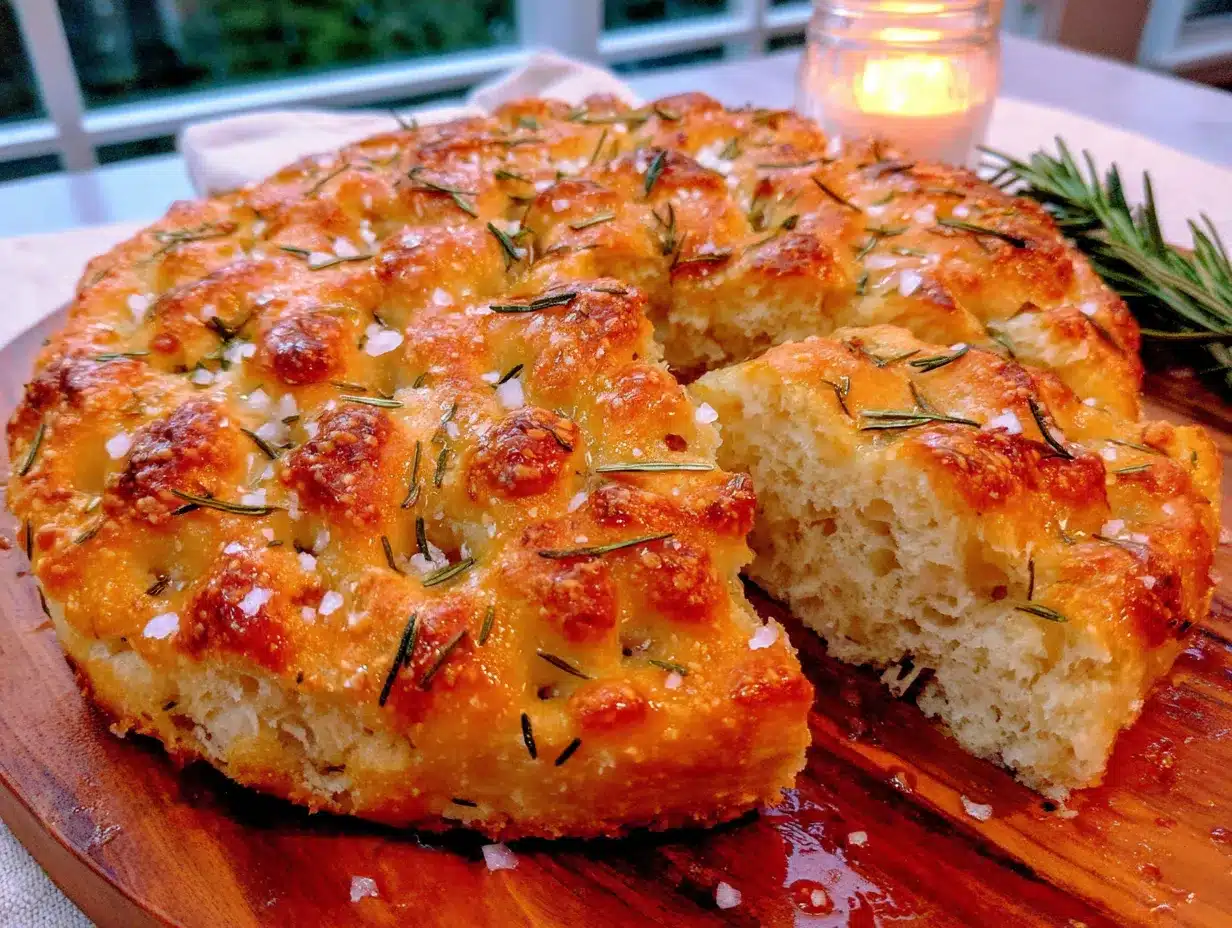
- 60 ml (1/4 cup) olive oil – This goes into the pan and gets generously drizzled on top. Don’t skimp—this is what creates that incredible crispy bottom and golden crust.
- 2 tablespoons fresh rosemary, finely chopped – Fresh is non-negotiable here. Dried rosemary just doesn’t have the same aromatic punch. I grow my own, but grocery store fresh rosemary works perfectly.
- Flaky sea salt, for finishing – Maldon salt is my go-to. The large flakes add a lovely crunch and burst of saltiness.
- Optional: Fresh thyme or oregano – If you want to mix up the herbs, a sprinkle of thyme adds a lovely earthy note.
Ingredient Tips and Substitutions
If you don’t have bread flour, you can substitute all-purpose flour, but the focaccia will be a bit less chewy and have a slightly softer crumb. For a whole wheat version, replace up to 50% of the bread flour with whole wheat flour—just note that the dough will be denser and may need a bit more water. If you’re gluten-free, this recipe isn’t ideal as written, but there are gluten-free sourdough starters you can experiment with.
For the rosemary, I’ve used dried in an emergency, and honestly, it’s not the same. Fresh rosemary has this piney, almost citrusy quality that really shines when it gets toasted in the hot olive oil. If you can’t find fresh rosemary, try fresh thyme or even chopped sage for a different but equally delicious flavor profile.
Equipment Needed
You don’t need a lot of fancy equipment for this No-Knead Sourdough Focaccia with Rosemary, which is part of what makes it so approachable. Here’s what you’ll need:
- A large mixing bowl – Glass or ceramic works best. Avoid metal bowls if you can, as they can sometimes react with the dough over long fermentation.
- A 9×13 inch baking pan – A metal pan gives you the crispiest bottom. Glass or ceramic will work, but the crust won’t be quite as crunchy. I use a half-sheet pan for a slightly thinner focaccia.
- A kitchen scale – I cannot recommend this enough. Measuring by weight gives you consistent results every time. A cup of flour can vary by 30 grams depending on how you scoop it.
- A bench scraper or spatula – For folding the dough. A rubber spatula works perfectly.
- Plastic wrap or a damp kitchen towel – To cover the dough while it rests.
- Optional: A proofing basket or banneton – Not necessary, but if you want to get fancy, it helps the dough hold its shape during the final rise.
If you don’t have a kitchen scale, you can use measuring cups, but be aware that the results might vary. I’ve been there—measuring flour with cups and wondering why my dough was too dry. A scale is a twenty-dollar investment that will transform your baking.
Preparation Method
Alright, let’s get to the good part. This No-Knead Sourdough Focaccia with Rosemary comes together in a way that feels almost too easy. Trust the process, and you’ll be rewarded with the most incredible bread.
Step 1: Mix the Dough (5 minutes)
In your large mixing bowl, combine the warm water and active sourdough starter. Stir until the starter is mostly dissolved—you’ll still see a few small bubbles floating around, and that’s perfectly fine. Add the bread flour and salt, then use a spatula or your hands to mix until everything comes together into a shaggy, sticky dough. It will look rough and uneven, and that’s exactly what you want. Cover the bowl with plastic wrap or a damp towel and let it rest for 30 minutes. This rest period, called autolyse, allows the flour to fully hydrate and starts the gluten development process.
Step 2: The Folds (30 minutes total)
After the rest, it’s time for the folds. Wet your hands slightly to prevent sticking, then grab one corner of the dough, stretch it up, and fold it over the top of the dough. Rotate the bowl a quarter turn and repeat. Do this four times total, giving the bowl a full rotation. Cover the dough again and let it rest for 30 minutes. Repeat this folding process three more times, with 30-minute rests in between. By the end, you’ll notice the dough has become smoother, more elastic, and is starting to hold its shape better. It’s still sticky, but it has structure now.
Step 3: Bulk Fermentation (4-6 hours at room temperature or overnight in the fridge)
Cover the bowl tightly with plastic wrap and let it sit at room temperature for 4 to 6 hours, or until the dough has nearly doubled in size and is covered in bubbles. The time will vary depending on the temperature of your kitchen and the strength of your starter. On a warm summer day, it might be ready in 4 hours. In a cooler kitchen, it might take 6 or even 8 hours. You’re looking for a dough that’s puffy, jiggly, and full of life. For the best flavor, you can transfer the dough to the fridge after the first 2 hours and let it cold ferment overnight. This slow fermentation develops a deeper, more complex sourdough tang.
Step 4: Prepare the Pan and Shape the Dough (10 minutes)
When your dough is ready, pour 3 tablespoons of the olive oil into your 9×13 inch baking pan. Use your fingers to spread it evenly across the bottom and up the sides. Gently scrape the dough out of the bowl and into the oiled pan. Don’t punch it down or deflate it—you want to preserve as many of those beautiful bubbles as possible. Let the dough rest for 15 minutes, then use your fingertips to gently press and stretch it toward the edges of the pan. If it resists, let it rest another 10 minutes and try again. The dough should fill the pan evenly, though it might not reach all the corners perfectly.
Step 5: Final Proof (1.5 to 2 hours)
Cover the pan loosely with plastic wrap or a damp towel and let the dough rise again until it’s puffy and has nearly doubled in height. This usually takes about 1.5 to 2 hours at room temperature. You’ll know it’s ready when you gently poke it and the indentation springs back slowly. If it springs back immediately, it needs more time. If the indentation stays, it’s over-proofed, but don’t worry—it will still taste delicious.
Step 6: Dimple and Top (5 minutes)
Preheat your oven to 425°F (220°C) with a rack in the middle position. Once the dough is proofed, drizzle the remaining tablespoon of olive oil over the top. Now for the fun part—using your fingertips, press deep dimples all over the surface of the dough. Don’t be shy here. You want to create those signature focaccia wells that will hold the olive oil and rosemary. Sprinkle the chopped fresh rosemary evenly over the top, followed by a generous pinch of flaky sea salt.
Step 7: Bake (25 to 30 minutes)
Place the pan in the preheated oven and bake for 25 to 30 minutes, or until the top is deep golden brown and the bottom sounds hollow when you tap it. If you have an instant-read thermometer, the internal temperature should be around 205°F (96°C). Every oven is different, so start checking at 22 minutes. You’re looking for that perfect golden color and a crust that crackles when you press it.
Step 8: Cool and Serve (15 minutes minimum)
Remove the focaccia from the oven and let it cool in the pan for 5 minutes. Then transfer it to a wire rack to cool for at least 10 more minutes before cutting. I know it’s tempting to tear into it immediately, but letting it cool allows the crumb to set properly. Plus, the flavors continue to develop as it cools. Cut it into squares or strips and serve warm or at room temperature.
Cooking Tips & Techniques
Over the years, I’ve made this No-Knead Sourdough Focaccia with Rosemary more times than I can count, and I’ve learned a few things the hard way. Let me save you some trouble.
Use a strong starter. This is the most important factor for a good rise. Your starter should be fed 4 to 8 hours before you mix the dough, and it should be at its peak—bubbly, doubled, and smelling fruity and tangy. A weak starter will give you a dense, flat focaccia. If you’re not sure, do the float test: drop a small spoonful of starter into a glass of water. If it floats, it’s ready. If it sinks, feed it again and wait.
Don’t rush the fermentation. The long, slow rise is what develops the flavor and texture. If you’re short on time, you can speed things up by using a warmer spot in your kitchen, but the flavor won’t be as deep. Cold fermentation in the fridge overnight is my preferred method—it gives you that complex sourdough tang that makes this bread so special.
Be generous with the olive oil. Focaccia is essentially fried bread, and the olive oil is what gives it that incredible crust. Don’t be afraid to use a full 1/4 cup in the pan. The oil also prevents sticking and creates those crispy, golden edges that everyone fights over.
Wet your fingers for dimpling. The dough will be sticky, so wet your fingertips with a little water or olive oil before pressing those dimples. This prevents the dough from sticking to your fingers and tearing. Deep dimples are essential—they create pockets that hold the oil and herbs, giving you those flavorful little wells in every bite.
Watch the oven temperature. Every oven runs differently. If your focaccia is browning too quickly on top but still seems underdone in the middle, tent it loosely with foil and continue baking. If it’s taking too long to brown, increase the temperature by 25°F (14°C) for the last 5 minutes.
Variations & Adaptations
One of the best things about this No-Knead Sourdough Focaccia with Rosemary is how adaptable it is. Here are some of my favorite variations:
Herb and Garlic Focaccia
Replace the rosemary with a mix of fresh thyme, oregano, and minced garlic. Add the garlic to the olive oil in the pan before adding the dough—it infuses the oil with flavor and roasts the garlic until it’s sweet and tender. This version is incredible served alongside pasta or soup.
Everything Bagel Focaccia
After dimpling the dough, sprinkle it with everything bagel seasoning (sesame seeds, poppy seeds, dried garlic, dried onion, and salt). The seeds toast in the oven and create this crunchy, flavorful crust that’s absolutely addictive. My kids beg for this version.
Roasted Tomato and Basil Focaccia
Press halved cherry tomatoes into the dimples before baking, and scatter fresh basil leaves over the top. The tomatoes roast and caramelize, creating little bursts of sweetness throughout the bread. This is perfect for summer when tomatoes are at their peak.
Cheese Lover’s Focaccia
Sprinkle grated Parmesan or crumbled feta over the top before baking. The cheese melts and gets crispy in the oven, adding a salty, savory element that pairs beautifully with the rosemary. I’ve also used shredded mozzarella for a more gooey, pull-apart texture.
Gluten-Free Adaptation
If you need a gluten-free version, you can use a gluten-free sourdough starter and a gluten-free all-purpose flour blend. The texture will be slightly different—more tender and less chewy—but it’s still delicious. Add an extra tablespoon of olive oil to compensate for the lack of gluten structure.
Serving & Storage Suggestions
This No-Knead Sourdough Focaccia with Rosemary is incredibly versatile when it comes to serving. Here’s how I like to enjoy it:
Serving Temperature: Focaccia is best served warm or at room temperature. If you’ve made it ahead, pop it in a 350°F (175°C) oven for 5 to 7 minutes to re-crisp the crust. Avoid microwaving it—that will make it soggy.
Presentation: Cut the focaccia into squares or long strips and arrange them on a wooden board or platter. Drizzle with a little extra olive oil and sprinkle with fresh rosemary for a beautiful presentation. It’s perfect for appetizers, side dishes, or just snacking.
Pairings: This bread is amazing alongside soups, salads, pasta dishes, or grilled meats. It’s also fantastic for making sandwiches—split a piece in half and fill it with roasted vegetables, fresh mozzarella, and pesto. For a simple appetizer, serve it with a bowl of good olive oil and balsamic vinegar for dipping.
Storage: Store leftover focaccia in an airtight container at room temperature for up to 3 days. Do not refrigerate it—the cold will dry it out and make it stale faster. If you need to keep it longer, wrap it tightly in plastic wrap and freeze it for up to 3 months. To thaw, let it come to room temperature on the counter, then reheat in the oven.
Flavor Development: Here’s a little secret—focaccia actually tastes better the next day. The flavors meld together overnight, and the texture becomes even more tender. If you can resist eating it all fresh, save some for the next day. You’ll be rewarded with an even more delicious bread.
Nutritional Information & Benefits
While this No-Knead Sourdough Focaccia with Rosemary is definitely a treat, it does offer some nutritional benefits worth mentioning. Here’s an approximate breakdown per serving (based on 12 servings):
| Nutrient | Amount per Serving |
|---|---|
| Calories | 220 |
| Total Fat | 9g |
| Saturated Fat | 1.5g |
| Carbohydrates | 30g |
| Fiber | 2g |
| Protein | 5g |
| Sodium | 380mg |
The sourdough fermentation process offers some unique health benefits. The long fermentation breaks down phytic acid, making the minerals in the flour more bioavailable. It also produces beneficial bacteria that can support gut health. The olive oil provides healthy monounsaturated fats and antioxidants, while the rosemary contains compounds with anti-inflammatory properties.
If you’re watching your sodium intake, you can reduce the salt slightly, but keep in mind that salt is essential for gluten development and flavor. For a lower-carb option, you can use a portion of whole wheat flour, though the texture will be denser. This recipe is naturally dairy-free and vegan, making it suitable for a wide range of dietary needs.
Conclusion
This No-Knead Sourdough Focaccia with Rosemary has become a staple in my kitchen for good reason. It’s the kind of recipe that makes you feel like a master baker without any of the stress or complicated techniques. The combination of that tangy sourdough flavor, the aromatic rosemary, and the incredibly crispy, golden crust is something you have to experience to believe.
I love that this recipe is forgiving enough for a beginner but rewarding enough for an experienced baker. It’s perfect for those days when you want homemade bread but don’t have hours to spend kneading and shaping. The long fermentation does all the work, and you get to enjoy the process without the pressure.
I’d love to hear how this focaccia turns out for you. Did you try any of the variations? Did you come up with your own twist? Drop a comment below and let me know—I read every single one and I love seeing your creations. And if you found this recipe helpful, please share it with a friend who needs a little bread in their life. Happy baking, friends!
Frequently Asked Questions
Can I use a sourdough discard for this recipe?
I wouldn’t recommend it for the best results. Active, bubbly starter gives you the rise and flavor you’re looking for. Discard will still work, but your focaccia will be denser and less airy. If you only have discard, add 1/4 teaspoon of instant yeast to help with the rise.
Why is my focaccia dense and flat?
This usually happens for one of three reasons: your starter wasn’t active enough, the dough didn’t ferment long enough, or you deflated it too much when transferring it to the pan. Make sure your starter is bubbly and doubled, give the dough enough time to rise, and handle it gently.
Can I make this recipe without a sourdough starter?
Yes, you can use 1 teaspoon of instant yeast instead of the sourdough starter. Mix it with the warm water and let it sit for 5 minutes before adding the flour. The flavor won’t be as complex, but you’ll still get a delicious focaccia with a great texture.
How do I get those big, irregular holes in my focaccia?
The key is using a high-hydration dough (which this is) and handling it gently. Don’t punch it down or knead it aggressively. The folding process creates those beautiful air pockets, and the long fermentation allows them to develop. Also, use a strong, active starter for the best rise.
Can I freeze this focaccia?
Absolutely. Bake the focaccia, let it cool completely, then wrap it tightly in plastic wrap and place it in a freezer bag. It will keep for up to 3 months. To reheat, thaw it at room temperature, then pop it in a 350°F (175°C) oven for 5 to 7 minutes to refresh the crust.
Pin This Recipe!
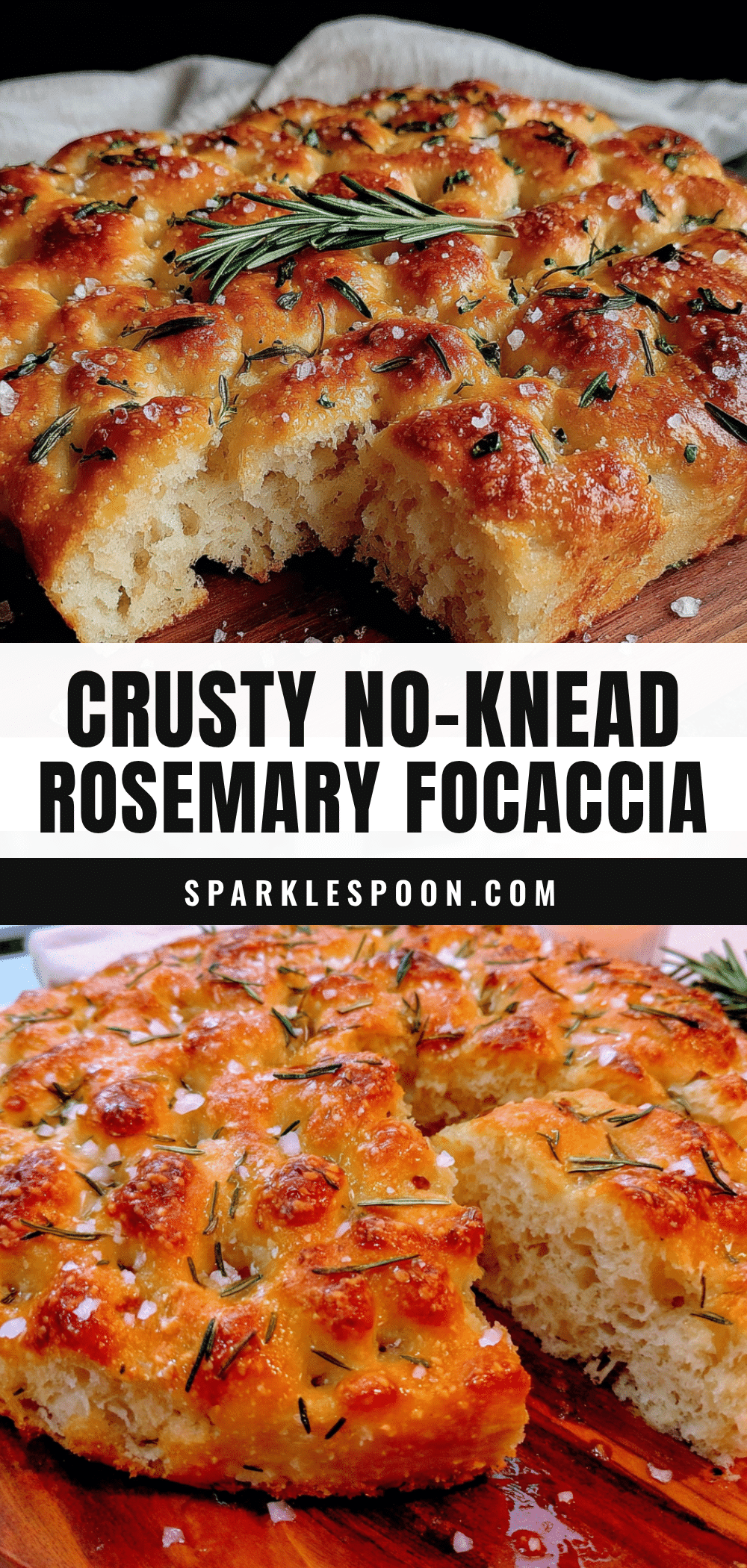
Easy No-Knead Sourdough Focaccia with Fresh Rosemary

This no-knead sourdough focaccia with fresh rosemary is a simple, forgiving bread that delivers a tangy sourdough flavor, a soft and airy interior, and an irresistibly crispy, golden crust. Perfect for beginners and experienced bakers alike, it requires minimal effort and lets the starter do the work.
- Prep Time: 15 minutes
- Cook Time: 30 minutes
- Total Time: 45 minutes (plus 4-6 hours bulk fermentation and 1.5-2 hours final proof)
- Yield: 12 servings 1x
- Category: Bread
- Cuisine: Italian
Ingredients
- 500 grams (4 cups) bread flour
- 400 grams (1 2/3 cups) warm water (about 80°F / 27°C)
- 150 grams (3/4 cup) active sourdough starter (bubbly and doubled)
- 10 grams (2 teaspoons) fine sea salt
- 15 grams (1 tablespoon) olive oil (for the dough)
- 60 ml (1/4 cup) olive oil (for the pan and topping)
- 2 tablespoons fresh rosemary, finely chopped
- Flaky sea salt, for finishing (e.g., Maldon)
- Optional: Fresh thyme or oregano for variation
Instructions
- Mix the Dough: In a large mixing bowl, combine warm water and active sourdough starter. Stir until mostly dissolved. Add bread flour and salt; mix with a spatula or hands until a shaggy, sticky dough forms. Cover with plastic wrap or a damp towel and let rest for 30 minutes (autolyse).
- The Folds: Wet your hands slightly. Grab one corner of the dough, stretch it up, and fold it over the top. Rotate the bowl a quarter turn and repeat. Do this four times total. Cover and rest for 30 minutes. Repeat this folding process three more times, with 30-minute rests in between. The dough will become smoother and more elastic.
- Bulk Fermentation: Cover the bowl tightly and let it sit at room temperature for 4 to 6 hours, or until nearly doubled in size and covered in bubbles. For best flavor, refrigerate overnight after the first 2 hours for a cold ferment.
- Prepare the Pan and Shape: Pour 3 tablespoons of olive oil into a 9×13 inch baking pan and spread evenly. Gently scrape the dough into the pan without deflating it. Let rest for 15 minutes, then use fingertips to gently press and stretch the dough toward the edges. If it resists, rest another 10 minutes and try again.
- Final Proof: Cover the pan loosely and let the dough rise for 1.5 to 2 hours at room temperature, until puffy and nearly doubled in height. It’s ready when a gentle poke springs back slowly.
- Dimple and Top: Preheat oven to 425°F (220°C). Drizzle remaining 1 tablespoon olive oil over the dough. Use fingertips to press deep dimples all over the surface. Sprinkle chopped rosemary and flaky sea salt evenly on top.
- Bake: Place pan in the preheated oven and bake for 25 to 30 minutes, until deep golden brown on top and the bottom sounds hollow when tapped. Internal temperature should be around 205°F (96°C).
- Cool and Serve: Let cool in the pan for 5 minutes, then transfer to a wire rack to cool for at least 10 more minutes before cutting. Serve warm or at room temperature.
Notes
Use a strong, active starter for best rise. Don’t rush fermentation; cold ferment overnight for deeper flavor. Be generous with olive oil for a crispy crust. Wet your fingers before dimpling to prevent sticking. Focaccia tastes even better the next day. Store at room temperature for up to 3 days or freeze for up to 3 months.
Nutrition
- Serving Size: 1 square (based on 1
- Calories: 220
- Sodium: 380
- Fat: 9
- Saturated Fat: 1.5
- Carbohydrates: 30
- Fiber: 2
- Protein: 5
Keywords: sourdough focaccia, no-knead bread, rosemary focaccia, easy bread recipe, sourdough bread, homemade focaccia