Love this? Save it for later!
Share the inspiration with your friends
I was at my local farmers’ market last fall, struggling to juggle a bag of apples and a pumpkin that was definitely too heavy for one hand, when the woman at the next stall just watched me for a moment. Then she laughed and said, “You need a casserole dish and some day-old bread, not all that.” Her name was Clara, and she ran the small bakery stall two rows over. We got to talking, and somewhere between her explaining why she always uses brioche for French toast and me admitting I’d never made a baked version that didn’t turn out soggy, she just wrote her recipe on a napkin. No formal lesson, no fuss—just a conversation between two people who love food. I’ve tweaked it a little over the years, but the heart of it is still hers. Honestly, that napkin is now stained and crinkled, tucked into my favorite cookbook. Let me tell you, this Cozy Baked French Toast Casserole with Maple Syrup is the kind of breakfast that makes a slow Saturday morning feel like a holiday.
This isn’t just another breakfast dish. It’s the one you make when you want the house to smell like cinnamon and vanilla, when you need something that feels special but doesn’t require standing at the stove flipping individual slices. Maybe you’ve been there—waking up on a cold morning, wanting to feed people something warm and sweet, but also wanting to stay in your pajamas a little longer. That’s exactly when this casserole shines. You assemble it the night before, let the bread soak up all that custard goodness, and then just bake it in the morning. It’s practically magic.
The first time I made it for my family, I forgot to set the timer and it came out a little darker than I’d planned. But you know what? Nobody cared. The edges were caramelized, the center was soft, and when I drizzled that maple syrup over the top, everyone just went quiet. That’s when I knew this recipe was a keeper.
Why You’ll Love This Recipe
This Cozy Baked French Toast Casserole with Maple Syrup has become my go-to for so many reasons. I’ve tested it at least a dozen times—sometimes with different breads, once with a slightly burnt sugar topping (don’t ask), and always, always with real maple syrup. It’s the kind of recipe that makes you look like a breakfast hero without actually working that hard.
- Make-Ahead Magic: Assemble it the night before, and in the morning, just pop it in the oven. Perfect for holidays, brunch parties, or those mornings when you need extra coffee before you can function.
- Simple Ingredients: You probably already have eggs, milk, cinnamon, and vanilla in your kitchen. The bread and maple syrup are the only things you might need to grab, and both are worth having on hand.
- Perfect for Cozy Mornings: This is the dish for cold weather, slow weekends, or any day that needs a little extra warmth. It’s comfort food in a baking dish.
- Crowd-Pleaser: I’ve served this to kids who usually pick at breakfast, to adults who claim they don’t eat carbs, and to my neighbor who is notoriously picky. Every single person asked for seconds.
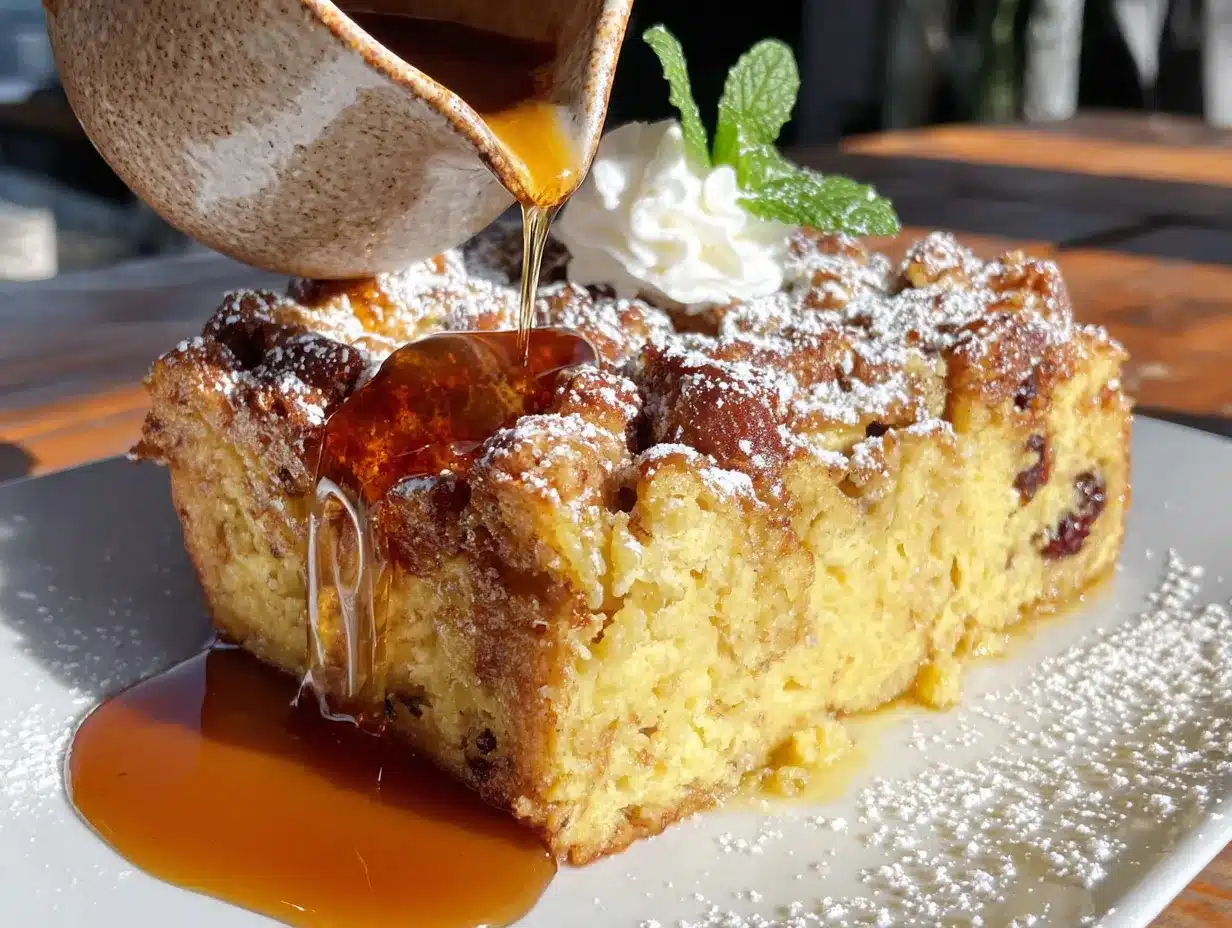
- Unbelievably Delicious: The texture is what gets me every time. The top gets slightly crisp and golden, while the inside stays soft, almost like bread pudding. And that maple syrup? It seeps into every crevice.
What makes this recipe different from the dozens of French toast casseroles out there is the custard-to-bread ratio. I spent a long time getting it just right—enough egg mixture to soak through without making the bread mushy. Plus, I use a mix of whole milk and a little heavy cream for richness, and I let it rest for at least 30 minutes (or overnight) so every bite is perfectly saturated. This isn’t just another version; it’s the one I keep coming back to.
This recipe is the kind that makes you close your eyes after the first bite. It’s comfort food reimagined—easier, faster to prep, but with the same soul-soothing satisfaction. Perfect for impressing guests without stress, or turning a simple Saturday morning into something memorable.
What Ingredients You Will Need
This recipe uses simple, wholesome ingredients to deliver that rich, custard-like texture and warm, spiced flavor. Most of these are pantry staples, and the ones that aren’t are easy to find and totally worth the trip.
- For the Bread:
- 1 loaf (about 12-14 ounces) day-old brioche or challah bread, cut into 1-inch cubes (stale bread soaks up the custard better without falling apart; I prefer brioche for its buttery richness)
- If you can’t find brioche, use a good-quality French bread or even Texas toast—just avoid anything too airy or fresh
- For the Custard:
- 8 large eggs, at room temperature (room temperature eggs whisk more smoothly into the milk)
- 2 cups whole milk (for creaminess; you can use 2% but the texture won’t be as lush)
- 1/2 cup heavy cream (this is the secret to that velvety texture; don’t skip it!)
- 1/2 cup granulated sugar
- 1/4 cup packed light brown sugar (adds a subtle molasses depth)
- 2 teaspoons vanilla extract (use pure vanilla extract, not imitation—it makes a difference)
- 1 teaspoon ground cinnamon
- 1/4 teaspoon ground nutmeg (freshly grated if you have it)
- 1/4 teaspoon salt (balances the sweetness)
- For the Topping:
- 1/2 cup all-purpose flour
- 1/2 cup packed light brown sugar
- 1 teaspoon ground cinnamon
- 1/4 cup cold unsalted butter, cut into small pieces (cold butter creates a crumbly topping; I use Kerrygold for its flavor)
- 1/2 cup chopped pecans or walnuts (optional, but I love the crunch; toast them lightly first for extra flavor)
- For Serving:
- 1/2 cup pure maple syrup (warm it slightly before drizzling—trust me on this)
- Optional: fresh berries, a dusting of powdered sugar, or a dollop of whipped cream
When choosing your bread, look for something sturdy. I’ve made this with a slightly stale croissant once, and while it was delicious, it was also a bit too delicate. Brioche or challah holds up beautifully. For the maple syrup, please use the real stuff. I know it’s pricier, but the fake syrup is too thin and sweet—it won’t give you that deep, woodsy flavor that makes this dish sing.
If you’re dairy-free, you can substitute the whole milk with oat milk and the heavy cream with full-fat coconut cream (the kind from a can). The texture will be slightly different, but still wonderful. For a gluten-free option, use a good-quality gluten-free bread—just make sure it’s sturdy and day-old.
Equipment Needed
You don’t need a fancy kitchen to make this casserole. Here’s what you’ll need:
- A 9×13-inch baking dish (ceramic or glass works best; metal can sometimes cause the edges to brown too quickly)
- A large mixing bowl for the custard
- A whisk (a fork works in a pinch, but a whisk makes the eggs and milk smooth faster)
- A smaller bowl for the topping mixture
- A pastry cutter or two forks to cut the butter into the flour (you can also use your fingers, just work quickly so the butter stays cold)
- Plastic wrap or aluminum foil for covering the dish overnight
- A sharp knife and cutting board for cubing the bread
If you don’t have a pastry cutter, don’t stress. I’ve used two forks more times than I can count, and once I even used a potato masher (it worked, honestly). The key is just to get the butter broken down into pea-sized pieces. And if you don’t have a 9×13 dish, you can use two smaller dishes—just adjust the baking time slightly, as smaller dishes will cook faster.
One tip: I always keep my butter in the fridge until the last minute. Cold butter is crucial for that crumbly topping. If it gets too warm, the topping turns into a paste instead of those lovely crumbles.
Preparation Method
This method is straightforward, but I’ve included all the little details I’ve learned from making it over and over. Follow these steps, and you’ll have a perfect casserole every time.
- Prepare the Bread: Cut your day-old brioche or challah into 1-inch cubes. Don’t worry about being too precise—roughly the same size is fine. Spread the cubes evenly in your 9×13-inch baking dish. You want them to fill the dish without being packed too tightly. If your bread is fresh, you can toast the cubes in a 300°F oven for about 10 minutes to dry them out slightly. This helps them absorb the custard without turning to mush.
- Make the Custard: In a large mixing bowl, whisk together the 8 eggs until they’re well beaten and slightly frothy. Add the whole milk, heavy cream, granulated sugar, brown sugar, vanilla extract, cinnamon, nutmeg, and salt. Whisk everything together until the sugars are mostly dissolved and the mixture is smooth. It should smell like heaven already—warm and sweet and spiced.
- Pour and Soak: Slowly pour the custard mixture over the bread cubes, making sure to distribute it as evenly as possible. Use a spatula or your hands (clean, obviously) to gently press the bread down so every piece gets soaked. Don’t mash it—just press gently. Cover the dish with plastic wrap and refrigerate for at least 30 minutes, but ideally overnight. The longer it sits, the better the bread absorbs the custard. I always do overnight because it makes the morning so easy.
- Make the Topping: In a small bowl, combine the flour, brown sugar, and cinnamon. Add the cold butter pieces. Use a pastry cutter or two forks to cut the butter into the dry ingredients until the mixture resembles coarse crumbs with some pea-sized butter pieces. If you’re using nuts, stir them in now. Pop this bowl in the fridge while the casserole rests—cold topping bakes up crunchier.
- Bake the Casserole: When you’re ready to bake, preheat your oven to 350°F. Take the casserole out of the fridge and let it sit on the counter while the oven heats (about 15-20 minutes). Remove the plastic wrap and sprinkle the topping evenly over the bread. Bake for 45-55 minutes, or until the top is golden brown and the center is set but still slightly jiggly. A knife inserted into the center should come out clean, or with just a few moist crumbs. If the top is browning too quickly, tent loosely with foil for the last 15 minutes.
- Rest and Serve: Let the casserole rest for 5-10 minutes after it comes out of the oven. This allows the custard to set completely. While it rests, warm your maple syrup in a small saucepan or in the microwave (about 30 seconds). Cut the casserole into squares, drizzle generously with warm maple syrup, and serve immediately. If you’re feeling fancy, add some fresh berries or a dusting of powdered sugar.
One thing I learned the hard way: don’t skip the resting step before baking. If you put a cold casserole straight into a hot oven, the cooking time becomes unpredictable, and the center might not cook through before the edges burn. Letting it sit on the counter for 15 minutes evens everything out.
Also, keep an eye on it around the 40-minute mark. Every oven is different, and I’ve had some that bake faster than others. The top should be a deep golden brown, and you should be able to see the custard is set when you gently shake the dish.
Cooking Tips & Techniques
Over the years, I’ve made plenty of mistakes with baked French toast casseroles. Here’s what I’ve learned so you don’t have to repeat them.
Use Stale Bread. This is non-negotiable. Fresh bread is too soft and will turn into a soggy mess. If you don’t have day-old bread, cube it and spread it on a baking sheet in a 300°F oven for 10-15 minutes. You want it dry but not toasted. I’ve forgotten to do this before, and the result was a casserole that was more like bread pudding—still tasty, but not the same texture.
Don’t Overmix the Custard. Whisk the eggs and milk together until just combined. Over-whisking can incorporate too much air, which makes the custard puff up in the oven and then deflate. You want it creamy, not foamy. I learned this after making a casserole that looked beautiful coming out of the oven and then sank into a sad, flat pancake five minutes later.
Let It Soak. I know it’s tempting to rush this step, especially if you’re hungry. But the magic happens during the soak. Overnight is ideal, but even 2-3 hours makes a big difference. The bread needs time to absorb the custard all the way through. If you rush it, you’ll have dry spots in the middle of the bread cubes.
Watch Your Oven Temperature. I once made this for a Christmas brunch and my oven was running hot. The top burned before the center was done. Now I always use an oven thermometer to double-check the temperature. If your casserole is browning too quickly on top, tent it with foil and lower the temperature by 25 degrees.
Multitasking Strategy. While the casserole is baking, I set the table, make the coffee, and warm the maple syrup. If I’m serving fruit, I wash and arrange it in a bowl. This way, everything is ready at the same time, and I’m not scrambling when the timer goes off.
Variations & Adaptations
This recipe is wonderfully flexible. Here are some ways I’ve changed it up over the years.
Berry Bliss Variation: In the summer, I add 1 cup of fresh blueberries or sliced strawberries to the bread cubes before pouring the custard. The berries burst as they bake, creating little pockets of jammy sweetness. In winter, I use frozen berries (don’t thaw them first, or they’ll turn the custard purple).
Chocolate Lover’s Twist: My kids begged me to try this, and honestly, it’s amazing. Add 1/2 cup of chocolate chips (dark or semi-sweet) to the bread cubes. The chocolate melts into the custard, creating these gooey, rich bites. Sprinkle a few extra chips on top before baking for a prettier presentation.
Vegan Adaptation: For a dairy-free and egg-free version, use 2 cups of oat milk mixed with 1/2 cup of canned coconut cream instead of the milk and heavy cream. Replace the eggs with 2 tablespoons of flaxseed meal mixed with 6 tablespoons of water (let it sit for 5 minutes to gel). The texture is a bit denser, but the flavor is still wonderful. Use a vegan butter for the topping.
Pumpkin Spice Version: In the fall, I reduce the milk by 1/4 cup and add 1/2 cup of pumpkin puree to the custard. Increase the cinnamon to 1 1/2 teaspoons and add 1/2 teaspoon of ginger and 1/4 teaspoon of cloves. It tastes like autumn in a dish. I’ve also added a tablespoon of bourbon to the custard for an adult version—just reduce the vanilla slightly.
Savory-Sweet Combo: This might sound strange, but trust me. Add 1/2 cup of cooked, crumbled bacon or breakfast sausage to the bread cubes. The salty, savory bits contrast beautifully with the sweet custard and maple syrup. I made this for a brunch once, and people couldn’t stop talking about it.
Serving & Storage Suggestions
This casserole is best served warm, straight from the oven. I like to cut it into generous squares and place them on individual plates, then drizzle each serving with warm maple syrup. A dusting of powdered sugar and a handful of fresh berries make it look beautiful, but it’s just as good plain.
For a complete brunch spread, I serve this alongside crispy bacon or breakfast sausages, a simple fruit salad, and plenty of hot coffee or mimosas. The sweetness of the casserole pairs perfectly with something salty and savory on the side. If you’re serving it for dessert (yes, I’ve done that), add a scoop of vanilla ice cream or a dollop of whipped cream.
Storage: Leftover casserole keeps well in the refrigerator for up to 3 days. Cover the dish tightly with plastic wrap or transfer individual portions to an airtight container. The topping will lose some of its crunch, but the flavor is still fantastic.
Reheating: The best way to reheat is in the oven at 300°F for about 10-15 minutes, or until warmed through. This helps revive the topping slightly. You can also use the microwave, but the topping will be soft. If microwaving, heat individual portions for 45-60 seconds. I always add a fresh drizzle of maple syrup after reheating to bring back some moisture.
Freezing: You can freeze the unbaked casserole for up to 3 months. Assemble it in the dish, cover tightly with plastic wrap and then foil, and freeze. To bake, thaw overnight in the refrigerator, then bake as directed. You can also freeze baked leftovers—just wrap individual portions in plastic wrap and foil, then reheat in the oven or microwave.
One thing I’ve noticed: the flavors actually deepen after a day in the fridge. The cinnamon and vanilla meld together even more, and the texture becomes almost like a bread pudding. I sometimes make this specifically to eat as leftovers the next day.
Nutritional Information & Benefits
While this is definitely a treat, it does have some redeeming qualities. Here’s a rough estimate per serving (based on 8 servings):
- Calories: 450-500
- Protein: 12g
- Carbohydrates: 55g
- Fat: 22g
- Fiber: 2g
- Sugar: 30g (including added sugar and natural sugars from the maple syrup)
Eggs provide high-quality protein and important nutrients like choline, which is great for brain health. The cinnamon in this recipe is more than just flavor—it has anti-inflammatory properties and can help regulate blood sugar. And while maple syrup is still sugar, it contains some minerals like zinc and manganese that you don’t get from refined sugar.
If you’re watching your sugar intake, you can reduce the sugar in the custard by half and use a sugar-free maple syrup substitute. You can also use a lower-fat milk, though the texture won’t be as rich. For a higher-protein version, add a scoop of unflavored protein powder to the custard (you’ll need to whisk it well to avoid clumps).
This recipe contains gluten, dairy, and eggs, so it’s not suitable for those with allergies to those ingredients without substitutions. The nut topping is optional, so you can easily omit it.
I personally believe that food like this is about more than just numbers. It’s about the joy of sharing a warm, delicious breakfast with people you love. Sometimes that’s the most nutritious thing of all.
Conclusion
This Cozy Baked French Toast Casserole with Maple Syrup has become a staple in my kitchen for good reason. It’s the recipe I turn to when I want to make a morning feel special without spending hours in the kitchen. It’s forgiving, adaptable, and always, always delicious. Whether you’re serving it for a holiday brunch, a lazy Sunday, or even a comforting dinner (no judgment here), I promise it will deliver.
I love that this recipe came from a simple conversation at a farmers’ market. It reminds me that the best recipes often come from unexpected places—from a neighbor, a friend, or a stranger who just happens to share something wonderful. I hope you’ll make this your own, tweak it to fit your family’s tastes, and pass it along to someone else.
So go ahead, grab that day-old bread, whisk up that custard, and let your house fill with the smell of cinnamon and maple. Then sit down, take a bite, and let yourself enjoy the moment. You deserve it. And when you do make it, I’d love to hear how it turned out—drop a comment below or tag me in your photos. Happy cooking!
Frequently Asked Questions
Can I use regular sandwich bread instead of brioche?
Yes, you can! A sturdy white bread or Texas toast works well. Just avoid very soft, airy bread as it can become too mushy. If using regular bread, you might want to toast the cubes slightly before adding the custard to help them hold their shape.
Do I have to let it sit overnight?
No, but it’s highly recommended. Even 30 minutes of soaking makes a difference, but overnight allows the custard to fully saturate the bread, resulting in a creamier, more consistent texture. If you’re short on time, aim for at least 2 hours.
Can I make this gluten-free?
Absolutely. Use a good-quality gluten-free bread (one that’s sturdy, not too crumbly). The rest of the ingredients are naturally gluten-free, just make sure your vanilla extract and any other add-ins are certified gluten-free. The texture will be slightly different, but still delicious.
How do I prevent the topping from burning?
If you notice the topping browning too quickly, tent the dish loosely with aluminum foil for the last 15-20 minutes of baking. You can also lower your oven temperature by 25 degrees and bake a little longer. Every oven runs differently, so keep an eye on it after 30 minutes.
Can I double this recipe?
Yes! For a crowd, double all the ingredients and use a large roasting pan or two 9×13 dishes. You may need to increase the baking time by 10-15 minutes, so check for doneness with a knife inserted into the center. Just make sure your dish is deep enough to hold everything without overflowing.
Pin This Recipe!
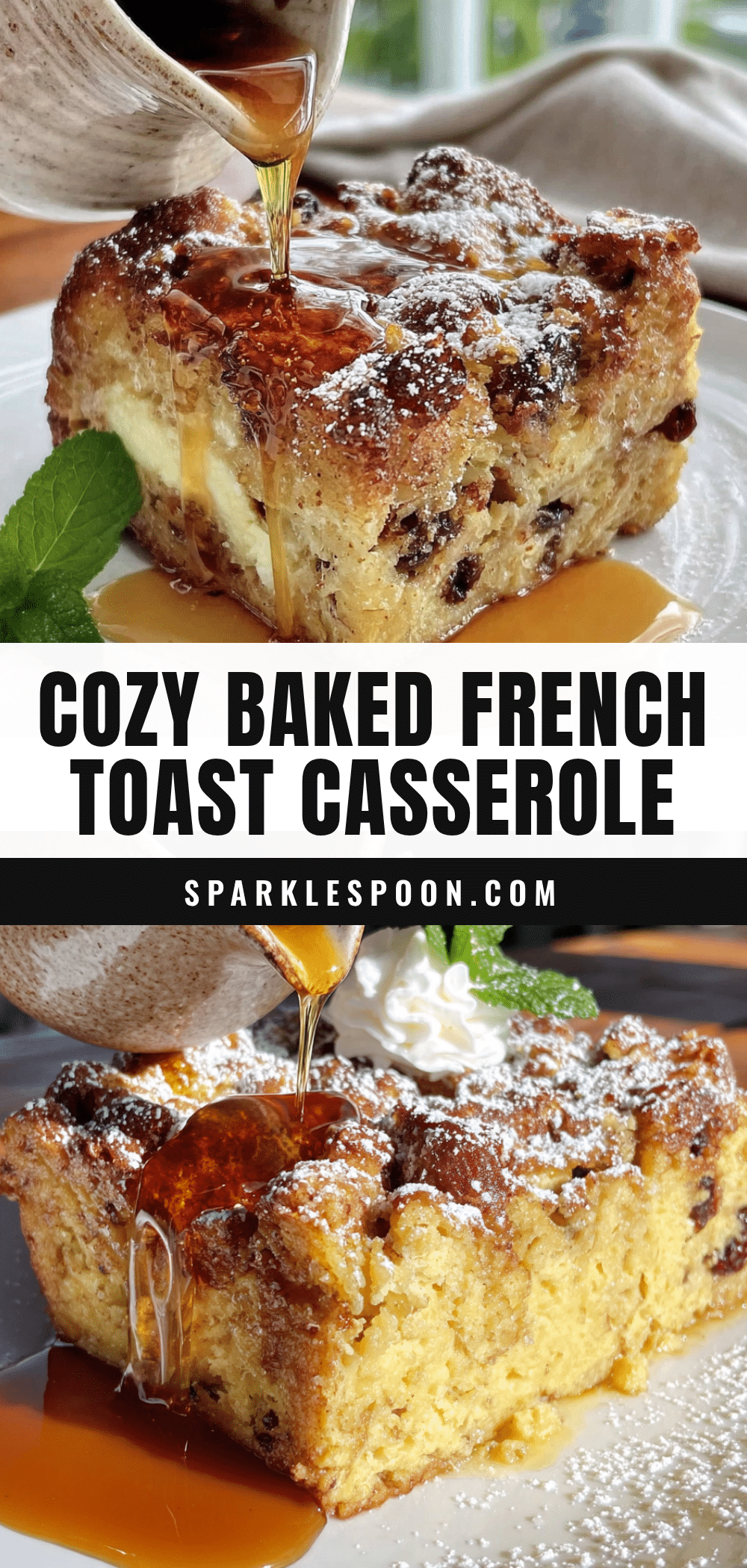
Cozy Baked French Toast Casserole with Maple Syrup
This make-ahead baked French toast casserole features a rich custard-soaked brioche base with a crunchy brown sugar topping, all finished with warm maple syrup. Perfect for cozy mornings and holiday brunches.
- Prep Time: 20 minutes
- Cook Time: 50 minutes
- Total Time: 1 hour 10 minutes (plus overnight soaking)
- Yield: 8 servings 1x
- Category: Breakfast
- Cuisine: American
Ingredients
- 1 loaf (12-14 ounces) day-old brioche or challah bread, cut into 1-inch cubes
- 8 large eggs, at room temperature
- 2 cups whole milk
- 1/2 cup heavy cream
- 1/2 cup granulated sugar
- 1/4 cup packed light brown sugar
- 2 teaspoons vanilla extract
- 1 teaspoon ground cinnamon
- 1/4 teaspoon ground nutmeg
- 1/4 teaspoon salt
- 1/2 cup all-purpose flour
- 1/2 cup packed light brown sugar
- 1 teaspoon ground cinnamon
- 1/4 cup cold unsalted butter, cut into small pieces
- 1/2 cup chopped pecans or walnuts (optional)
- 1/2 cup pure maple syrup (for serving)
- Fresh berries, powdered sugar, or whipped cream (optional, for serving)
Instructions
- Cut day-old brioche or challah into 1-inch cubes and spread evenly in a 9×13-inch baking dish.
- In a large bowl, whisk eggs until frothy. Add milk, heavy cream, granulated sugar, brown sugar, vanilla, cinnamon, nutmeg, and salt; whisk until smooth.
- Pour custard over bread cubes, pressing gently to soak. Cover and refrigerate at least 30 minutes or overnight.
- In a small bowl, combine flour, brown sugar, and cinnamon. Cut in cold butter until mixture resembles coarse crumbs. Stir in nuts if using. Refrigerate until ready to use.
- Preheat oven to 350°F. Let casserole sit at room temperature for 15-20 minutes. Sprinkle topping evenly over bread.
- Bake for 45-55 minutes until golden brown and center is set but slightly jiggly. Tent with foil if browning too quickly.
- Let rest 5-10 minutes. Warm maple syrup. Cut into squares, drizzle with syrup, and serve.
Notes
Use day-old bread for best texture. For dairy-free, substitute oat milk and coconut cream. For gluten-free, use sturdy gluten-free bread. Let casserole rest before baking to ensure even cooking.
Nutrition
- Serving Size: 1 square
- Calories: 475
- Sugar: 30
- Sodium: 350
- Fat: 22
- Saturated Fat: 12
- Carbohydrates: 55
- Fiber: 2
- Protein: 12
Keywords: baked French toast casserole, overnight French toast, maple syrup, brioche, brunch recipe, make-ahead breakfast