Love this? Save it for later!
Share the inspiration with your friends
It was 11:47 PM on a Wednesday in late November, and I was wide awake with a very specific, deeply unhinged craving for stuffing. Not just any stuffing—I wanted the kind that tastes like the soul of Thanksgiving, all savory and herbal and impossibly cozy. But here’s the thing: I didn’t have any leftover bread cubes or stale artisan loaves lying around. What I did have was a half-bag of crusty sourdough from three days ago that was starting to feel like a science experiment, a stick of butter that was definitely not room temperature, and a crazy idea that arrived in that sleepy, unfiltered state where you just go for it. Maybe you’ve been there—that late-night impulse where you decide you’re going to make a holiday side dish at nearly midnight because the craving is just too loud to ignore. I pulled out my biggest skillet, tossed in that butter, and watched it bubble and foam until it turned this gorgeous, nutty amber color. The smell of brown butter alone almost woke up my neighbors. I threw in some sage leaves I’d forgotten I had, and suddenly my tiny kitchen smelled like a Thanksgiving miracle. Honestly, that weird, impulsive, late-night experiment turned into my absolute favorite way to make stuffing. It’s the recipe I now bring to every Friendsgiving, every family dinner, and every quiet night when I need a little taste of gratitude.
Why You’ll Love This Recipe
Let me tell you why this brown butter sage stuffing is going to steal the show at your Thanksgiving table. I’ve tested this version more times than I can count—through dry bread disasters, soggy stuffing tragedies, and one particularly sad attempt where I forgot the sage entirely (we don’t talk about that). This recipe is the result of all those trials, and it’s absolutely foolproof.
- Quick & Easy: Comes together in under an hour, with only 15 minutes of hands-on prep. Perfect for when you’re juggling a dozen other dishes on the big day.
- Simple Ingredients: No fancy grocery trips needed. You likely already have bread, butter, onions, celery, and sage in your kitchen right now.
- Perfect for Thanksgiving: This is the side dish that disappears first, every single time. It’s the cozy, nostalgic comfort food that makes the holiday feel complete.
- Crowd-Pleaser: I’ve served this to everyone from picky kids to foodie relatives, and it always gets rave reviews. The brown butter adds this irresistible nutty depth that surprises everyone.
- Unbelievably Delicious: The texture is absolute perfection—crispy golden edges with a soft, tender center. The sage and brown butter combo is next-level comfort food that you’ll crave long after Thanksgiving is over.
What makes this stuffing different from every other recipe out there is the technique. Instead of just mixing melted butter into the bread, you brown it first. This one simple step transforms the entire dish. The nutty, caramelized flavor of the brown butter infuses every single bread cube, creating a depth that regular butter just can’t match. Plus, the fried sage leaves add this incredible crispy, herby crunch that takes it over the top. This isn’t just another stuffing recipe—it’s your new Thanksgiving tradition.
What Ingredients You Will Need
This recipe uses simple, wholesome ingredients to deliver bold flavor and satisfying texture without the fuss. Most of these are pantry staples or easy to find at any grocery store, especially during the holiday season.
For the Stuffing
- 1 loaf (about 1 pound) day-old sourdough bread, cut into 1-inch cubes (stale bread works best—it holds its shape and absorbs the broth perfectly)
- 1/2 cup (1 stick) unsalted butter (I prefer Kerrygold for its rich flavor, but any good quality butter works)
- 1 large yellow onion, finely diced (about 1 1/2 cups)
- 3 celery stalks, finely diced (about 1 cup)
- 4 cloves garlic, minced
- 1/4 cup fresh sage leaves, roughly chopped, plus 12 whole leaves for frying (fresh sage is non-negotiable here—dried just won’t give you that vibrant, peppery flavor)
- 2 teaspoons fresh thyme leaves (or 1 teaspoon dried)
- 1 teaspoon kosher salt
- 1/2 teaspoon black pepper
- 2 cups low-sodium chicken or vegetable broth (warm—this helps the bread absorb faster)
- 2 large eggs, lightly beaten (they bind everything together without making it heavy)
Ingredient Tips & Substitutions
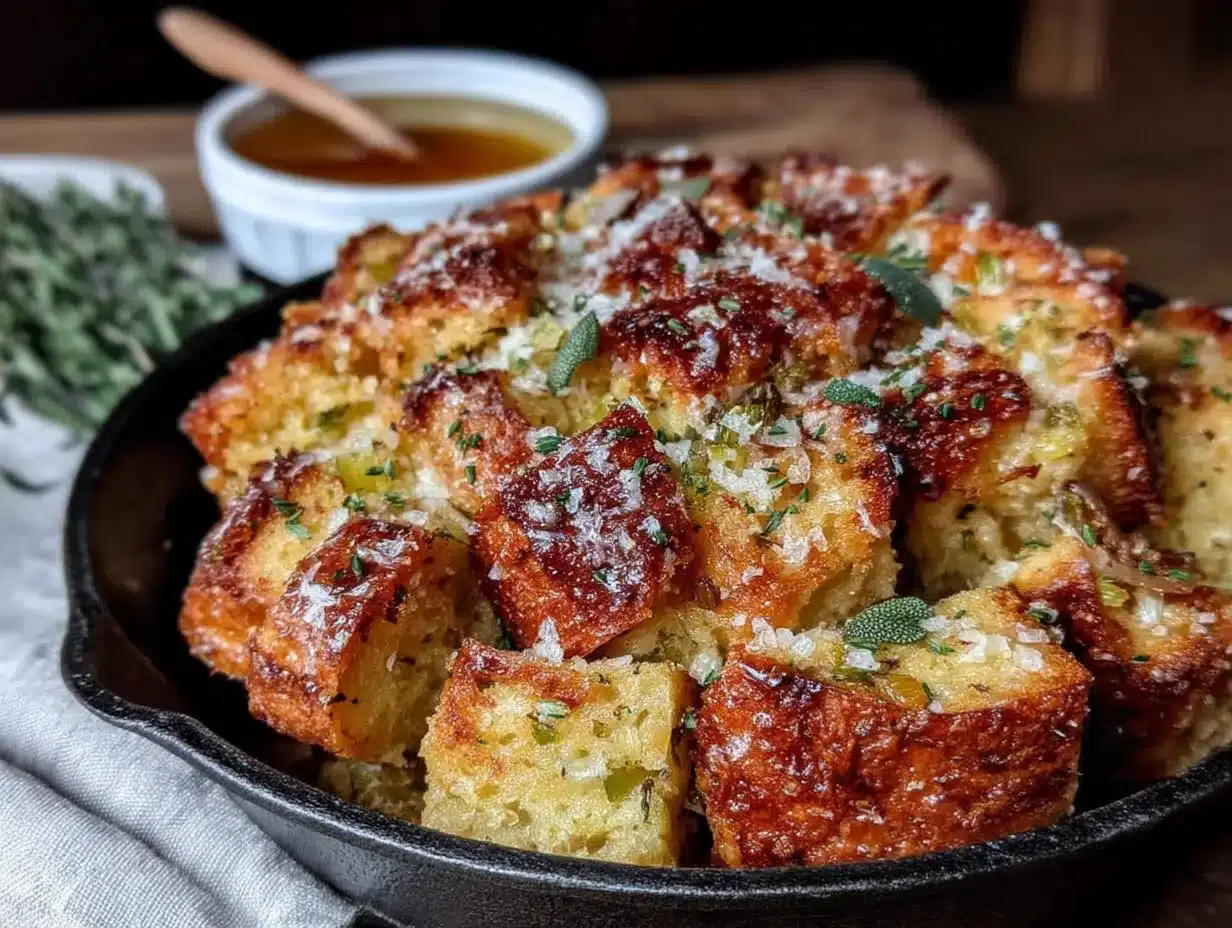
- Bread choice: Sourdough is my go-to because it has enough structure to hold up to the broth without turning mushy. French bread or ciabatta also work great. Avoid soft sandwich bread—it’ll turn into paste.
- Fresh vs. dried herbs: I really recommend fresh sage and thyme for this recipe. The flavors are brighter and more aromatic. If you’re in a pinch, use 1 tablespoon dried sage and 1 teaspoon dried thyme, but trust me, fresh is worth the extra effort.
- Make it vegetarian: Use vegetable broth instead of chicken broth. I like the Pacific Foods brand for its rich, savory flavor.
- Gluten-free option: Swap the sourdough for a good quality gluten-free bread. Let it dry out completely before using, and reduce the broth to 1 1/2 cups since gluten-free bread absorbs less liquid.
- Dairy-free adaptation: Use a high-quality vegan butter like Miyoko’s. It browns beautifully and has that same nutty richness.
Equipment Needed
You don’t need a professional kitchen to make this stuffing. Here’s what you’ll need:
- Large skillet or sauté pan (12-inch is ideal for browning the butter and cooking the vegetables)
- Large mixing bowl (for combining the bread and broth mixture)
- 9×13-inch baking dish (or any 3-quart casserole dish)
- Sharp knife and cutting board
- Wooden spoon or silicone spatula
- Measuring cups and spoons
- Whisk (for beating the eggs)
If you don’t have a 9×13-inch dish, you can use a 10-inch cast iron skillet for a more rustic presentation. I’ve done it both ways, and the cast iron gives you even crispier edges. Just make sure to grease it well. Also, if you’re short on time, you can skip toasting the bread in the oven and just use day-old bread that’s already stale. But honestly, that extra 10 minutes of toasting makes a huge difference in texture.
Preparation Method
Let’s get cooking! This recipe comes together in about 45 minutes, and I promise you every step is worth it.
- Preheat your oven to 350°F (175°C). Spread the bread cubes in a single layer on a large baking sheet. Toast for 10-12 minutes, stirring halfway through, until they’re dry and lightly golden. Don’t skip this—it prevents soggy stuffing. Set aside to cool slightly.
- While the bread toasts, make the brown butter. Place the butter in a large skillet over medium heat. Let it melt completely, then continue cooking, swirling the pan occasionally. You’ll see it start to foam and bubble. After about 4-5 minutes, the foam will subside, and you’ll notice little brown specks forming at the bottom of the pan. The butter will smell nutty and amazing. As soon as it turns a deep amber color (think the color of a hazelnut), remove it from the heat immediately. Be careful—it can go from perfect to burnt in seconds.
- Fry the sage leaves. Drop the 12 whole sage leaves into the hot brown butter. They’ll sizzle and crisp up in about 15-20 seconds. Use a slotted spoon to transfer them to a paper towel-lined plate. They’ll get even crispier as they cool. Set aside for garnish.
- Cook the vegetables. Return the skillet with the remaining brown butter to medium heat. Add the diced onion and celery. Cook for 6-8 minutes, stirring occasionally, until they’re soft and translucent. Add the minced garlic, chopped sage, and thyme. Cook for 1 more minute until fragrant. Season with salt and pepper.
- Combine everything. In a large mixing bowl, combine the toasted bread cubes and the cooked vegetable mixture. Toss gently to distribute everything evenly.
- Add the broth and eggs. In a small bowl or liquid measuring cup, whisk together the warm broth and beaten eggs. Pour this mixture over the bread and vegetables. Use a spatula to fold everything together until the bread is evenly moistened. Don’t overmix—you want some texture, not mush. Let it sit for 5 minutes so the bread can absorb the liquid.
- Transfer to baking dish. Grease your 9×13-inch baking dish with butter or nonstick spray. Spoon the stuffing mixture into the dish and spread it into an even layer. If you want extra crispy edges (and who doesn’t?), press it down gently but don’t pack it too tightly.
- Bake to perfection. Bake for 30-35 minutes, until the top is golden brown and crispy. The internal temperature should reach 165°F (74°C). If you want it even crispier, broil for 2-3 minutes at the end, watching closely so it doesn’t burn.
- Garnish and serve. Let the stuffing rest for 5 minutes before serving. Top with the crispy fried sage leaves for that gorgeous, restaurant-worthy presentation.
Cooking Tips & Techniques
Let me share some hard-earned wisdom from my stuffing-making adventures. I’ve made every mistake in the book, so you don’t have to.
The brown butter trick: This is the game-changer. When you brown the butter, you’re toasting the milk solids, which unlocks this incredible nutty, caramelized flavor. But here’s the thing—you have to watch it like a hawk. That first time I made it, I got distracted by my phone, and suddenly my kitchen smelled like burnt popcorn. Not ideal. Set a timer for 4 minutes, then watch it like you’re babysitting a toddler. The moment it turns amber, pull it off the heat.
Don’t skip toasting the bread. I know it’s an extra step, and on Thanksgiving morning when you’re already juggling a million things, it’s tempting to just toss in fresh bread. But here’s what happens: fresh bread soaks up the broth and turns into a sad, soggy mess. Toasted bread holds its shape and gives you those beautiful crispy edges. Trust me on this one.
Warm broth is your friend. Cold broth takes forever to absorb into the bread, and you end up with unevenly moistened stuffing. Heat your broth in the microwave for about 30 seconds before adding it. The warm liquid gets absorbed faster and more evenly.
The perfect texture test. Before you bake it, grab a small handful of the stuffing mixture and squeeze it gently. A little liquid should drip out, but it shouldn’t be soaking wet. If it’s too dry, add a splash more broth. If it’s too wet, add a handful more bread cubes. You’re aiming for the texture of a wrung-out sponge.
Make ahead tip: You can assemble the stuffing completely (minus the fried sage garnish) up to 24 hours in advance. Just cover it tightly with foil and refrigerate. On Thanksgiving day, let it sit at room temperature for 30 minutes, then bake as directed. You might need to add 5-10 minutes to the baking time since it’s starting from cold.
Variations & Adaptations
One of the best things about this stuffing recipe is how versatile it is. Over the years, I’ve tried all sorts of variations, and here are my favorites.
Classic Sausage Stuffing: Brown 1 pound of breakfast sausage or Italian sausage in the skillet before cooking the vegetables. Remove the sausage, then proceed with the recipe. Crumble the cooked sausage back in when you combine the bread and vegetables. This adds incredible savory depth and makes it a heartier side dish.
Mushroom & Leek Stuffing: Swap the celery for 2 cups of sliced cremini mushrooms and 1 large leek (white and light green parts only, cleaned thoroughly). Sauté them together until golden and tender. The earthy mushrooms pair beautifully with the brown butter and sage.
Apple & Cranberry Stuffing: Add 1 diced Honeycrisp apple and 1/2 cup dried cranberries to the vegetable mixture. The sweet-tart fruit adds brightness and a pop of color that looks gorgeous on the table. This is my go-to for Friendsgiving—everyone always asks for the recipe.
Herb & Parmesan Stuffing: Stir in 1/2 cup freshly grated Parmesan cheese and 1/4 cup chopped fresh parsley right before baking. The Parmesan adds a salty, umami kick that complements the brown butter beautifully. Just don’t tell your dairy-free guests.
Gluten-Free & Dairy-Free Version: Use gluten-free bread (I like the Canyon Bakehouse brand) and vegan butter. Follow the same instructions, but reduce the broth to 1 1/2 cups. Gluten-free bread is more delicate, so handle it gently when mixing.
Serving & Storage Suggestions
This stuffing is best served hot, straight out of the oven, with those crispy edges and tender center. But let’s talk about how to make it shine on your Thanksgiving table.
Serving temperature: Serve it within 10 minutes of coming out of the oven. The texture is at its peak when it’s hot and the edges are still crispy. If it sits too long, the steam will soften the top. Garnish with the crispy fried sage leaves right before serving for maximum visual impact.
What to serve with it: This stuffing is the ultimate Thanksgiving side. It pairs perfectly with roasted turkey breast, creamy mashed potatoes, and a tangy cranberry sauce. For a complete holiday meal, I love serving it alongside my honey glazed carrots and a simple green salad with vinaigrette to cut through all the richness.
Storing leftovers: Transfer any leftover stuffing to an airtight container and refrigerate for up to 4 days. The flavors actually get better as they meld together overnight. I’ve been known to eat cold stuffing straight from the fridge the next morning—don’t judge me until you’ve tried it.
Reheating instructions: For the best texture, reheat stuffing in a 350°F oven for 10-15 minutes, covered with foil. Remove the foil for the last 5 minutes to re-crisp the top. You can also reheat individual portions in a skillet over medium heat with a splash of broth to prevent drying out. The microwave works in a pinch, but it’ll be softer.
Freezing: You can freeze the unbaked stuffing for up to 3 months. Assemble it completely in the baking dish, wrap tightly with plastic wrap and foil, and freeze. To bake, thaw overnight in the refrigerator, then bake as directed, adding 10-15 minutes to the cooking time. Baked stuffing also freezes well—just reheat directly from frozen in a 350°F oven for 20-25 minutes.
Nutritional Information & Benefits
Let’s be real—stuffing is a comfort food, and it’s meant to be enjoyed as part of a celebratory meal. But here’s the good news: this version is actually more nutritious than traditional recipes because of the wholesome ingredients.
| Nutrient | Amount per Serving (1 cup) |
|---|---|
| Calories | 285 |
| Total Fat | 14g |
| Saturated Fat | 8g |
| Carbohydrates | 32g |
| Fiber | 3g |
| Protein | 7g |
| Sodium | 520mg |
Health highlights: Sage is packed with antioxidants and has anti-inflammatory properties. It’s also been used traditionally to support digestion—perfect for a heavy holiday meal. The brown butter contains butyrate, a fatty acid that supports gut health. And the onions and garlic provide prebiotic fiber that feeds your good gut bacteria. Plus, using sourdough bread means you’re getting natural fermentation benefits, which can be easier to digest than regular bread.
Dietary considerations: This recipe contains gluten, dairy, and eggs. For gluten-free and dairy-free adaptations, see the variations section above. It’s naturally vegetarian when made with vegetable broth.
Conclusion
This brown butter sage stuffing has become my absolute favorite Thanksgiving tradition. It’s the dish that makes everyone at the table go quiet for a moment, then reach for seconds before they’ve even finished their first serving. The nutty richness of the brown butter, the earthy warmth of the sage, the perfect balance of crispy and tender—it’s everything you want from a holiday side dish.
I love that this recipe feels special enough for Thanksgiving dinner but is simple enough to make on a random Tuesday night when you’re craving comfort food. It’s forgiving, adaptable, and always delivers. Whether you’re hosting your first Thanksgiving or you’re a seasoned pro, this stuffing will earn a permanent spot on your menu.
I’d love to hear how it turns out for you! Did you add your own twist? Did the brown butter change your life like it changed mine? Drop a comment below and share your stuffing stories. And if you loved this recipe, please share it with your friends and family—good food is meant to be passed around. Happy Thanksgiving, friends!
Frequently Asked Questions
Can I make this stuffing ahead of time?
Absolutely! You can assemble the stuffing completely (without the fried sage garnish) up to 24 hours in advance. Cover and refrigerate, then bake as directed on the day you’re serving. You may need to add 5-10 minutes to the baking time since it’s starting from cold.
Can I use dried sage instead of fresh?
You can, but fresh sage really makes a difference in this recipe. The flavor is brighter and more aromatic. If you must use dried, use 1 tablespoon dried sage instead of 1/4 cup fresh. The fried sage leaves for garnish are best with fresh leaves, but you can skip them if needed.
How do I prevent my stuffing from being soggy?
The key is toasting the bread cubes until they’re completely dry before adding the liquid. Also, make sure your broth is warm but not boiling, and let the mixture sit for 5 minutes before baking so the bread can absorb the liquid evenly. Don’t overmix, and don’t pack the stuffing too tightly in the baking dish.
Can I cook this stuffing inside the turkey?
I don’t recommend it for food safety reasons. Cooking stuffing inside the turkey can lead to uneven cooking and potential bacterial issues. This recipe is designed to be baked separately, which gives you those beautiful crispy edges and perfectly tender centers that you just can’t achieve inside the bird.
What can I substitute for eggs?
If you need an egg-free version, you can use a flax egg (1 tablespoon ground flaxseed mixed with 3 tablespoons water, let sit for 5 minutes) or 1/4 cup unsweetened applesauce. The eggs help bind the stuffing, but these substitutes work well in a pinch.
Pin This Recipe!
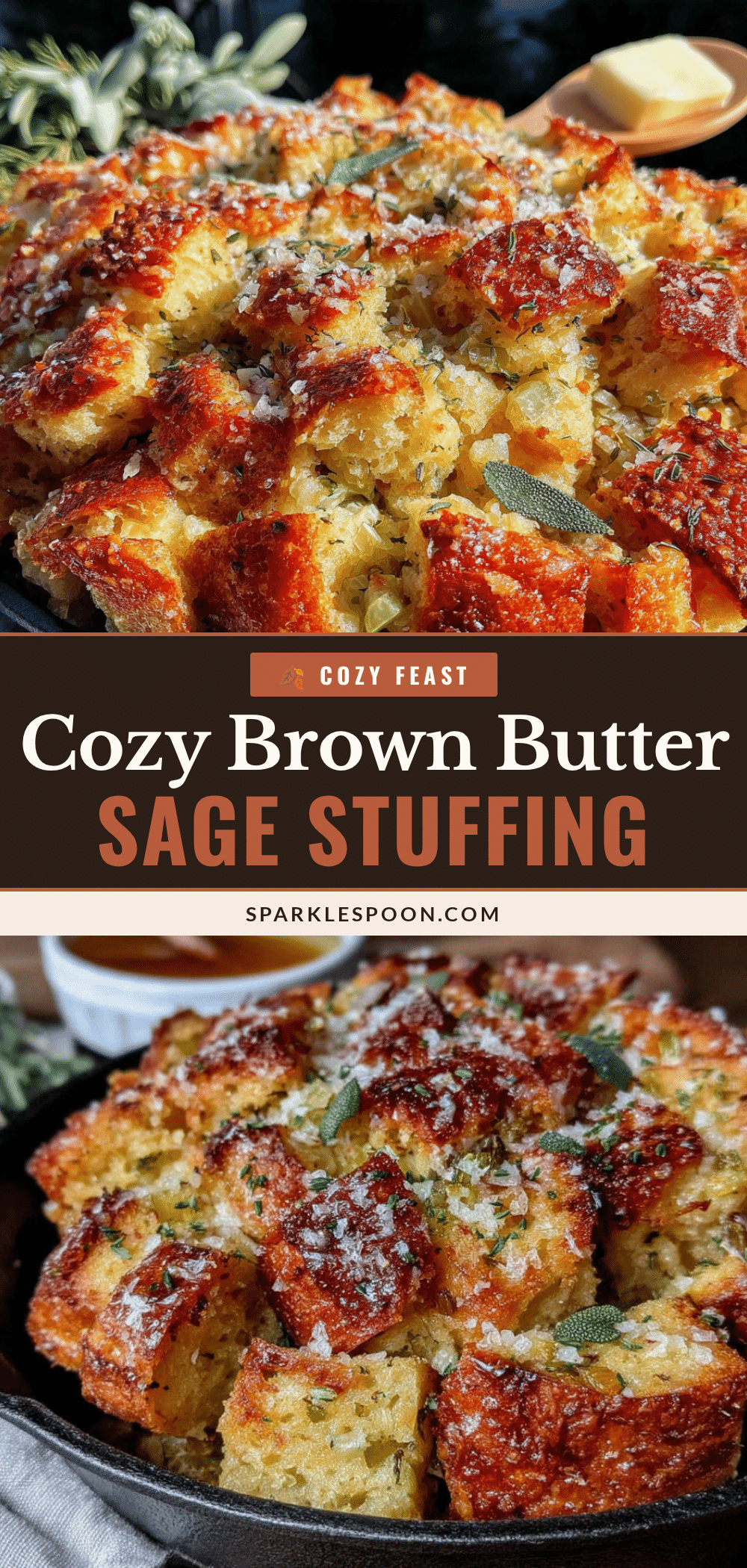
Best Brown Butter Sage Stuffing – Easy Thanksgiving Recipe

This brown butter sage stuffing is the ultimate Thanksgiving side dish, featuring nutty brown butter, crispy fried sage, and perfectly toasted sourdough bread. It’s quick, easy, and guaranteed to be the star of your holiday table.
- Prep Time: 15 minutes
- Cook Time: 30 minutes
- Total Time: 45 minutes
- Yield: 8 servings 1x
- Category: Side Dish
- Cuisine: American
Ingredients
- 1 loaf (about 1 pound) day-old sourdough bread, cut into 1-inch cubes
- 1/2 cup (1 stick) unsalted butter
- 1 large yellow onion, finely diced (about 1 1/2 cups)
- 3 celery stalks, finely diced (about 1 cup)
- 4 cloves garlic, minced
- 1/4 cup fresh sage leaves, roughly chopped, plus 12 whole leaves for frying
- 2 teaspoons fresh thyme leaves (or 1 teaspoon dried)
- 1 teaspoon kosher salt
- 1/2 teaspoon black pepper
- 2 cups low-sodium chicken or vegetable broth, warm
- 2 large eggs, lightly beaten
Instructions
- Preheat your oven to 350°F (175°C). Spread the bread cubes in a single layer on a large baking sheet. Toast for 10-12 minutes, stirring halfway through, until they’re dry and lightly golden. Set aside to cool slightly.
- While the bread toasts, make the brown butter. Place the butter in a large skillet over medium heat. Let it melt completely, then continue cooking, swirling the pan occasionally. After about 4-5 minutes, the foam will subside and little brown specks will form at the bottom. When the butter turns a deep amber color, remove from heat immediately.
- Fry the sage leaves. Drop the 12 whole sage leaves into the hot brown butter. They’ll sizzle and crisp up in about 15-20 seconds. Use a slotted spoon to transfer them to a paper towel-lined plate. Set aside for garnish.
- Cook the vegetables. Return the skillet with the remaining brown butter to medium heat. Add the diced onion and celery. Cook for 6-8 minutes, stirring occasionally, until soft and translucent. Add the minced garlic, chopped sage, and thyme. Cook for 1 more minute until fragrant. Season with salt and pepper.
- Combine everything. In a large mixing bowl, combine the toasted bread cubes and the cooked vegetable mixture. Toss gently to distribute evenly.
- Add the broth and eggs. In a small bowl or liquid measuring cup, whisk together the warm broth and beaten eggs. Pour over the bread and vegetables. Fold together until the bread is evenly moistened. Let sit for 5 minutes so the bread can absorb the liquid.
- Transfer to baking dish. Grease a 9×13-inch baking dish with butter or nonstick spray. Spoon the stuffing mixture into the dish and spread into an even layer. Press down gently but don’t pack too tightly.
- Bake to perfection. Bake for 30-35 minutes, until the top is golden brown and crispy. The internal temperature should reach 165°F (74°C). For extra crispiness, broil for 2-3 minutes at the end, watching closely.
- Garnish and serve. Let the stuffing rest for 5 minutes before serving. Top with the crispy fried sage leaves.
Notes
For best results, use day-old sourdough bread and toast it until dry to prevent sogginess. Watch the brown butter carefully—it can go from perfect to burnt in seconds. Warm broth helps the bread absorb faster. The stuffing can be assembled up to 24 hours in advance (without the fried sage garnish) and refrigerated; add 5-10 minutes to baking time if starting from cold.
Nutrition
- Serving Size: 1 cup
- Calories: 285
- Sodium: 520
- Fat: 14
- Saturated Fat: 8
- Carbohydrates: 32
- Fiber: 3
- Protein: 7
Keywords: brown butter sage stuffing, Thanksgiving stuffing, easy stuffing recipe, sourdough stuffing, holiday side dish