Love this? Save it for later!
Share the inspiration with your friends
My friend Jenna asked me last week why I couldn’t just use maple syrup in the dressing instead of honey. I was halfway through explaining the science of emulsification—how honey’s viscosity helps bind oil and vinegar—when I stopped. I mean, honestly, I had never actually tried it. I’d just assumed maple syrup would be too thin, too watery, too… wrong. So I grabbed the bottle of dark amber maple syrup from my pantry, shrugged, and poured it in. And then I stood there, whisk in hand, watching it come together perfectly. The dressing was silky, smooth, and had this warm, almost woodsy sweetness that honey never quite delivers. I felt a little ridiculous, honestly. All those years of thinking I knew better, and the simpler answer was sitting right there on my counter.
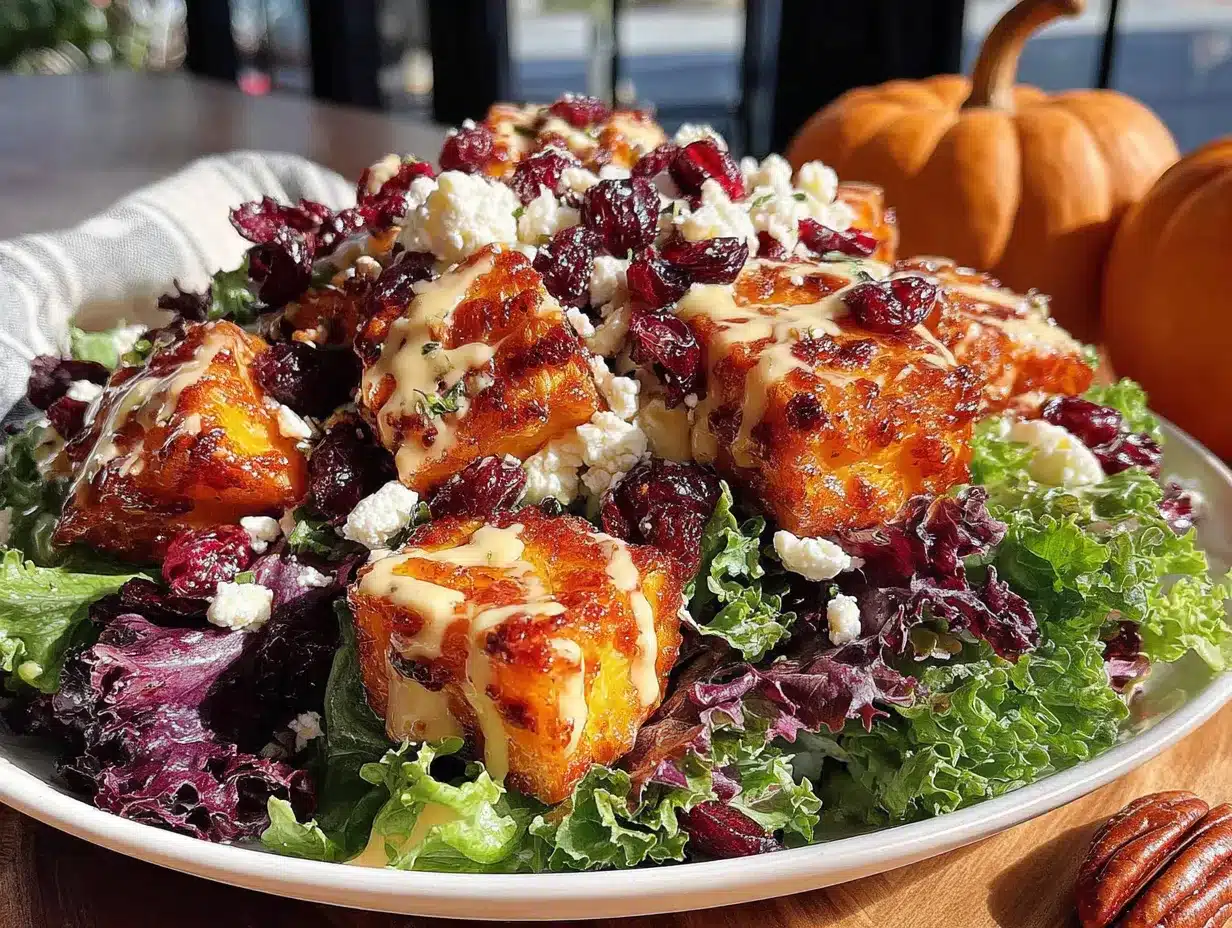
That moment changed how I make salads in the fall. This Fresh Harvest Fall Salad with Maple Vinaigrette is the direct result of being humbled by a friend’s casual suggestion. It’s got roasted butternut squash that caramelizes at the edges, crunchy pecans, tart dried cranberries, creamy goat cheese, and a bed of sturdy greens that hold up to the dressing. The vinaigrette is the star, though—that maple syrup gives it a depth that honey just can’t touch. It’s less sweet, more complex, and it clings to every leaf like it was made for it. Maybe you’ve been there, too, stubbornly sticking to what you know until someone casually proves you wrong. That’s this salad.
The first time I made it, I forgot to toast the pecans. I was halfway through assembling, realized my mistake, and just tossed them in raw. It was still good, but the next time I remembered, and honestly, that crunch makes all the difference. This recipe has become my go-to for fall gatherings, quiet Sunday meal preps, and even those nights when I want something that feels special but takes almost no real effort. It’s the salad that made me stop being so rigid in the kitchen, and I keep coming back to it because it works every single time.
Why You’ll Love This Recipe
This Fresh Harvest Fall Salad with Maple Vinaigrette isn’t just another salad recipe. It’s the kind of dish that makes you forget you’re eating something packed with nutrients. I’ve tested this one dozens of times, tweaking the roast time on the squash, adjusting the dressing ratios, and even swapping out different greens. It’s been family-approved at three different Thanksgiving dinners and one very skeptical potluck where someone asked for the recipe before they finished their first bite.
- Quick & Easy : Comes together in under 30 minutes, perfect for busy weeknights or last-minute dinner party sides.
- Simple Ingredients : No fancy grocery trips needed; you likely already have maple syrup, olive oil, and vinegar in your kitchen.
- Perfect for Fall Gatherings : Great for Thanksgiving, Friendsgiving, or cozy Sunday dinners when you want something that looks impressive without the stress.
- Crowd-Pleaser : Always gets rave reviews from kids and adults alike—even people who claim they “don’t like salad.”
- Unbelievably Delicious : The combination of warm roasted squash, cool creamy goat cheese, and that maple vinaigrette is next-level comfort food.
What makes this salad different from the rest is the dressing technique. Instead of a standard honey-based vinaigrette, using maple syrup creates a thinner, more emulsified dressing that coats the greens evenly without weighing them down. It’s a small swap, but it changes everything. This isn’t just another version of a fall salad—it’s my best version, born from being wrong and learning to listen.
This recipe is the kind that makes you close your eyes after the first bite. It’s comfort food reimagined—healthier, faster, but with the same soul-soothing satisfaction. Perfect for impressing guests without stress, or turning a simple meal into something memorable.
What Ingredients You Will Need
This Harvest Fall Salad uses simple, wholesome ingredients to deliver bold flavor and satisfying texture without the fuss. Most of these are pantry staples or easy to find at your local grocery store during the fall season.
For the Salad
- Butternut squash, peeled and cubed into ½-inch pieces (about 3 cups) — I prefer using pre-cut squash from the store when I’m short on time, but fresh always roasts better
- Mixed greens or baby spinach (5 ounces) — sturdy greens like arugula or spring mix hold up well to the warm squash and dressing
- Dried cranberries (½ cup) — look for unsweetened or reduced-sugar versions if you’re watching your sugar intake
- Pecans, roughly chopped (½ cup) — raw works, but toasting them brings out a nutty depth that’s worth the extra 5 minutes
- Goat cheese, crumbled (⅓ cup) — use a log-style goat cheese for easy crumbling; dairy-free feta works well as a substitute
- Red onion, thinly sliced (¼ cup) — soak the slices in cold water for 10 minutes to mellow the sharpness if you’re sensitive to raw onion
- Olive oil (2 tablespoons for roasting) — use a good quality extra virgin olive oil for the best flavor
- Salt and black pepper to taste
For the Maple Vinaigrette
- Pure maple syrup (3 tablespoons) — I recommend dark amber maple syrup for a richer flavor; avoid pancake syrup, which contains artificial flavors
- Apple cider vinegar (2 tablespoons) — adds the perfect tangy balance to the sweetness
- Dijon mustard (1 teaspoon) — helps emulsify the dressing and adds a subtle savory note
- Extra virgin olive oil (¼ cup) — a fruity olive oil works beautifully here
- Garlic, minced (1 small clove) — optional, but it adds a lovely savory depth
- Salt and black pepper to taste
For the squash, I recommend using a whole butternut squash and roasting it yourself for the best texture. Pre-cut squash tends to be drier and doesn’t caramelize as well. Look for a squash that feels heavy for its size with smooth, unblemished skin. If butternut isn’t available, you can substitute with sweet potatoes or cubed pumpkin.
For the pecans, I personally prefer buying raw pecans and toasting them at home. It takes just 5 minutes in a dry skillet over medium heat, and the flavor difference is night and day. If you have a nut allergy, pumpkin seeds or sunflower seeds make an excellent crunchy substitute.
Equipment Needed
You don’t need any fancy equipment to make this Harvest Fall Salad. Here’s what I use:
- Baking sheet (half-sheet size) for roasting the squash — a rimmed sheet prevents the squash juices from spilling
- Parchment paper or silicone baking mat — makes cleanup so much easier and prevents the squash from sticking
- Chef’s knife and cutting board for prepping the squash and onion
- Medium mixing bowl for the salad ingredients
- Small jar or bowl for the vinaigrette — I use a mason jar with a tight-fitting lid for easy shaking
- Whisk if you’re not using a jar method
- Dry skillet for toasting the pecans
- Measuring spoons and measuring cups
If you don’t have a baking sheet, a cast-iron skillet works beautifully for roasting the squash. I’ve also used a toaster oven on the convection setting when I didn’t want to heat up the whole kitchen. For the dressing, a small food processor or blender works if you want an ultra-smooth emulsion, but honestly, a jar and a good shake do the job just fine.
Preparation Method
This Fresh Harvest Fall Salad comes together in under 30 minutes. Here’s how I do it, step by step.
- Preheat your oven to 400°F (200°C). Line a baking sheet with parchment paper for easy cleanup. While the oven heats, peel and cube the butternut squash into ½-inch pieces. I find this size roasts evenly and fits perfectly on a fork.
- Toss the squash with olive oil, salt, and pepper. Spread it in a single layer on the prepared baking sheet. Don’t overcrowd the pan—if the pieces are too close together, they’ll steam instead of caramelizing. Roast for 20-25 minutes, flipping halfway through, until the edges are golden brown and the squash is tender when pierced with a fork. Let it cool slightly while you prepare the rest of the salad.
- Toast the pecans. While the squash roasts, heat a dry skillet over medium heat. Add the chopped pecans and cook, stirring frequently, for 3-5 minutes until they’re fragrant and lightly browned. Watch them closely—they burn quickly. Transfer to a plate to cool.
- Make the maple vinaigrette. In a small jar or bowl, combine the maple syrup, apple cider vinegar, Dijon mustard, minced garlic, salt, and pepper. Add the olive oil, then either shake the jar vigorously or whisk until the dressing is emulsified and smooth. Taste and adjust seasoning—I usually add a pinch more salt to balance the sweetness. Set aside.
- Assemble the salad. In a large mixing bowl, add the mixed greens, roasted butternut squash (slightly warm or at room temperature), dried cranberries, toasted pecans, and thinly sliced red onion. Drizzle about half the vinaigrette over the top and toss gently to coat. You want every leaf to get a little bit of that dressing.
- Add the goat cheese. Crumble the goat cheese over the top of the salad. I like to add it after tossing so the cheese stays in distinct, creamy pockets rather than getting smeared everywhere. If you’re serving this to guests, reserve a few squash pieces and pecans for the top to make it look pretty.
- Serve immediately. Drizzle with remaining vinaigrette if desired, and enjoy while the squash is still slightly warm. The contrast between warm squash and cool greens is part of what makes this salad so good.
A few notes from my many batches: If you’re meal prepping, keep the dressing, greens, and toppings separate until you’re ready to eat. The greens will wilt if they sit with the warm squash and dressing for too long. Also, if your squash isn’t browning after 15 minutes, your oven might run cool—try increasing the temperature to 425°F (220°C) for the last 5 minutes.
Cooking Tips & Techniques
Over the years, I’ve learned a few things that make this Harvest Fall Salad turn out perfectly every time. Let me share what I’ve picked up—mostly through trial and error.
Roast the squash at the right temperature. 400°F is the sweet spot. Too low, and the squash will steam instead of caramelizing. Too high, and the outside will burn before the inside is tender. I once tried roasting at 350°F because I was making multiple dishes, and the squash came out pale and sad. Don’t make that mistake.
Cut the squash into uniform pieces. This sounds obvious, but it’s worth saying. If some pieces are smaller than others, they’ll burn while the bigger ones are still raw. I aim for ½-inch cubes, and I take the time to cut them evenly. It makes a real difference.
Toast your nuts. I cannot stress this enough. Raw pecans are fine, but toasted pecans are transformative. The heat releases their natural oils and deepens their flavor. Just watch them closely—I’ve burned more batches than I’d like to admit. They go from perfectly toasted to burnt in about 30 seconds.
Emulsify the dressing properly. If you’re using a jar, shake it like you mean it for at least 15 seconds. If you’re whisking, pour the oil in a slow, steady stream while whisking constantly. A properly emulsified dressing coats the greens evenly instead of pooling at the bottom of the bowl.
Warm squash, cool greens. This is the secret to a great fall salad. Let the squash cool for about 5 minutes after roasting before adding it to the greens. If it’s too hot, it will wilt the greens. If it’s completely cold, you lose that lovely contrast in temperature and texture.
Season as you go. Don’t just season the dressing and call it done. Season the squash before roasting, season the dressing, and add a tiny pinch of flaky salt on top before serving. Layers of seasoning make everything taste more vibrant.
One thing I learned the hard way: don’t overdress the salad. Start with half the vinaigrette, toss, and add more if needed. You can always add more dressing, but you can’t take it away. A soggy salad is a sad thing.
Variations & Adaptations
This Harvest Fall Salad is incredibly flexible. Here are some variations I’ve tried and loved.
Protein-Packed Version : Add grilled chicken, roasted chickpeas, or sliced steak to turn this into a full meal. I’ve also added crispy bacon bits when I wanted something extra indulgent. The salty crunch pairs beautifully with the sweet maple dressing.
Vegan Adaptation : Swap the goat cheese for a vegan feta or omit it entirely. Add roasted chickpeas or avocado for creaminess. The dressing is already vegan since it uses maple syrup instead of honey. I’ve made this version for a vegan friend’s dinner party, and it was a hit.
Grain Bowl Version : Add cooked farro, quinoa, or wild rice to make it more substantial. The chewy texture of farro pairs especially well with the roasted squash and crunchy pecans. This is my go-to for meal prep lunches during the week.
Seasonal Swaps : In the fall, use roasted delicata squash or pumpkin instead of butternut. In winter, swap the cranberries for dried cherries or pomegranate arils. In spring, try roasted asparagus and strawberries with a lemon-maple vinaigrette. The base recipe works year-round with a few tweaks.
Nut-Free Option : Replace pecans with roasted pumpkin seeds or sunflower seeds. Toasted pepitas add a wonderful crunch and are safe for nut-free households. I’ve also used crispy roasted chickpeas as a topping for extra texture.
Cheese Variations : If you’re not a goat cheese fan, try crumbled feta, shaved Parmesan, or blue cheese. Each brings a different character to the salad. Feta adds a salty tang, Parmesan brings nuttiness, and blue cheese gives it a bold, funky kick.
My personal favorite variation is adding roasted chickpeas and avocado for a complete meal. I toss the chickpeas in the same pan as the squash during the last 10 minutes of roasting. They get crispy on the outside and stay tender inside—it’s my little trick for making the salad feel more substantial without much extra effort.
Serving & Storage Suggestions
This Harvest Fall Salad is best served immediately while the squash is still slightly warm and the greens are crisp. The contrast in temperatures and textures is what makes it special. I like to serve it in a large wooden bowl for a rustic look, with a few extra pecans and cranberries sprinkled on top for visual appeal.
For a fall dinner party, this salad pairs beautifully with roasted chicken, pork tenderloin, or a hearty soup like butternut squash soup. I’ve also served it alongside a charcuterie board for a casual gathering, and it was the first thing to disappear. For drinks, a crisp apple cider or a dry riesling complements the maple sweetness perfectly.
Storage : If you have leftovers, store the components separately. Keep the undressed greens in an airtight container lined with a paper towel to absorb excess moisture. Store the dressing in a separate jar, and keep the roasted squash and toppings in their own containers. The greens will stay fresh for 2-3 days this way.
Reheating : The squash can be reheated in a 350°F oven for 5-7 minutes, or in the microwave for 30 seconds. I don’t recommend reheating the entire assembled salad—the greens will wilt and the cheese will get melty. Instead, assemble fresh portions using the stored components.
Make-Ahead Tips : You can roast the squash up to 3 days in advance and store it in the refrigerator. The dressing keeps well for up to a week in the fridge—just let it come to room temperature and shake it well before using. The pecans can be toasted up to 5 days ahead and stored in an airtight container.
One thing I’ve noticed: the flavors of the dressing actually deepen after a day or two in the fridge. The maple and apple cider vinegar meld together beautifully, making it even more delicious. So don’t be afraid to make the dressing ahead of time.
Nutritional Information & Benefits
This Harvest Fall Salad isn’t just delicious—it’s packed with nutrients that make you feel good about eating it. Here’s a rough breakdown per serving (based on 4 servings):
- Calories: Approximately 320-350 calories
- Protein: 8 grams (from the goat cheese and pecans)
- Healthy Fats: 22 grams (from olive oil, pecans, and goat cheese)
- Carbohydrates: 32 grams (mostly from the squash and cranberries)
- Fiber: 6 grams (thanks to the squash and greens)
- Vitamin A: Over 200% of the daily value (butternut squash is loaded with beta-carotene)
- Vitamin C: 25% of the daily value
- Iron: 10% of the daily value
Butternut squash is a powerhouse of vitamin A, which supports eye health and immune function. Pecans are rich in healthy monounsaturated fats and antioxidants. The mixed greens provide folate, vitamin K, and a good dose of fiber. Maple syrup, while still a sugar, contains antioxidants and minerals like zinc and manganese that refined sugar lacks.
This salad is naturally gluten-free and can easily be made vegan or nut-free with the substitutions mentioned earlier. If you’re watching your sugar intake, use unsweetened dried cranberries and reduce the maple syrup to 2 tablespoons. It’s a balanced, satisfying meal that fits into most dietary patterns without feeling restrictive.
Conclusion
This Fresh Harvest Fall Salad with Maple Vinaigrette is proof that sometimes the best recipes come from being wrong. I spent years insisting on honey for my dressings, convinced that maple syrup wouldn’t work. Now I can’t imagine making a fall salad any other way. The warm roasted squash, the crunchy toasted pecans, the creamy goat cheese, and that silky maple vinaigrette—it all comes together in a way that feels both comforting and fresh.
I hope you give this recipe a try, and I hope you customize it to make it your own. Add your favorite protein, swap in whatever seasonal produce you have on hand, or double the dressing because you’ll want to put it on everything. That’s the beauty of a good salad—it’s a template, not a rulebook.
If you make this Harvest Fall Salad, I’d love to hear how it turns out. Leave a comment below with your favorite variation, or tag me in your photos if you share them online. Happy cooking, and here’s to being delightfully wrong about what works in the kitchen!
Frequently Asked Questions
Can I use honey instead of maple syrup in the vinaigrette?
You can, but the dressing will be thicker and sweeter. Maple syrup creates a thinner, more emulsified dressing that coats the greens more evenly. If you use honey, you may need to add an extra tablespoon of vinegar to balance the sweetness.
Can I make this salad ahead of time?
Yes, but keep the components separate. Roast the squash, toast the pecans, and make the dressing up to 3 days in advance. Store everything in airtight containers in the refrigerator, and assemble the salad just before serving to keep the greens crisp.
What can I substitute for goat cheese?
Feta cheese, crumbled blue cheese, or shaved Parmesan all work well. For a dairy-free option, try vegan feta or omit the cheese entirely and add avocado for creaminess.
Can I use frozen butternut squash?
Frozen squash can be used in a pinch, but it won’t caramelize as well as fresh because it releases more water during roasting. If using frozen, thaw it first, pat it dry with paper towels, and roast at 425°F to encourage browning.
How do I keep the pecans from burning?
Watch them constantly while toasting. They go from perfectly golden to burnt in about 30 seconds. Stir them every minute, and remove them from the pan as soon as they’re fragrant. I usually transfer them to a cool plate immediately to stop the cooking process.
Pin This Recipe!
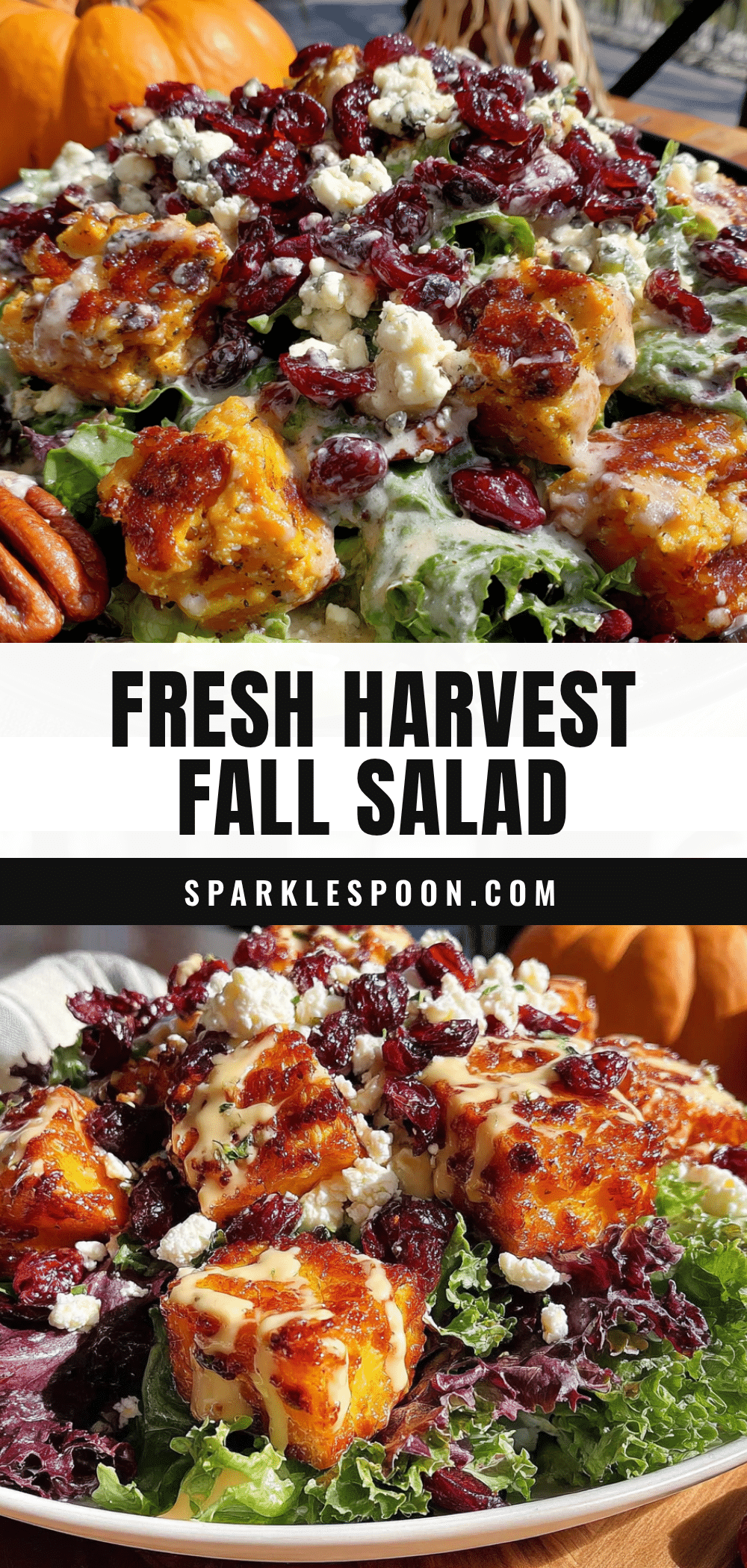
Harvest Fall Salad with Easy Maple Vinaigrette
A fresh fall salad featuring roasted butternut squash, crunchy pecans, dried cranberries, creamy goat cheese, and a silky maple vinaigrette. This crowd-pleasing recipe comes together in under 30 minutes and is perfect for fall gatherings or a quick weeknight meal.
- Prep Time: 10 minutes
- Cook Time: 20 minutes
- Total Time: 30 minutes
- Yield: 4 servings
- Category: Salad
- Cuisine: American
Ingredients
- Butternut squash, peeled and cubed into ½-inch pieces (about 3 cups)
- Mixed greens or baby spinach (5 ounces)
- Dried cranberries (½ cup)
- Pecans, roughly chopped (½ cup)
- Goat cheese, crumbled (⅓ cup)
- Red onion, thinly sliced (¼ cup)
- Olive oil (2 tablespoons for roasting)
- Salt and black pepper to taste
- Pure maple syrup (3 tablespoons)
- Apple cider vinegar (2 tablespoons)
- Dijon mustard (1 teaspoon)
- Extra virgin olive oil (¼ cup)
- Garlic, minced (1 small clove, optional)
- Salt and black pepper to taste
Instructions
- Preheat your oven to 400°F (200°C). Line a baking sheet with parchment paper.
- Toss the cubed butternut squash with olive oil, salt, and pepper. Spread in a single layer on the prepared baking sheet. Roast for 20-25 minutes, flipping halfway, until edges are golden brown and squash is tender. Let cool slightly.
- While squash roasts, toast the pecans in a dry skillet over medium heat for 3-5 minutes, stirring frequently, until fragrant and lightly browned. Transfer to a plate to cool.
- Make the maple vinaigrette: In a small jar or bowl, combine maple syrup, apple cider vinegar, Dijon mustard, minced garlic, salt, and pepper. Add olive oil, then shake or whisk until emulsified. Adjust seasoning to taste.
- In a large mixing bowl, combine mixed greens, roasted butternut squash, dried cranberries, toasted pecans, and sliced red onion. Drizzle with about half the vinaigrette and toss gently to coat.
- Crumble goat cheese over the top. Reserve a few squash pieces and pecans for garnish if desired.
- Serve immediately, drizzling with remaining vinaigrette if desired.
Notes
For best results, cut squash into uniform ½-inch cubes. Toast pecans carefully as they burn quickly. Let squash cool for about 5 minutes before adding to greens to avoid wilting. Start with half the dressing and add more as needed. For meal prep, store components separately and assemble just before serving. The dressing keeps well in the fridge for up to a week.
Nutrition
- Serving Size: 1 serving (about 2 c
- Calories: 335
- Sugar: 18
- Sodium: 280
- Fat: 22
- Saturated Fat: 5
- Carbohydrates: 32
- Fiber: 6
- Protein: 8
Keywords: fall salad, harvest salad, maple vinaigrette, butternut squash, roasted squash, goat cheese, pecans, cranberries, easy salad, gluten-free, vegetarian