Love this? Save it for later!
Share the inspiration with your friends
There used to be a tiny German place tucked behind a laundromat on the west side of town that made the most incredible Bavarian red cabbage. When they closed their doors two years ago—honestly, the landlord wanted to put in another vape shop—I actually felt a little panicked. I had relied on that sweet-and-sour, bacon-flecked cabbage for every bad day, every snowy evening, every time I needed something that felt like a hug on a plate. After twelve tries—twelve, let me tell you, some of them were pure vinegar disasters—I finally got it.
I still remember the first time I walked into that place. It was November, freezing rain was coming down sideways, and I just wanted something warm. The owner, a quiet woman named Ingrid, brought out this deep burgundy bowl of cabbage with a slice of dark bread. That first bite stopped me mid-thought. The cabbage was soft but not mushy, the apples had melted into the background, and the bacon gave everything this smoky backbone. I asked her what the secret was, and she just smiled and said, “Patience and a good pan.” Not exactly a recipe, right?
So I became a woman on a mission. I bought every kind of apple—Granny Smith, Honeycrisp, even some mealy ones I regretted. I tried red wine vinegar, apple cider vinegar, white wine vinegar. I burned bacon, I oversalted cabbage, I made a batch so sour my neighbor’s cat wouldn’t come near the kitchen window. But somewhere around attempt number eight, I started to understand. It wasn’t about one secret ingredient. It was about the balance—the way the apples sweeten things just enough, the way the bacon fat carries all that flavor, the way a little patience transforms humble cabbage into something you actually crave. Maybe you’ve been there, chasing a taste you can’t quite forget. This is that recipe.
Why You’ll Love This Recipe
This isn’t just another cabbage dish that sits sadly on the side of your plate. This is the kind of recipe that makes people ask for seconds, and honestly, it’s been tested on my picky family and a few skeptical dinner guests. Here is why it works:
- Quick & Easy: Comes together in about 45 minutes, most of which is hands-off simmering. Perfect for a busy weeknight when you still want something that feels special.
- Simple Ingredients: Cabbage, apples, bacon, vinegar, sugar—you probably have most of this in your kitchen right now. No trips to a specialty store required.
- Perfect for Cozy Evenings: This dish was made for cold weather, holiday dinners, or any night you need a little comfort. It pairs beautifully with roasted meats or even a simple sausage.
- Crowd-Pleaser: I have watched people who “don’t like cabbage” go back for thirds. The bacon and apples do some serious heavy lifting here.
- Unbelievably Delicious: The sweet-sour balance is just right—tangy from the vinegar, sweet from the apples, savory from the bacon. It’s comfort food that actually delivers.
What makes this different from every other red cabbage recipe out there? It’s the technique. Most recipes just boil everything together and hope for the best. I spent months figuring out that browning the bacon first, then cooking the apples just until they soften, and finally letting the cabbage simmer low and slow—that is what makes the texture perfect. The cabbage stays tender but never mushy, and the flavors meld into something deeper than you’d expect from such simple ingredients.
This recipe is the one that makes you close your eyes after the first bite. It’s comfort food reimagined—faster than you’d think, made with real ingredients, and packed with the same soul-soothing satisfaction that made me chase that memory for months.
What Ingredients You Will Need
This recipe uses simple, wholesome ingredients to deliver bold flavor and satisfying texture without the fuss. Most of these are pantry staples or easy to find at any grocery store.
- Bacon: 4 slices, chopped. I prefer thick-cut bacon for more flavor and a better texture. The fat renders out and becomes the cooking base for everything else. Smoked bacon adds an extra layer of depth.
- Red cabbage: 1 medium head (about 2 pounds), cored and thinly sliced. Look for a cabbage that feels heavy for its size with tightly packed leaves. Pre-shredded coleslaw mix won’t work here—you want the texture of fresh cabbage.
- Apples: 2 medium, peeled, cored, and diced into ½-inch pieces. I use Honeycrisp or Fuji for natural sweetness, but Granny Smith works if you prefer more tartness. The apples break down slightly during cooking, adding body and sweetness.
- Yellow onion: 1 medium, diced. Adds a savory base note that balances the sweetness from the apples and sugar.
- Apple cider vinegar: ¼ cup. This is the tangy backbone of the dish. I recommend Bragg or Spectrum for consistent acidity. Do not substitute with distilled white vinegar—it’s too harsh.
- Brown sugar: 2 tablespoons, packed. Light or dark both work; dark brown sugar adds a deeper molasses note. You can also use maple syrup or honey if you prefer.
- Water or chicken broth: ½ cup. Broth adds more savory depth, but water works fine. Use low-sodium broth if you go that route.
- Butter: 1 tablespoon, unsalted. Adds richness at the end. Salted butter works too—just adjust your salt accordingly.
- Salt and black pepper: To taste. Go easy on the salt initially since bacon adds plenty.
- Optional spices: 1 bay leaf, 2 whole cloves, or a pinch of caraway seeds. These are traditional additions that add complexity. I usually add a bay leaf and skip the cloves if I’m serving this to kids.
For the best texture, slice your cabbage into thin ribbons—about ¼-inch wide. A sharp knife or a mandoline makes this easy. If you’re using a mandoline, watch your fingers; I learned that lesson the hard way.
Equipment Needed
You don’t need a fancy kitchen to make this recipe. Here is what you will need:
- Large Dutch oven or heavy-bottomed pot: A 5- to 6-quart pot works perfectly. The heavy bottom prevents burning and distributes heat evenly. I use my old Le Creuset, but any heavy pot works.
- Sharp chef’s knife: For slicing cabbage and dicing apples. A dull knife makes this job frustrating and dangerous.
- Cutting board: A large wooden or plastic board gives you room to work.
- Wooden spoon or spatula: For stirring and scraping up any browned bits from the bottom of the pot.
- Measuring cups and spoons: For accurate measurements. I keep a set just for savory cooking.
- Optional but helpful: A mandoline for thin, even cabbage slices. A box grater if you prefer grated apples (they melt into the cabbage more).
If you don’t have a Dutch oven, any large pot with a tight-fitting lid will work. Just keep an eye on the heat—thinner pots can scorch the cabbage if you’re not careful. I have used a stainless steel stockpot in a pinch, and it worked fine; I just stirred a little more often.
Preparation Method
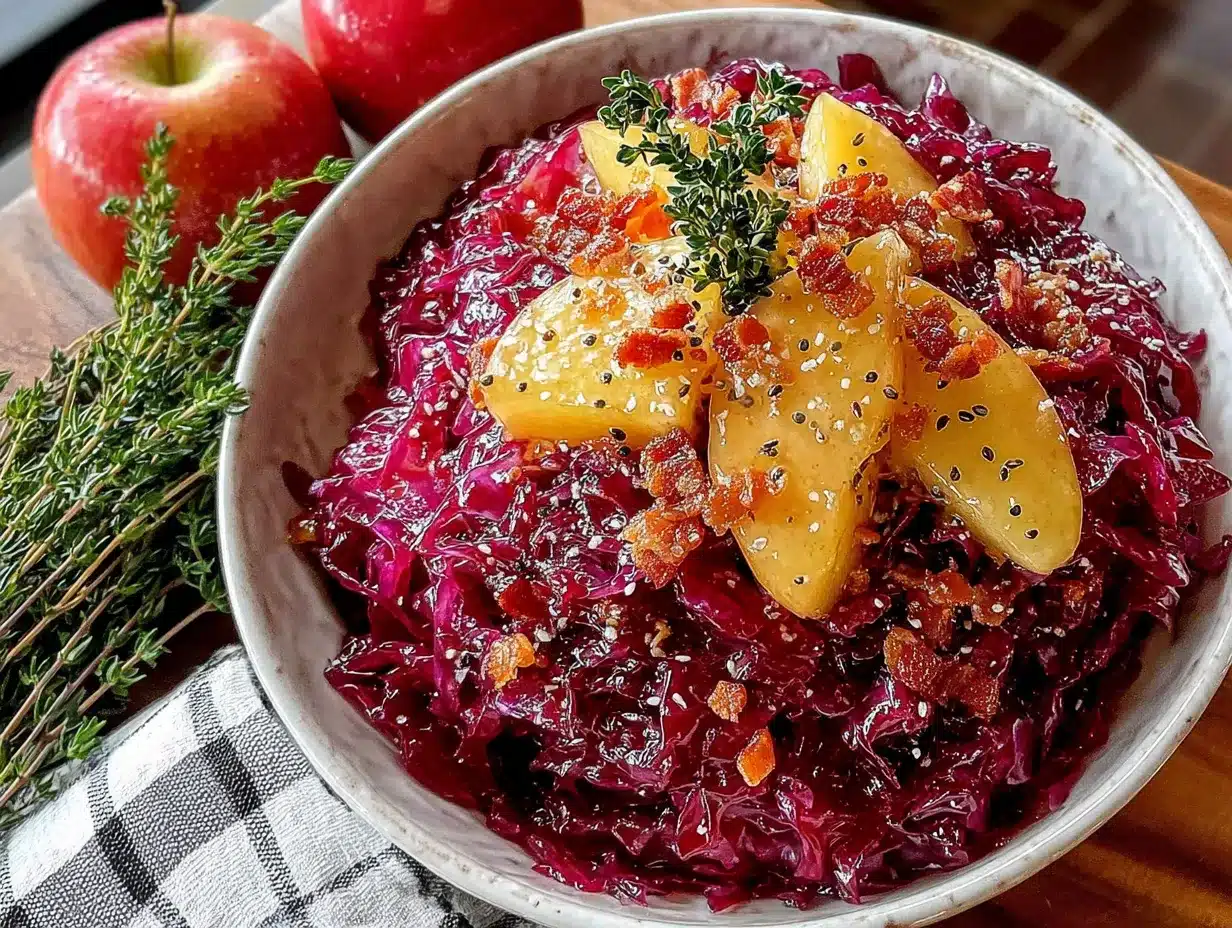
Let’s get cooking. This recipe moves quickly once you start, so have everything prepped before you turn on the heat.
- Cook the bacon. Place your Dutch oven over medium heat. Add the chopped bacon and cook, stirring occasionally, until crispy and the fat has rendered—about 6 to 8 minutes. Use a slotted spoon to transfer the bacon to a paper towel-lined plate, leaving the rendered fat in the pot. Do not wipe the pot clean; that fat is pure flavor.
- Sauté the onion. Add the diced onion to the pot with the bacon fat. Cook over medium heat, stirring often, until softened and translucent—about 4 to 5 minutes. If the onion starts to brown too quickly, lower the heat slightly. You want it soft, not crispy.
- Add the apples. Stir in the diced apples and cook for 2 to 3 minutes, just until they start to soften around the edges. The apples should still hold their shape at this point—they will continue cooking with the cabbage.
- Add the cabbage. Add the sliced red cabbage to the pot. It will look like a mountain, but don’t worry—it cooks down significantly. Stir everything together, coating the cabbage in the bacon fat and onion mixture. Cook for 3 to 4 minutes, stirring occasionally, until the cabbage starts to wilt.
- Add the liquids and seasonings. Pour in the apple cider vinegar, water or broth, and brown sugar. Add the bay leaf if using. Stir well to combine. The liquid should come about halfway up the cabbage—if it looks dry, add another ¼ cup of water or broth.
- Simmer. Bring the mixture to a gentle simmer, then reduce the heat to low. Cover the pot with a tight-fitting lid and let it cook for 30 to 35 minutes. Stir once or twice during cooking to prevent sticking. The cabbage should be tender but not mushy—think al dente pasta, not baby food.
- Finish with butter and bacon. Remove the pot from the heat. Stir in the tablespoon of butter until melted. Taste and adjust seasoning with salt and pepper. Add the crispy bacon back to the pot and stir gently to distribute. Remove the bay leaf before serving.
- Rest before serving. Let the cabbage sit, uncovered, for 5 minutes. This allows the flavors to settle and the liquid to thicken slightly. Serve warm, not piping hot—the flavors are more pronounced at a comfortable eating temperature.
One thing I learned the hard way: do not rush the simmer. I tried cranking the heat to save time once, and the cabbage turned out uneven—some parts were mushy, others were still crunchy. Low and slow is the way to go. Also, taste the cabbage about 20 minutes in. If it’s too tangy, add a pinch more brown sugar. If it’s too sweet, add a splash more vinegar. This is your dish—adjust it to your liking.
Cooking Tips & Techniques
After twelve attempts, I have a few tricks up my sleeve. Here is what I wish I had known from the start:
- Slice the cabbage evenly. Uneven slices cook unevenly. Take the extra minute to make sure your cabbage ribbons are roughly the same thickness. A mandoline is worth the investment if you make this often.
- Don’t skip the bacon fat. I tried making this with olive oil once because I was out of bacon. It was fine, but it wasn’t the same. The smoky depth from bacon fat is what makes this dish feel cozy and satisfying. If you need a vegetarian version, use a tablespoon of smoked paprika and a little extra butter to mimic that smokiness.
- Watch your vinegar. Different brands of apple cider vinegar have different acidity levels. If your vinegar is particularly sharp, start with 3 tablespoons instead of ¼ cup. You can always add more at the end.
- Let it rest. This is the tip that changed everything for me. Red cabbage always tastes better the next day. The flavors meld and deepen overnight. If you can, make this a day ahead and reheat it gently. I have been known to make a double batch just for the leftovers.
- Use a heavy pot. Thin pots scorch the sugar in the brown sugar and vinegar mixture. A heavy-bottomed pot distributes heat evenly and prevents burning. I burned my first two batches because I was using a cheap stockpot.
- Taste as you go. This is not a set-it-and-forget-it recipe. Taste at the 20-minute mark, adjust the sweet-sour balance, and taste again before serving. Your palate is the best tool in the kitchen.
I also learned that multitasking doesn’t work well here. I tried answering emails while the cabbage simmered and ended up with a pot that had cooked dry. Set a timer, stir occasionally, and give this dish the attention it deserves. It’s only 45 minutes of your life, and the payoff is huge.
Variations & Adaptations
This recipe is flexible. Here are a few ways to make it your own:
- Vegetarian version: Skip the bacon and use 2 tablespoons of butter or olive oil to sauté the onions. Add ½ teaspoon of smoked paprika to mimic the smoky flavor. The dish won’t be as rich, but it will still be delicious.
- Spiced version: Add 1 cinnamon stick, 2 whole cloves, and 1 star anise along with the liquids. These warm spices are traditional in some Bavarian recipes and add a holiday-like aroma. Just remember to remove them before serving.
- Sweet-tart version: Use Granny Smith apples and add an extra tablespoon of apple cider vinegar. This version is brighter and more tangy—perfect if you love pickled flavors.
- Slow cooker adaptation: Cook the bacon and sauté the onions on the stovetop first, then transfer everything to a slow cooker. Cook on low for 4 to 6 hours. Stir in the butter and bacon at the end. The texture will be softer, but the flavor will be even deeper.
- Instant Pot version: Use the sauté function to cook the bacon and onions, then add the remaining ingredients. Pressure cook on high for 8 minutes, then quick release. Stir in the butter and bacon at the end.
- Lower sugar option: Reduce the brown sugar to 1 tablespoon and use a very sweet apple like Fuji or Gala. The natural sweetness from the apple will carry the dish.
I personally love the spiced version during the holidays. I made it for Thanksgiving last year, and my sister-in-law asked for the recipe—which is basically the highest compliment in our family. The cinnamon and cloves make the whole kitchen smell like a Christmas market.
Serving & Storage Suggestions
This Bavarian red cabbage is incredibly versatile. Here is how to serve and store it:
Serving temperature: Serve warm, not hot. Let it rest for 5 minutes after cooking. The flavors are more pronounced at a comfortable eating temperature. It also works well at room temperature, making it a great option for potlucks or buffets.
What to serve with it: This cabbage is a natural partner for roasted meats—pork roast, roast chicken, or braised beef. It is also fantastic with sausages, especially bratwurst or knockwurst. For a vegetarian meal, serve it over mashed potatoes or alongside a hearty lentil stew. A dollop of sour cream on top adds a nice creamy contrast.
Storage: Let the cabbage cool completely, then transfer it to an airtight container. It will keep in the refrigerator for up to 5 days. The flavor actually improves after a day or two as the ingredients meld together.
Freezing: This dish freezes beautifully. Portion it into freezer-safe containers or zip-top bags. It will keep for up to 3 months. Thaw overnight in the refrigerator before reheating.
Reheating: Reheat gently on the stovetop over medium-low heat, adding a splash of water or broth if the cabbage looks dry. You can also microwave it in 30-second bursts, stirring between each. Avoid high heat, which can make the cabbage mushy.
Make-ahead tip: This is one of those dishes that begs to be made ahead. I often make it two days before a big dinner. The flavors deepen, and it saves me precious oven space on the day of the event.
Nutritional Information & Benefits
This recipe is surprisingly nutritious for something that tastes so indulgent. Here is an approximate breakdown per serving (based on 6 servings):
| Nutrient | Amount per Serving |
|---|---|
| Calories | 185 |
| Total Fat | 10g |
| Saturated Fat | 4g |
| Cholesterol | 20mg |
| Sodium | 380mg |
| Total Carbohydrates | 22g |
| Dietary Fiber | 4g |
| Sugars | 14g |
| Protein | 5g |
Red cabbage is packed with anthocyanins—the compounds that give it that beautiful purple color. These are powerful antioxidants that support heart health and reduce inflammation. The apples add soluble fiber, which helps with digestion and keeps you feeling full. Bacon, in moderation, adds protein and a satisfying richness that makes this dish feel like a treat rather than a health food.
If you are watching your sodium, use low-sodium broth and reduce the added salt. The bacon provides plenty of saltiness on its own. For a lower-fat version, you can drain off some of the bacon fat after cooking the bacon, though you will lose some flavor.
This dish is naturally gluten-free and can easily be made dairy-free by skipping the butter or using a plant-based alternative. It is also low-carb friendly at about 22 grams of carbohydrates per serving, with 4 grams of fiber.
Conclusion
This Bavarian red cabbage is more than just a side dish—it is the kind of recipe that becomes a tradition. It is the thing I make when I need to feel grounded, when the weather turns cold, when I want to fill my kitchen with a smell that says “everything is going to be okay.” After twelve attempts and one unforgettable restaurant memory, I can honestly say this version is the one.
I hope you make this your own. Add a little more vinegar if you like things tangy. Throw in a cinnamon stick if you are feeling festive. Serve it with sausages on a Tuesday or with a roast on a Sunday. However you make it, I think you will understand why I kept chasing that memory.
When you make this—and I really hope you do—come back and let me know how it turned out. Did you add extra bacon? Did your family ask for seconds? Did it make your kitchen smell like a cozy Bavarian kitchen? Drop a comment below or tag me in your photos. I love seeing these recipes come to life in your kitchens. Until next time, happy cooking, and may your cabbage always be perfectly tender.
Frequently Asked Questions
Can I make this recipe ahead of time?
Absolutely. In fact, this dish tastes even better the next day. Make it up to two days ahead, store it in the refrigerator, and reheat gently on the stovetop. The flavors deepen and meld together beautifully overnight.
Can I use green cabbage instead of red?
You can, but the flavor and texture will be different. Green cabbage is milder and less sturdy, so it will cook faster and become softer. Red cabbage has a slightly peppery note and holds its shape better. If you use green cabbage, reduce the cooking time by about 10 minutes.
Is this recipe gluten-free?
Yes, this recipe is naturally gluten-free. Just make sure your broth is certified gluten-free if you use that option. The bacon, vinegar, and brown sugar are all gluten-free ingredients.
Can I freeze Bavarian red cabbage?
Yes, this dish freezes wonderfully. Let it cool completely, then transfer it to freezer-safe containers. It will keep for up to 3 months. Thaw overnight in the refrigerator and reheat gently on the stovetop with a splash of water or broth.
How do I prevent the cabbage from turning out too sour?
Start with less vinegar than the recipe calls for—about 3 tablespoons instead of ¼ cup. Taste the cabbage after 20 minutes of simmering and add more vinegar if needed. You can also balance the sourness with an extra tablespoon of brown sugar. The key is to adjust gradually and taste as you go.
Pin This Recipe!
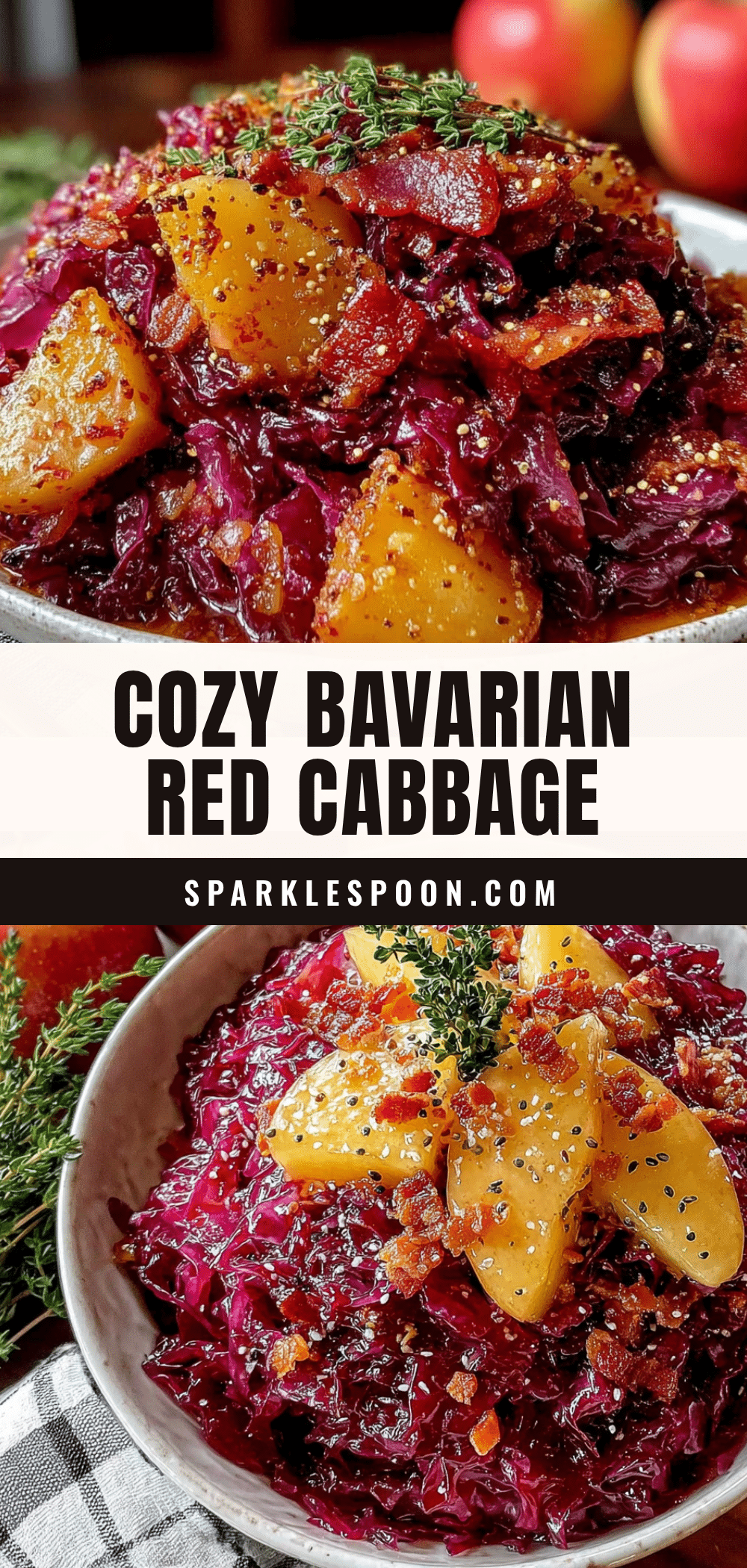
Cozy Bavarian Red Cabbage Recipe Easy Side Dish

This sweet-and-sour, bacon-flecked Bavarian red cabbage is the ultimate comfort food side dish. Made with simple ingredients like red cabbage, apples, and bacon, it comes together in about 45 minutes and pairs perfectly with roasted meats or sausages.
- Prep Time: 15 minutes
- Cook Time: 35 minutes
- Total Time: 50 minutes
- Yield: 6 servings 1x
- Category: Side Dish
- Cuisine: German
Ingredients
- 4 slices bacon, chopped
- 1 medium head red cabbage (about 2 pounds), cored and thinly sliced
- 2 medium apples (Honeycrisp or Fuji), peeled, cored, and diced into ½-inch pieces
- 1 medium yellow onion, diced
- ¼ cup apple cider vinegar
- 2 tablespoons brown sugar, packed
- ½ cup water or low-sodium chicken broth
- 1 tablespoon unsalted butter
- Salt and black pepper to taste
- 1 bay leaf (optional)
- 2 whole cloves (optional)
- Pinch of caraway seeds (optional)
Instructions
- Cook the bacon: Place a large Dutch oven over medium heat. Add the chopped bacon and cook, stirring occasionally, until crispy and the fat has rendered, about 6 to 8 minutes. Use a slotted spoon to transfer the bacon to a paper towel-lined plate, leaving the rendered fat in the pot.
- Sauté the onion: Add the diced onion to the pot with the bacon fat. Cook over medium heat, stirring often, until softened and translucent, about 4 to 5 minutes. Lower the heat if the onion starts to brown too quickly.
- Add the apples: Stir in the diced apples and cook for 2 to 3 minutes, just until they start to soften around the edges.
- Add the cabbage: Add the sliced red cabbage to the pot. Stir everything together, coating the cabbage in the bacon fat and onion mixture. Cook for 3 to 4 minutes, stirring occasionally, until the cabbage starts to wilt.
- Add the liquids and seasonings: Pour in the apple cider vinegar, water or broth, and brown sugar. Add the bay leaf if using. Stir well to combine. The liquid should come about halfway up the cabbage; if it looks dry, add another ¼ cup of water or broth.
- Simmer: Bring the mixture to a gentle simmer, then reduce the heat to low. Cover the pot with a tight-fitting lid and let it cook for 30 to 35 minutes, stirring once or twice to prevent sticking. The cabbage should be tender but not mushy.
- Finish with butter and bacon: Remove the pot from the heat. Stir in the tablespoon of butter until melted. Taste and adjust seasoning with salt and pepper. Add the crispy bacon back to the pot and stir gently to distribute. Remove the bay leaf before serving.
- Rest before serving: Let the cabbage sit, uncovered, for 5 minutes. Serve warm, not piping hot.
Notes
For best results, slice cabbage evenly (about ¼-inch wide). Do not rush the simmer; low and slow is key. Taste at 20 minutes and adjust sweet-sour balance. This dish tastes even better the next day. For a vegetarian version, skip bacon and use 2 tablespoons butter or olive oil plus ½ teaspoon smoked paprika.
Nutrition
- Serving Size: 1 serving (about 1 c
- Calories: 185
- Sugar: 14
- Sodium: 380
- Fat: 10
- Saturated Fat: 4
- Carbohydrates: 22
- Fiber: 4
- Protein: 5
Keywords: Bavarian red cabbage, German red cabbage, sweet and sour cabbage, braised red cabbage, easy side dish, holiday side dish, bacon cabbage