Love this? Save it for later!
Share the inspiration with your friends
This was supposed to be a completely different dinner. I had a nice pot roast planned, the kind that simmers all afternoon and fills the house with that rich, beefy smell that makes everyone wander into the kitchen asking, “What time are we eating?” But somewhere between the grocery store and my front door, the plan fell apart. I got distracted by a phone call, forgot to grab the chuck roast, and ended up with a pound of ground beef and a bag of potatoes instead. Honestly, I stood in my kitchen for a solid minute just staring at the counter, feeling that familiar pinch of defeat. You know that feeling when dinner plans go sideways and you’re already tired?
I almost ordered takeout. But then I remembered my grandmother’s voice in my head—she never let a kitchen mishap win. So I grabbed my biggest pot, tossed in that ground beef, and started building something from what I had. The potatoes went in first, then some carrots I found hiding in the crisper drawer, and a handful of pantry staples that somehow turned into the most comforting broth I’d ever made. Thirty minutes later, I was ladling this hearty poor man’s stew into bowls, and let me tell you, I couldn’t believe what I was tasting. It was richer, more satisfying, and somehow more soulful than any pot roast I’d ever made on purpose.
That night, my family ate every last drop, and my youngest asked if we could have “that potato stew” again tomorrow. I knew then that this wasn’t just a backup meal—it was a keeper. This hearty poor man’s stew with ground beef and potatoes has become my go-to for those nights when I need dinner to work, not stress me out. It’s proof that you don’t need fancy cuts of meat or complicated techniques to make something truly memorable. Sometimes the best recipes come from the moments when you just make it work.
Why You’ll Love This Recipe
Let me tell you why this hearty poor man’s stew has earned a permanent spot in my weekly rotation. I’ve tested this recipe at least a dozen times, tweaking the seasonings and adjusting the cooking times until it was just right. What I ended up with is a stew that delivers maximum comfort with minimum effort. Here’s what makes it special:
- Budget-Friendly: Ground beef and potatoes are two of the most affordable ingredients you can buy. This whole pot costs under $10 to make, and it feeds a crowd.
- One-Pot Wonder: Everything cooks in a single pot, which means less cleanup and more time relaxing. I’m all about efficiency in the kitchen, honestly.
- Pantry-Friendly: Most of these ingredients are probably in your kitchen right now. No special trips to the store required, and that’s the kind of flexibility I love.
- Family-Approved: I’ve served this to picky eaters, hungry teenagers, and dinner guests who asked for seconds. It’s one of those rare recipes that pleases everyone at the table.
- Comfort in a Bowl: There’s something deeply satisfying about tender potatoes swimming in a savory, herb-infused broth with perfectly seasoned ground beef. It’s the kind of meal that makes you slow down and actually enjoy eating.
What really sets this hearty poor man’s stew apart from other versions is the way the potatoes break down just enough to thicken the broth naturally. I don’t use any flour or cornstarch—the potatoes do all the work. And the seasoning blend? It took me a few tries to get it right, but I finally landed on a combination of smoked paprika, thyme, and a touch of Worcestershire sauce that adds this deep, almost roasted flavor. It’s not just another stew. It’s the stew that makes you close your eyes after the first bite and forget about whatever went wrong that day.
What Ingredients You Will Need
This hearty poor man’s stew uses simple, everyday ingredients that come together to create something truly special. The beauty of this recipe is that you probably already have most of these items in your pantry or refrigerator. Let me walk you through each ingredient and why it matters.
For the Base
- 1 pound ground beef (80/20 works best for flavor; drain excess fat if needed)
- 1 tablespoon olive oil (for browning the beef and vegetables)
- 1 medium yellow onion, diced (adds sweetness and depth to the broth)
- 3 cloves garlic, minced (fresh is always better, but jarred works in a pinch)
For the Vegetables
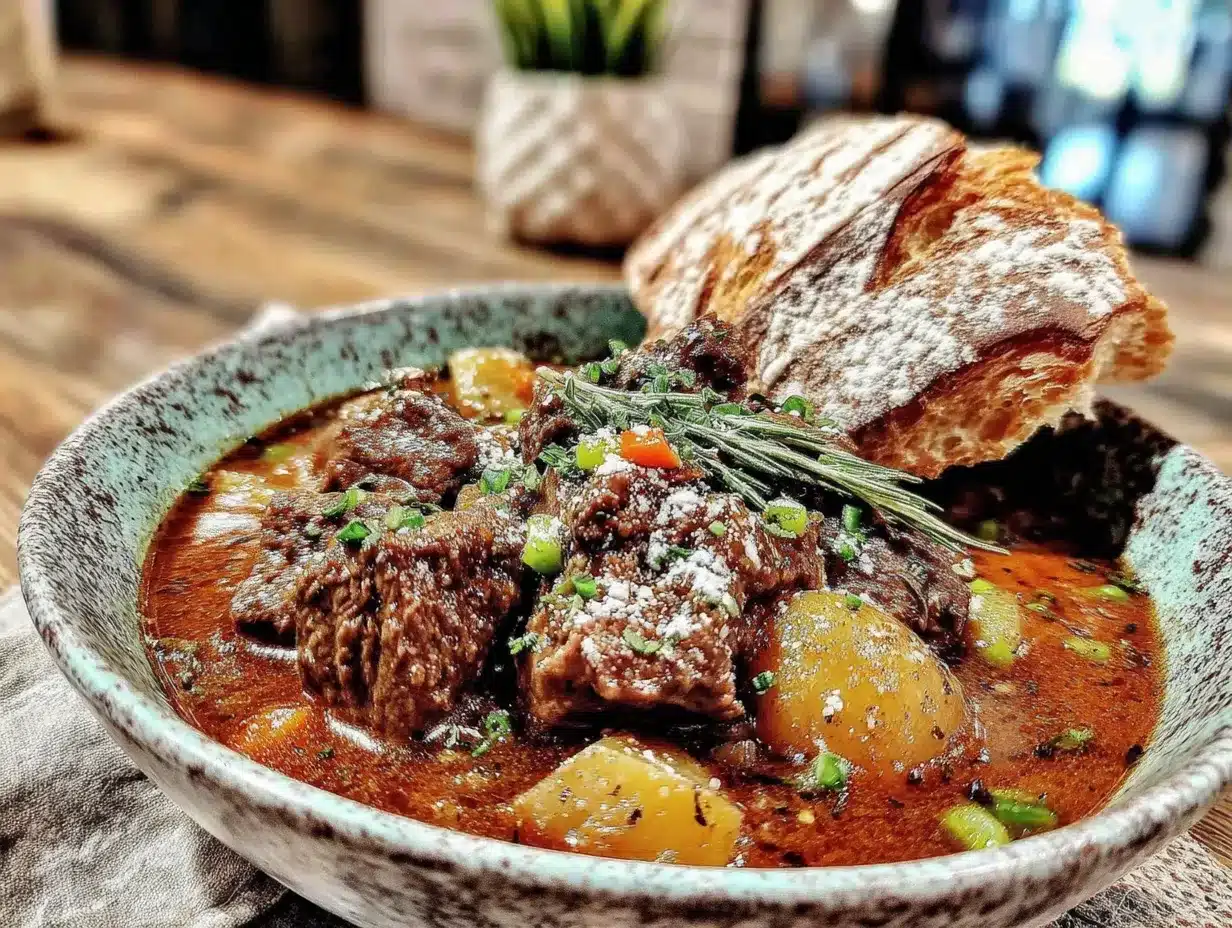
- 4 medium russet potatoes, peeled and cubed into 1-inch pieces (Yukon Golds work great too; they hold their shape better)
- 3 large carrots, peeled and sliced (add natural sweetness and color)
- 2 celery stalks, sliced (adds that classic stew flavor and texture)
- 1 cup frozen peas (add them at the end to keep them bright green)
For the Broth and Seasoning
- 4 cups beef broth (I prefer low-sodium so I can control the salt; Swanson or Kitchen Basics are my go-to brands)
- 1 can (14.5 oz) diced tomatoes, undrained (adds acidity and richness to the broth)
- 2 tablespoons tomato paste (this is the secret to a deep, savory flavor)
- 1 tablespoon Worcestershire sauce (adds umami and complexity)
- 1 teaspoon smoked paprika (regular paprika works, but smoked adds that little something extra)
- 1 teaspoon dried thyme (or 1 tablespoon fresh thyme leaves)
- 1 bay leaf (remember to remove it before serving)
- Salt and black pepper to taste (start with 1 teaspoon salt and ½ teaspoon pepper, then adjust)
Optional Add-Ins
- 1 cup green beans, trimmed and cut (adds color and texture)
- ½ cup frozen corn (adds a touch of sweetness)
- Fresh parsley, chopped (for garnish and a fresh finish)
One thing I’ve learned from making this stew over and over is that ingredient quality matters, even with simple foods. For the beef, I recommend looking for ground beef that’s not too lean—the 80/20 blend adds flavor that leaner cuts just can’t match. And for the potatoes, russets are ideal because they break down slightly and help thicken the broth naturally. If you’re in a pinch, Yukon Golds work beautifully too, though they hold their shape a bit more. And don’t skip the tomato paste—it’s the ingredient that gives this stew that deep, slow-cooked flavor even though it comes together in under an hour.
Equipment Needed
You don’t need a fancy kitchen to make this hearty poor man’s stew. Here’s what I use every time I make it:
- Large Dutch oven or heavy-bottomed pot (at least 5 quarts; I use my trusty Lodge enameled Dutch oven that I’ve had for years)
- Sharp chef’s knife (a dull knife makes chopping vegetables frustrating and dangerous)
- Cutting board (wood or plastic, whatever you have)
- Wooden spoon or spatula (for stirring and breaking up the ground beef)
- Measuring cups and spoons (eyeballing works for some things, but for seasoning, I recommend being precise)
- Ladle (for serving)
- Vegetable peeler (if you’re peeling your potatoes and carrots)
If you don’t have a Dutch oven, don’t worry. A large soup pot or even a deep skillet with a lid will work just fine. I’ve made this stew in a cheap nonstick pot when I was traveling, and it turned out great. The key is having a pot that holds heat evenly and has a lid for simmering. And if you don’t have a vegetable peeler, just scrub your potatoes well and leave the skins on—they add fiber and flavor anyway. Honestly, I’ve forgotten my peeler before and the stew was still delicious. This recipe is forgiving like that.
Preparation Method
Making this hearty poor man’s stew is straightforward, but I’ve included all the little details that make the difference between a good stew and a great one. Follow these steps, and you’ll have a pot of comfort that tastes like it simmered all day.
- Prep your vegetables first. Peel and cube the potatoes into 1-inch pieces. Slice the carrots and celery. Dice the onion. Mince the garlic. Having everything ready before you start cooking makes the process smooth and stress-free. I learned this the hard way after burning garlic while scrambling to chop an onion.
- Brown the ground beef. Heat the olive oil in your Dutch oven over medium-high heat. Add the ground beef and cook, breaking it up with your wooden spoon, until it’s browned all over—about 6 to 8 minutes. Don’t rush this step. You want some nice brown bits on the bottom of the pot; that’s flavor waiting to happen. If there’s excess fat, spoon it out, leaving about 1 tablespoon in the pot.
- Sauté the aromatics. Add the diced onion to the pot with the beef and cook for 3 to 4 minutes, until it’s soft and translucent. Stir in the minced garlic and cook for another 30 seconds until fragrant. Your kitchen should smell amazing at this point. If it doesn’t, your garlic might be past its prime.
- Build the flavor base. Stir in the tomato paste and cook for 1 to 2 minutes, stirring constantly. This step removes the raw taste and deepens the tomato flavor. Then add the Worcestershire sauce, smoked paprika, dried thyme, and a generous pinch of black pepper. Stir everything together until the beef and onions are well coated.
- Add the liquids and vegetables. Pour in the beef broth and the can of diced tomatoes with their juices. Use your wooden spoon to scrape up all those browned bits from the bottom of the pot—that’s where so much flavor lives. Add the cubed potatoes, sliced carrots, and celery. Tuck the bay leaf into the liquid.
- Bring to a boil, then simmer. Turn the heat to high and bring the stew to a gentle boil. Once it’s bubbling, reduce the heat to low, cover the pot, and let it simmer for 25 to 30 minutes. You want a gentle simmer, not a vigorous boil. The potatoes should be fork-tender when they’re done.
- Add the peas and adjust seasoning. Stir in the frozen peas and let them warm through for about 2 minutes. Taste the broth and adjust the salt and pepper as needed. I usually add about ½ teaspoon more salt at this point, but it depends on your broth and personal preference.
- Rest and serve. Remove the bay leaf and let the stew sit off the heat for 5 to 10 minutes before serving. This allows the flavors to meld together and the stew to thicken slightly. Ladle into bowls and garnish with fresh parsley if you have it.
A few things I’ve learned from making this stew many times: If the stew seems too thick, add a splash of beef broth or water. If it’s too thin, let it simmer uncovered for an extra 5 to 10 minutes. And whatever you do, don’t skip the resting time at the end. That short pause makes a noticeable difference in how the flavors come together. Trust me on this one.
Cooking Tips & Techniques
After making this hearty poor man’s stew more times than I can count, I’ve picked up a few tricks that make the process easier and the results better. Let me share what I’ve learned.
Don’t overcrowd the pot when browning the beef. If you’re doubling the recipe, brown the meat in batches. When too much meat is in the pot at once, it steams instead of browning, and you lose that deep, caramelized flavor. I learned this the hard way when I tried to cook two pounds of ground beef at once and ended up with gray, sad meat. Never again.
Season in layers. Add a pinch of salt when you brown the beef, another when you sauté the onions, and then adjust at the end. This builds flavor gradually rather than dumping it all in at once. It’s a small habit that makes a big difference.
Use the right potato. Russet potatoes break down slightly and thicken the broth naturally, which is exactly what you want in a stew. If you prefer chunky potatoes that hold their shape, go with Yukon Golds or red potatoes. Both work, but they give different results.
Let the stew rest. I know I mentioned this already, but it’s worth repeating. The stew continues to thicken and develop flavor as it sits. If you can make it a few hours ahead or even the day before, it will taste even better. The flavors just get deeper and more harmonious overnight.
A common mistake I see: People add all the liquid at once and then wonder why their stew is watery. The key is to start with the amount listed and let it simmer down. You can always add more liquid, but you can’t take it out. If your stew seems too thin at the end, just let it simmer uncovered for a few extra minutes.
One more thing—taste as you go. I know it sounds obvious, but I’ve caught myself skipping this step when I’m in a hurry, and I always regret it. A pinch of salt or a dash of pepper at the right moment can transform the entire dish. Your taste buds are the best tool you have in the kitchen.
Variations & Adaptations
One of the best things about this hearty poor man’s stew is how adaptable it is. Over the years, I’ve tried several variations, and they’ve all been delicious in their own way. Here are some of my favorites:
Slow Cooker Version: Brown the beef and sauté the onions and garlic in a skillet first, then transfer everything to your slow cooker. Add all the remaining ingredients except the peas. Cook on low for 6 to 8 hours or on high for 3 to 4 hours. Stir in the peas during the last 15 minutes. This version is perfect for busy days when you want dinner waiting for you.
Vegetarian Adaptation: Swap the ground beef for two cans of drained and rinsed chickpeas or a bag of frozen meatless crumbles. Use vegetable broth instead of beef broth. The rest of the recipe stays the same, and it’s surprisingly hearty. I made this for a vegetarian friend once, and she asked for the recipe before she finished her bowl.
Spicy Kick: Add ½ teaspoon of red pepper flakes along with the garlic, or stir in a diced jalapeño (seeds removed if you want less heat). The smoky paprika and heat work beautifully together. My husband loves this version, though I usually make a mild batch for the kids.
Herb Swap: If you don’t have thyme, try rosemary or oregano. I’ve used dried Italian seasoning in a pinch, and it worked perfectly. Fresh herbs are lovely if you have them—just double the amount and add them in the last 10 minutes of cooking.
Add More Vegetables: This stew is a great way to use up whatever vegetables you have. Zucchini, bell peppers, mushrooms, or even a handful of spinach stirred in at the end all work beautifully. I once added a chopped sweet potato instead of a regular potato, and it added a lovely sweetness that balanced the savory broth.
The beauty of this recipe is that it’s a template, not a strict formula. Once you’ve made it as written, feel free to experiment. You might discover your own perfect version.
Serving & Storage Suggestions
This hearty poor man’s stew is incredibly versatile when it comes to serving and storing. Here’s how I handle both.
Serving: Ladle the stew into deep bowls while it’s still hot. I love serving it with a chunk of crusty bread or a warm dinner roll for sopping up every last drop of broth. A simple side salad with a tangy vinaigrette cuts through the richness beautifully. For a heartier meal, serve it over rice, egg noodles, or even mashed potatoes—yes, potatoes on potatoes, and it’s amazing. A sprinkle of fresh parsley or a dollop of sour cream on top adds a nice finishing touch.
Storage: This stew keeps beautifully in the refrigerator for up to 4 days. Let it cool completely before transferring it to an airtight container. The flavors actually deepen and improve overnight, so leftovers taste even better than the first serving. I often make a double batch just for this reason.
Freezing: This stew freezes wonderfully for up to 3 months. Let it cool completely, then portion it into freezer-safe containers or zip-top bags. Leave a little room for expansion. When you’re ready to eat it, thaw it overnight in the refrigerator and reheat gently on the stovetop or in the microwave. Add a splash of broth or water if it seems too thick after thawing.
Reheating: Reheat the stew on the stovetop over medium-low heat, stirring occasionally, until it’s hot throughout. You can also microwave individual portions in 30-second bursts, stirring between each. If the stew has thickened too much in the fridge, just stir in a little beef broth or water until it reaches your desired consistency.
One thing I’ve noticed is that this stew tastes even better the next day. Something magical happens overnight as the flavors meld together. So don’t be afraid to make it ahead—your future self will thank you.
Nutritional Information & Benefits
This hearty poor man’s stew is not just comforting—it’s also packed with nutrition. Here’s a rough breakdown per serving (based on 6 servings):
| Nutrient | Amount Per Serving |
|---|---|
| Calories | 385 |
| Protein | 24g |
| Carbohydrates | 35g |
| Fiber | 6g |
| Fat | 16g |
| Saturated Fat | 5g |
| Sodium | 780mg |
| Vitamin A | 120% DV |
| Vitamin C | 35% DV |
| Iron | 25% DV |
Health Benefits: The carrots and potatoes provide a healthy dose of vitamin A and vitamin C, while the beef offers high-quality protein and iron. The fiber from the vegetables helps keep you full and supports digestive health. This stew is naturally gluten-free and dairy-free, making it suitable for many dietary needs. If you’re watching your sodium, use low-sodium broth and go easy on the added salt—you can always add more at the table.
I love that this stew feels indulgent and comforting while still being packed with real, whole ingredients. It’s the kind of meal that nourishes your body and your soul at the same time. And honestly, that’s the best kind of cooking.
FAQs
Can I use ground turkey instead of ground beef?
Absolutely! Ground turkey works well in this recipe. Just be aware that turkey is leaner, so you might want to add an extra tablespoon of olive oil to keep the stew moist and flavorful. The taste will be slightly different, but it’s still delicious.
How can I make this stew thicker?
If you prefer a thicker stew, you have a few options. You can mash some of the potatoes against the side of the pot before serving, which releases their starch and thickens the broth naturally. Alternatively, mix 1 tablespoon of cornstarch with 2 tablespoons of cold water and stir it into the simmering stew. Let it cook for 2 to 3 minutes until it thickens.
Can I make this in an Instant Pot?
Yes! Use the sauté function to brown the beef and cook the aromatics. Then add the remaining ingredients except the peas. Pressure cook on high for 8 minutes, then do a quick release. Stir in the peas and let them warm through. It’s faster than the stovetop version and works beautifully.
Why is my stew broth thin?
Thin broth usually means the stew hasn’t simmered long enough, or the potatoes haven’t broken down enough to release their starch. Let it simmer uncovered for 5 to 10 more minutes, and it should thicken. If it’s still thin, try mashing a few potato pieces against the pot to release more starch.
Can I omit the tomatoes?
You can, but the stew will lose some of its depth and acidity. If you need to skip the tomatoes, add an extra cup of beef broth and a splash of apple cider vinegar or lemon juice to brighten the flavors. It won’t be exactly the same, but it will still be tasty.
Conclusion
This hearty poor man’s stew with ground beef and potatoes has become a staple in my kitchen for good reason. It’s proof that you don’t need expensive ingredients or complicated techniques to create something truly satisfying. Every time I make it, I’m reminded that the best recipes often come from simple, honest ingredients handled with care. The ground beef gets perfectly seasoned, the potatoes turn tender and silky, and the broth becomes this rich, savory liquid that feels like a warm hug in a bowl.
I hope you give this recipe a try and make it your own. Add extra vegetables, adjust the seasonings, or serve it over your favorite grain—this stew is flexible enough to work with whatever you have on hand. And when you do make it, I’d love to hear how it turned out. Drop a comment below and let me know what variations you tried or how your family liked it. Your feedback helps other home cooks discover new ways to enjoy this recipe.
Happy cooking, friends. May your pot always be full and your heart always be warm.
Pin This Recipe!
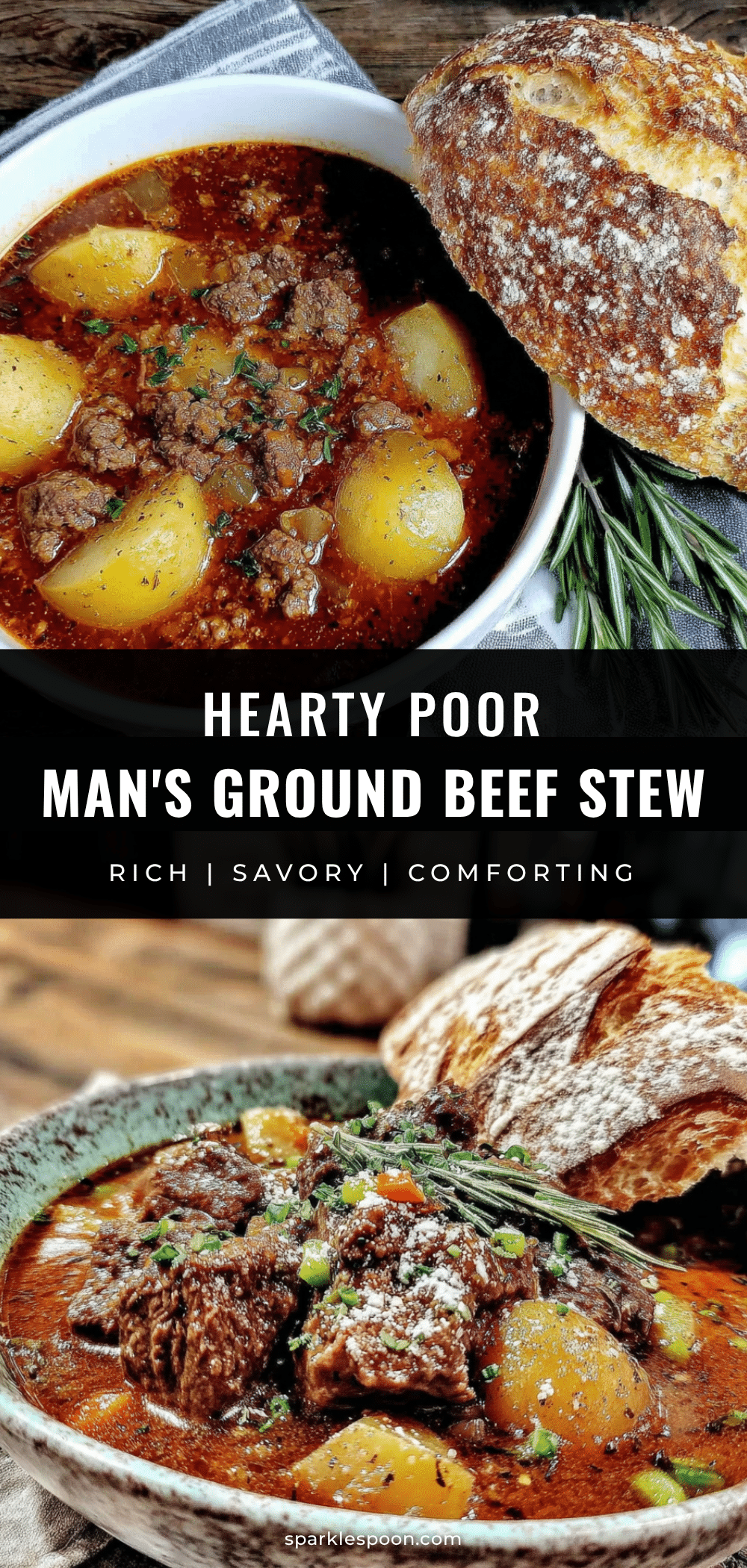
Hearty Poor Man’s Stew Recipe with Ground Beef & Potatoes

A comforting, budget-friendly stew made with ground beef and potatoes in a rich, savory broth. This one-pot wonder is perfect for busy weeknights and uses simple pantry ingredients to create a deeply satisfying meal.
- Prep Time: 15 minutes
- Cook Time: 35 minutes
- Total Time: 50 minutes
- Yield: 6 servings 1x
- Category: Main Course
- Cuisine: American
Ingredients
- 1 pound ground beef (80/20 works best)
- 1 tablespoon olive oil
- 1 medium yellow onion, diced
- 3 cloves garlic, minced
- 4 medium russet potatoes, peeled and cubed into 1-inch pieces
- 3 large carrots, peeled and sliced
- 2 celery stalks, sliced
- 1 cup frozen peas
- 4 cups beef broth (low-sodium preferred)
- 1 can (14.5 oz) diced tomatoes, undrained
- 2 tablespoons tomato paste
- 1 tablespoon Worcestershire sauce
- 1 teaspoon smoked paprika
- 1 teaspoon dried thyme
- 1 bay leaf
- Salt and black pepper to taste (start with 1 teaspoon salt and ½ teaspoon pepper)
- Optional: 1 cup green beans, trimmed and cut
- Optional: ½ cup frozen corn
- Optional: Fresh parsley, chopped for garnish
Instructions
- Prep your vegetables first. Peel and cube the potatoes into 1-inch pieces. Slice the carrots and celery. Dice the onion. Mince the garlic.
- Heat the olive oil in a Dutch oven over medium-high heat. Add the ground beef and cook, breaking it up, until browned all over, about 6 to 8 minutes. Spoon out excess fat, leaving about 1 tablespoon in the pot.
- Add the diced onion and cook for 3 to 4 minutes until soft and translucent. Stir in the minced garlic and cook for 30 seconds until fragrant.
- Stir in the tomato paste and cook for 1 to 2 minutes, stirring constantly. Add the Worcestershire sauce, smoked paprika, dried thyme, and a generous pinch of black pepper. Stir to coat the beef and onions.
- Pour in the beef broth and diced tomatoes with their juices. Scrape up any browned bits from the bottom of the pot. Add the cubed potatoes, sliced carrots, and celery. Tuck the bay leaf into the liquid.
- Bring to a gentle boil over high heat, then reduce heat to low, cover, and simmer for 25 to 30 minutes until potatoes are fork-tender.
- Stir in the frozen peas and let warm through for about 2 minutes. Taste and adjust salt and pepper as needed.
- Remove the bay leaf and let the stew rest off the heat for 5 to 10 minutes before serving. Ladle into bowls and garnish with fresh parsley if desired.
Notes
For a thicker stew, mash some of the potatoes against the side of the pot before serving. This stew tastes even better the next day as flavors meld. Can be made in a slow cooker or Instant Pot (see variations in blog). Russet potatoes are ideal for thickening the broth naturally.
Nutrition
- Serving Size: 1 bowl (about 1.5 cu
- Calories: 385
- Sugar: 8
- Sodium: 780
- Fat: 16
- Saturated Fat: 5
- Carbohydrates: 35
- Fiber: 6
- Protein: 24
Keywords: poor man's stew, ground beef stew, potato stew, hearty stew, budget-friendly dinner, one-pot meal, comfort food, easy stew recipe