Love this? Save it for later!
Share the inspiration with your friends
I’m not supposed to play favorites with recipes, but here we are.
Three winters ago, I walked into my neighbor’s house to borrow a ladder—nothing special, just a quick Tuesday afternoon favor. But the smell that hit me before I even got through the doorway stopped me cold. It was warm, slightly floral, deeply spiced, and somehow both sweet and earthy at the same time. I stood there like an idiot, one foot in the door, completely forgetting why I’d come over.
My neighbor, Clara, was at the stove stirring a big pot with this completely unbothered expression. She wasn’t trying to impress anyone. She was making homemade elderberry syrup with honey, and to her, it was just another Tuesday chore—like folding laundry or sweeping the porch. But to me, it was this magical, bubbling pot of goodness that smelled like winter hadn’t stood a chance.
I asked her what she was making, and she just shrugged and said, “Oh, just my yearly batch of syrup. Keeps the colds away.” She handed me a spoonful, and honestly, I was hooked. It wasn’t overly sweet or medicine-like. It was rich and cozy, with a honey finish that lingered in the best way.
Of course, I asked for the recipe, and she scribbled it on a scrap of paper that still has a coffee ring on it. I’ve made this homemade elderberry syrup with honey every single season since then. Maybe you’ve been there—tasting something so unexpectedly good that you can’t stop thinking about it. That’s this recipe.
It’s not just for cold season, either. I drizzle it on pancakes, swirl it into yogurt, and sometimes just take a spoonful when I need a little comfort. Let me tell you, this stuff is the real deal.
Why You’ll Love This Recipe
This isn’t just another wellness trend. This homemade elderberry syrup with honey is something I’ve tested, tweaked, and trusted through multiple flu seasons, busy work weeks, and even a few picky-kid breakfast tables. It’s earned its spot in my fridge.
- Quick & Easy : From start to finish, this comes together in under an hour. Most of that time is hands-off simmering, so you can fold laundry or answer emails while it works its magic.
- Simple Ingredients : You don’t need a specialty grocery store. Dried elderberries, raw honey, and a few pantry spices are all it takes. I bet you already have the ginger and cinnamon.
- Perfect for Cold Season : This syrup is my go-to when the sniffles start. It’s also wonderful for post-holiday immunity boosts or just getting through a stressful week.
- Crowd-Pleaser : Even people who swear they hate “herbal stuff” love this. The honey and spices make it taste like a warm hug, not medicine.
- Unbelievably Delicious : The texture is silky, the flavor is deep and complex, and the honey adds a natural sweetness that processed sugar just can’t match.
What makes this different from every other recipe out there? It’s the balance. I spent three batches getting the spice ratios just right—not too much clove, not too little ginger. And using raw honey instead of sugar or maple syrup gives it a floral depth that changes everything. This isn’t just another version. It’s the version I keep coming back to.
Honestly, this recipe makes you feel like you’re taking care of yourself. It’s comfort in a jar—healthier, faster, and way more satisfying than anything you’d buy at the store.
What Ingredients You Will Need
This recipe relies on a short list of simple, whole ingredients. Most of them are probably already in your pantry or spice rack. The star, of course, is the dried elderberries, which you can find at health food stores or online.
- 1 cup dried elderberries (look for deep purple-black berries; avoid any with lots of stems or debris)
- 4 cups filtered water (tap water works, but filtered gives a cleaner taste)
- 1 (3-inch) piece fresh ginger, sliced into thin rounds (no need to peel—just wash it well)
- 2 cinnamon sticks (I prefer Ceylon cinnamon for a milder, sweeter flavor)
- 1 teaspoon whole cloves (go easy—they’re potent and can overpower the syrup)
- 1 cup raw honey (use local honey if you can; it adds unique floral notes and may help with seasonal allergies)
- Optional: 1 star anise (adds a subtle licorice note that pairs beautifully with the honey)
- Optional: 1/2 teaspoon turmeric powder (for extra anti-inflammatory benefits and a warm golden color)
Ingredient Tips: I recommend buying dried elderberries from Mountain Rose Herbs or your local co-op. They’re consistently high quality and free of stems. For the honey, look for a brand that’s labeled “raw” and “unfiltered”—that’s where the good stuff (enzymes, pollen, flavor) lives.
If you’re out of fresh ginger, you can use 1 teaspoon of dried ground ginger, but the fresh stuff really makes a difference in the syrup’s zing. And if you’re avoiding honey, you can substitute maple syrup, but the flavor will be less floral and more woodsy.
Equipment Needed
You don’t need a fancy kitchen to make this. Here’s what you’ll need:
- Large saucepan or stockpot (at least 3-quart capacity; I use a 4-quart stainless steel pot)
- Fine-mesh strainer (a nut milk bag or cheesecloth also works, but a fine-mesh strainer is easier to clean)
- Glass jars or bottles (two 16-ounce mason jars work perfectly; sterilize them first by boiling or running through the dishwasher)
- Wooden spoon (for stirring—metal can react with the acidic ingredients)
- Measuring cups and spoons
- Funnel (makes pouring into jars much less messy)
If you don’t have a fine-mesh strainer, you can use cheesecloth folded over a few times. I’ve done that in a pinch, and it works fine—just takes a little longer. Also, a ladle helps when transferring the hot liquid to the funnel.
Preparation Method
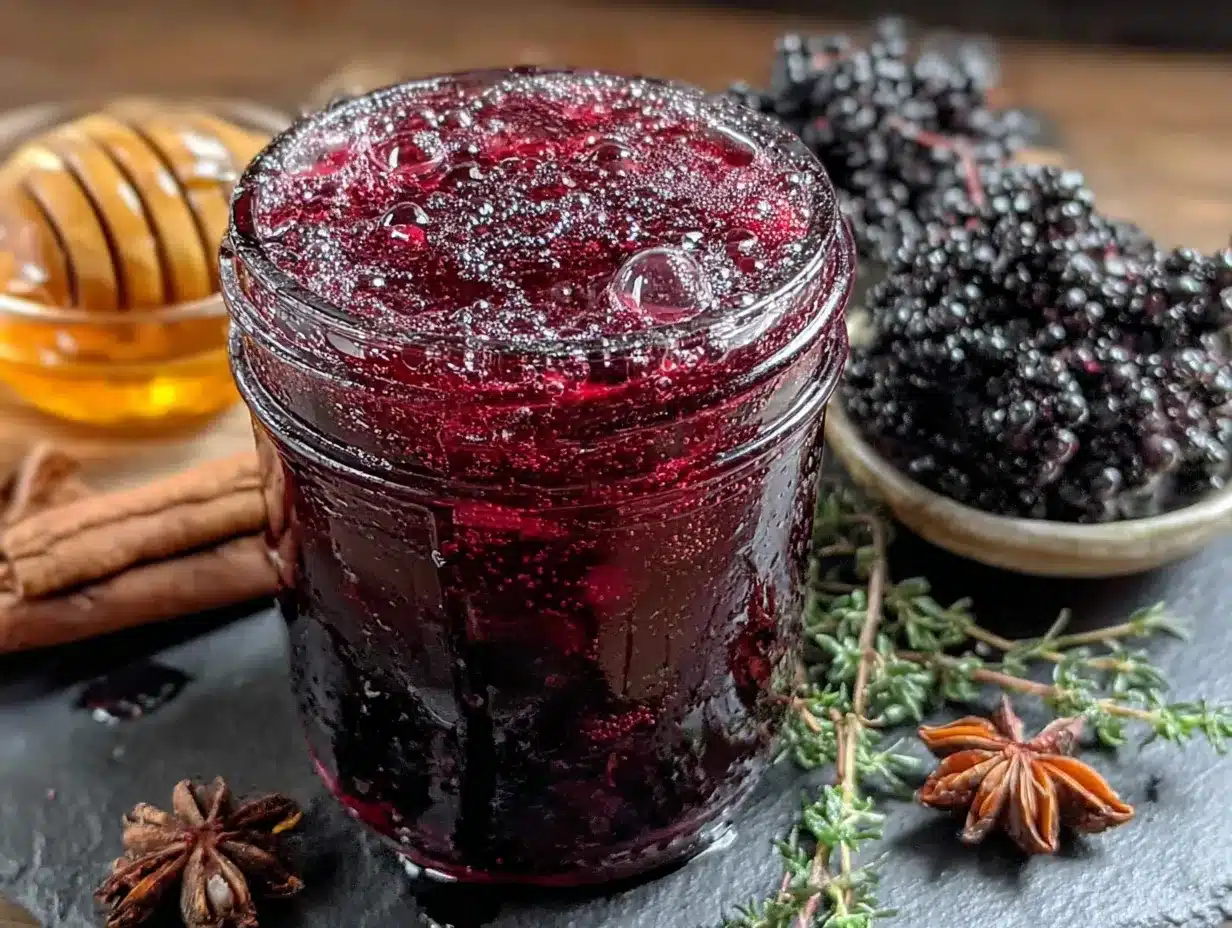
Making this homemade elderberry syrup with honey is almost meditative. The whole process takes about 45 minutes, and most of it is just letting the berries do their thing on the stove.
- Rinse the elderberries. Place the dried elderberries in the strainer and give them a quick rinse under cool water. This removes any dust or tiny stem pieces. Don’t soak them—just a quick rinse.
- Combine berries, water, and spices. In your large saucepan, add the rinsed elderberries, 4 cups of filtered water, sliced ginger, cinnamon sticks, and whole cloves. If you’re using star anise, add it now.
- Bring to a boil, then simmer. Turn the heat to high and bring the mixture to a boil. Once it’s boiling, reduce the heat to low and let it simmer uncovered for 30-35 minutes. You’ll see the liquid turn a deep, almost black-purple color, and your kitchen will smell incredible.
- Mash the berries. After 30 minutes, use the back of your wooden spoon to gently mash the berries against the side of the pot. This releases more of their goodness. Let it simmer for another 5 minutes.
- Strain the liquid. Place your fine-mesh strainer over a large bowl or measuring cup. Carefully pour the hot liquid through the strainer. Let it sit for a few minutes to drain completely. Don’t press on the berries too hard, or you’ll get cloudy syrup (it’s still fine, just less pretty).
- Cool slightly. Let the strained liquid cool for about 10-15 minutes. It should be warm but not hot—around 120°F (49°C). This is important because raw honey loses its beneficial enzymes when heated above 118°F (48°C).
- Stir in the honey. Once the liquid has cooled slightly, pour in the 1 cup of raw honey. Stir gently but thoroughly until the honey is completely dissolved. The mixture will thin out a bit as the honey incorporates.
- Bottle and store. Using your funnel, pour the syrup into the sterilized glass jars. Leave about 1/2 inch of headspace at the top. Seal tightly and let it cool to room temperature before refrigerating.
Sensory Cues: At step 3, you’ll know it’s ready when the liquid looks like dark grape juice and the berries have plumped up and softened. The smell should be spicy and sweet—like a holiday candle, but real. When you mash the berries (step 4), you should feel them give way easily under the spoon.
Personal Tip: I always set a timer for 30 minutes, but I also keep an ear out. The simmer should be gentle—just a few lazy bubbles breaking the surface. If it’s boiling hard, turn the heat down. You want to extract the goodness, not boil it away.
Cooking Tips & Techniques
After years of making this, I’ve learned a few things the hard way. Here’s what I wish someone had told me the first time.
Don’t boil the honey. This is the biggest mistake I made on my first batch. I added the honey while the liquid was still piping hot, and it killed all the beneficial enzymes. Let the liquid cool to warm—think bathwater temperature—before stirring in the honey.
Watch the cloves. Whole cloves are potent. I once got distracted and added a whole tablespoon instead of a teaspoon. The syrup tasted like a Christmas candle. Stick to the measurement, and consider tying the cloves in a piece of cheesecloth so you can fish them out easily.
Strain twice for clarity. If you want a crystal-clear syrup (great for gifting), strain the liquid through the fine-mesh strainer first, then through a coffee filter or a double layer of cheesecloth. I don’t always bother, but it makes a beautiful jar.
Multitasking tip: While the berries are simmering, sterilize your jars. Boil them in hot water for 10 minutes, or run them through a hot dishwasher cycle. This saves time and ensures your syrup stays fresh longer.
Consistency check: The syrup will be thin when it’s warm. Don’t worry—it thickens as it cools. If it’s still too thin after refrigeration, you can simmer it a little longer next time to reduce it more. But honestly, a thinner syrup is easier to drizzle.
Variations & Adaptations
This recipe is flexible. Here are a few ways I’ve adapted it over the years:
- Spicy Kick Version: Add 1/4 teaspoon of cayenne pepper or a small dried chili to the simmer. It gives the syrup a warming heat that’s amazing when you’re feeling congested.
- Citrus Boost: Add the zest of one orange and one lemon (use a vegetable peeler to get wide strips, avoiding the white pith). Simmer with the berries for a bright, fruity twist.
- Alcohol-Based Tincture: For a longer shelf life, you can make a tincture instead. After straining the liquid, skip the honey and add 1 cup of vodka or brandy. Store in a dark cabinet. This version lasts up to a year.
- Low-Sugar Option: Use just 1/2 cup of honey and add a few drops of stevia to taste. The flavor will be less floral, but still delicious.
- Dried Herb Addition: I once added a sprig of fresh rosemary during the simmer, and it was surprisingly good. Echinacea or astragalus root also pair well for extra immune support.
My personal favorite variation is the citrus boost. I made it last spring when I had a surplus of lemons, and the syrup was incredible drizzled over vanilla ice cream. Don’t knock it ’til you try it.
Serving & Storage Suggestions
This syrup is surprisingly versatile. Here’s how I use it:
- Daily dose: Take 1 tablespoon (adults) or 1 teaspoon (kids) daily during cold season. I just take it straight—it’s sweet enough to be pleasant.
- In drinks: Stir a tablespoon into hot tea, warm water with lemon, or even sparkling water for a mocktail. It’s amazing in ginger tea.
- On food: Drizzle over pancakes, waffles, oatmeal, yogurt, or ice cream. It’s also wonderful brushed on roasted chicken or pork during the last few minutes of cooking.
- As a glaze: Use it as a glaze for baked ham or roasted root vegetables. The honey caramelizes beautifully.
Storage: Keep the syrup in a sealed glass jar in the refrigerator. It will last for 2-3 months. If you see any mold or fermentation (bubbles, off smell), toss it and make a fresh batch.
Freezing: You can freeze the syrup in ice cube trays for individual portions. Once frozen, pop the cubes out and store them in a freezer bag. They’ll keep for up to 6 months. Thaw a cube in the fridge overnight.
Reheating: If the honey crystallizes in the fridge (this happens sometimes with raw honey), just set the jar in a bowl of warm water for a few minutes and stir. Don’t microwave it, or you’ll destroy the honey’s benefits.
I find the flavors actually deepen after a week in the fridge. The spices meld together, and the honey becomes more pronounced. So don’t worry if it tastes a little different on day one.
Nutritional Information & Benefits
This isn’t a medical claim, but here’s what I’ve learned about the ingredients in this syrup:
- Elderberries: Packed with antioxidants and vitamins A and C. Traditionally used to support the immune system and reduce cold symptoms.
- Raw Honey: Contains natural enzymes, antioxidants, and antibacterial properties. Local honey may help with seasonal allergies.
- Ginger: Known for its anti-inflammatory effects and ability to soothe sore throats and nausea.
- Cinnamon: Rich in antioxidants and may help regulate blood sugar.
- Cloves: Contain eugenol, a compound with anti-inflammatory and pain-relieving properties.
Estimated Nutrition per 1 tablespoon serving:
- Calories: 35
- Carbohydrates: 9g
- Sugars: 8g (from honey)
- Fat: 0g
- Protein: 0g
- Vitamin C: 2% DV
Dietary Notes: This recipe is gluten-free, dairy-free, and refined sugar-free. It’s not suitable for infants under 1 year old due to the honey (risk of botulism). If you’re diabetic, consult your doctor, as the honey will affect blood sugar.
I personally love that this syrup lets me feel like I’m doing something proactive for my health. It’s not a cure-all, but it’s a delicious, comforting way to support my body through the winter months.
Conclusion
This homemade elderberry syrup with honey has become a staple in my kitchen, and I honestly can’t imagine going through a cold season without it. It’s one of those recipes that feels like a secret weapon—simple to make, incredibly rewarding, and loved by everyone who tries it.
I hope you give it a try and make it your own. Tweak the spices, try the citrus version, or just stick with the classic. The beauty of this recipe is that it’s forgiving and flexible. You really can’t mess it up.
When you make a batch, I’d love to hear about it. Drop a comment below and tell me how you like to use it—on pancakes, in tea, or straight from the spoon (no judgment here). And if you share it on social media, tag me so I can see your beautiful jars of purple goodness.
Stay healthy, stay cozy, and keep cooking. This syrup is your winter armor, and it tastes like a hug in a jar.
Frequently Asked Questions
How long does homemade elderberry syrup last in the fridge?
Properly stored in a sealed glass jar, your syrup will last 2-3 months in the refrigerator. Always check for signs of mold or fermentation before using.
Can I use fresh elderberries instead of dried?
Yes, but you’ll need to adjust the amount. Use 2 cups of fresh elderberries in place of 1 cup dried. Also, never eat raw fresh elderberries—they must be cooked to be safe.
Is this syrup safe for children?
Yes, for children over 1 year old. The standard dose is 1 teaspoon daily for kids ages 1-6, and 1 tablespoon for older children. Do not give honey to infants under 12 months due to botulism risk.
Can I make this without honey?
Absolutely. You can substitute maple syrup, agave nectar, or even coconut sugar (dissolved in a little warm water). The flavor will change slightly, but it will still be delicious and beneficial.
Why did my syrup crystallize?
Crystallization happens naturally with raw honey, especially when refrigerated. It’s not spoiled. Simply place the jar in a bowl of warm water and stir until the crystals dissolve. Avoid microwaving.
Pin This Recipe!
The Best Homemade Elderberry Syrup with Honey Recipe
This homemade elderberry syrup with honey is a comforting, immune-boosting staple that’s quick and easy to make. With simple ingredients like dried elderberries, raw honey, and warming spices, it’s perfect for cold season and versatile enough to drizzle on pancakes or swirl into yogurt.
- Prep Time: 10 minutes
- Cook Time: 35 minutes
- Total Time: 45 minutes
- Yield: 4 servings 1x
- Category: Condiment
- Cuisine: American
Ingredients
- 1 cup dried elderberries
- 4 cups filtered water
- 1 (3-inch) piece fresh ginger, sliced into thin rounds
- 2 cinnamon sticks
- 1 teaspoon whole cloves
- 1 cup raw honey
- Optional: 1 star anise
- Optional: 1/2 teaspoon turmeric powder
Instructions
- Rinse the dried elderberries under cool water in a fine-mesh strainer.
- In a large saucepan, combine the rinsed elderberries, 4 cups filtered water, sliced ginger, cinnamon sticks, and whole cloves. Add star anise if using.
- Bring to a boil over high heat, then reduce heat to low and simmer uncovered for 30-35 minutes, until the liquid is deep purple and the berries are plump.
- Using the back of a wooden spoon, gently mash the berries against the side of the pot. Simmer for another 5 minutes.
- Strain the liquid through a fine-mesh strainer into a large bowl or measuring cup. Let it drain completely without pressing the berries too hard.
- Let the strained liquid cool for 10-15 minutes until warm (about 120°F / 49°C).
- Stir in the raw honey until fully dissolved.
- Pour the syrup into sterilized glass jars using a funnel, leaving about 1/2 inch headspace. Seal tightly and let cool to room temperature before refrigerating.
Notes
Do not add honey while the liquid is hot; let it cool to around 120°F to preserve raw honey’s beneficial enzymes. Whole cloves are potent—stick to 1 teaspoon. For a clearer syrup, strain twice (first through a fine-mesh strainer, then through a coffee filter or double layer of cheesecloth). The syrup thickens as it cools. Store in the refrigerator for 2-3 months. Freeze in ice cube trays for up to 6 months. If honey crystallizes, place the jar in warm water and stir—do not microwave.
Nutrition
- Serving Size: 1 tablespoon
- Calories: 35
- Sugar: 8
- Carbohydrates: 9
Keywords: elderberry syrup, homemade elderberry syrup, elderberry syrup with honey, immune booster, cold season remedy, elderberry recipe, honey syrup