Love this? Save it for later!
Share the inspiration with your friends
Introduction
“Why can’t we just mix the pumpkin puree right into the sourdough starter?” my friend asked while we were prepping for a weekend baking session. I started to explain why that wouldn’t work — then stopped. Honestly, she had a point. The idea of blending the tangy, fermented notes of sourdough with the rich, smooth pumpkin felt a little wild to me at first.
That afternoon, with a cracked mixing bowl and a kitchen timer that beeped a little too soon, we gave it a shot. The result? This cozy sourdough pumpkin bread that somehow captures the best of both worlds: the deep, complex flavor of sourdough with the warm sweetness of pumpkin, all topped with a brown butter glaze that just melts into every crumb. I mean, I was convinced it wouldn’t work, but it absolutely did—and better than I imagined.
Maybe you’ve been there—skeptical about a recipe twist, then surprised by the magic it creates. This recipe stuck with me because it’s not just about baking bread; it’s about embracing unexpected combinations and finding joy in the process. Plus, it fills the kitchen with this irresistible fall aroma that makes you want to curl up with a good book and a hot cup of tea. If you love baking with a bit of a twist and crave that cozy vibe, this sourdough pumpkin bread with brown butter glaze might just become your new favorite.
Why You’ll Love This Recipe
After many trials and a few happy accidents, this sourdough pumpkin bread recipe has become a staple in my kitchen. It’s one of those recipes that feels both special and approachable, and here’s why it could be the one you reach for on chilly mornings or relaxed weekends:
- Quick & Easy: Despite the sourdough starter, this bread comes together in under 3 hours of active work, perfect for busy days when you want homemade without the fuss.
- Simple Ingredients: You probably have most of these pantry staples on hand, and the pumpkin puree adds natural moisture and subtle sweetness without extra sugar.
- Perfect for Fall Gatherings: Whether it’s a weekend brunch or a cozy coffee break, this bread brings seasonal vibes with every slice.
- Crowd-Pleaser: Both kids and adults have given this recipe rave reviews — the sourdough tang balances the pumpkin sweetness beautifully.
- Unbelievably Delicious: The brown butter glaze is a game-changer — nutty, rich, and just the right amount of sweet to finish things off.
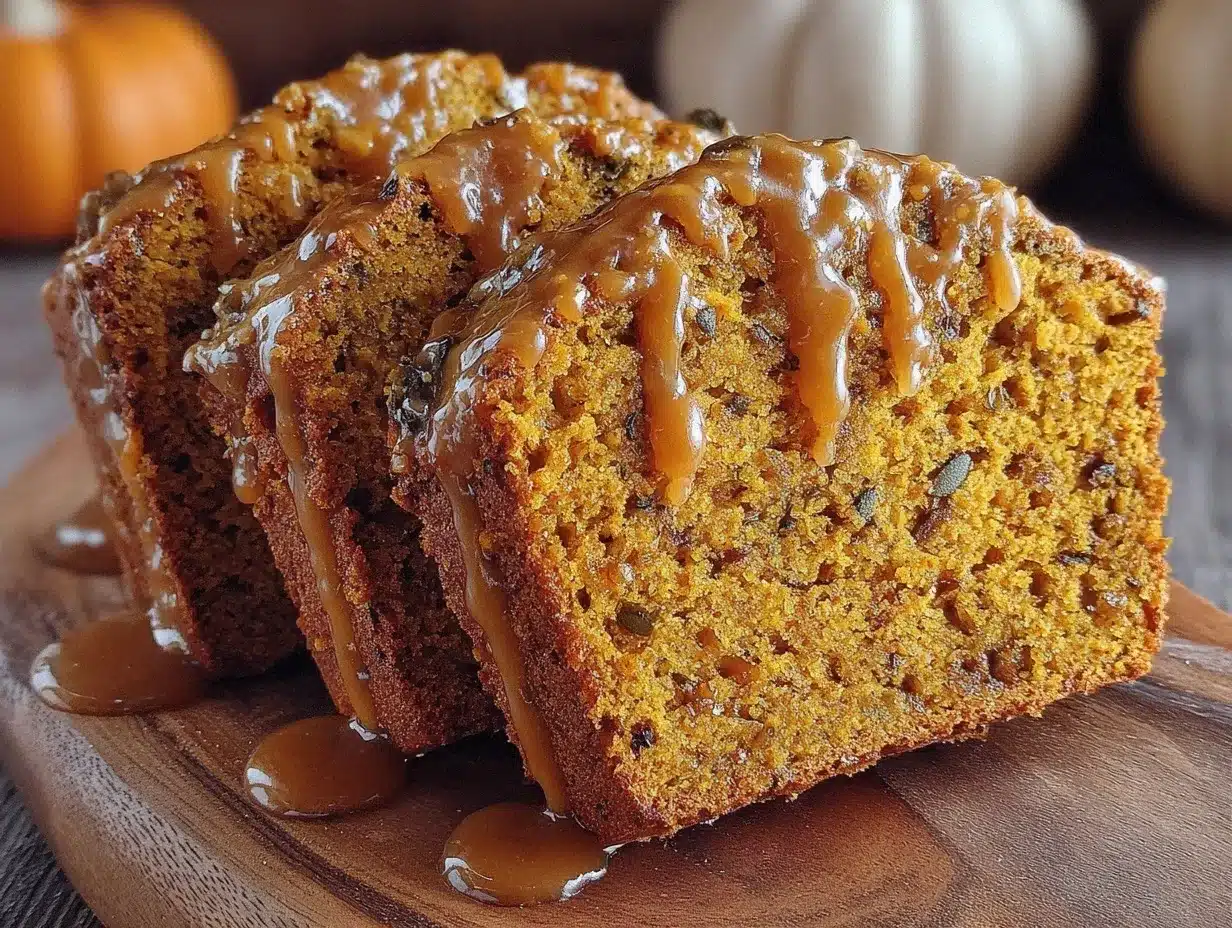
This isn’t your average pumpkin bread. The sourdough base adds a subtle depth of flavor that makes the bread feel artisanal but still homey. Plus, the brown butter glaze? It’s that little extra touch that makes you close your eyes after the first bite. I’ve shared this with friends who swear it belongs in a bakery window, but honestly, it’s way better to make it yourself. Trust me, once you try it, you’ll see why it’s a recipe I keep coming back to, no matter the season.
What Ingredients You Will Need
This recipe uses simple, wholesome ingredients to deliver bold flavor and a satisfying texture without the fuss. Most are pantry staples, and you can easily swap a few if needed.
- Sourdough starter: 100g, active and bubbly (I like using my 100% hydration starter for the best rise)
- All-purpose flour: 250g (about 2 cups), for the bread base (King Arthur flour works well here)
- Whole wheat flour: 50g (about 1/3 cup), adds nuttiness and texture
- Pumpkin puree: 200g (about 3/4 cup), canned or fresh roasted (I prefer fresh roasted for a deeper flavor)
- Brown sugar: 100g (1/2 cup), packed (adds caramel notes)
- Ground cinnamon: 2 tsp
- Ground nutmeg: 1/2 tsp
- Ground ginger: 1/4 tsp
- Salt: 1 tsp
- Baking soda: 1 tsp, helps with lift
- Eggs: 2 large, room temperature (for richness and structure)
- Vegetable oil or melted coconut oil: 60 ml (1/4 cup), adds moistness
- Vanilla extract: 1 tsp, for a warm aroma
- Butter: 50g (about 3.5 tbsp) unsalted, for the brown butter glaze
- Powdered sugar: 100g (about 3/4 cup), for the glaze
- Milk or cream: 2-3 tbsp, to thin the glaze (use dairy-free milk if needed)
If you need to make this gluten-free, you can swap the flours for a gluten-free blend but keep in mind the texture will differ slightly. For a vegan version, replace eggs with flax eggs and use a plant-based oil and milk for the glaze. I’ve found that fresh roasted pumpkin puree adds an extra layer of flavor, but canned works just fine in a pinch. And if you want a little crunch, tossing in 1/2 cup chopped walnuts or pecans works beautifully without overpowering the bread’s tender crumb.
Equipment Needed
- Mixing bowls: One large for the batter and a smaller one for the glaze
- Measuring cups and spoons: Accurate measurements keep this bread consistent
- Kitchen scale: Optional but recommended for best results, especially with flour and starter
- Whisk and spatula: For mixing wet and dry ingredients smoothly
- Loaf pan (8.5 x 4.5 inches or similar): I recommend a non-stick or well-greased metal pan for even baking
- Oven thermometer: To double-check your oven temperature, which can vary and affect rise
- Small saucepan: For browning the butter for the glaze
- Cooling rack: Allows the bread to cool evenly and prevents sogginess
If you don’t have a kitchen scale, measuring by volume works fine, but be mindful that flour can pack differently. I’ve tried silicone loaf pans before, and they work, but the crust tends to be a bit softer. For a crispier crust, metal pans are my go-to. Also, browning butter is a quick step, so a good saucepan that heats evenly helps avoid burning. Nothing worse than a scorched glaze! I keep a timer handy and stir constantly for that nutty aroma to develop just right.
Preparation Method
- Activate your sourdough starter: Make sure your 100g starter is bubbly and active—feed it about 4-6 hours before starting the bread to get the best rise. (If you’re short on time, you can use a ripe starter from the fridge, but the rise might be gentler.)
- Mix dry ingredients: In a large bowl, whisk together 250g all-purpose flour, 50g whole wheat flour, 1 tsp salt, 1 tsp baking soda, 2 tsp cinnamon, 1/2 tsp nutmeg, and 1/4 tsp ginger. This blend sets the warm, spiced foundation for the bread.
- Combine wet ingredients: In a separate bowl, beat 2 large eggs with 200g pumpkin puree, 100g brown sugar, 60 ml vegetable oil, and 1 tsp vanilla extract until smooth. The batter will be thick but creamy.
- Incorporate the starter: Stir the 100g active sourdough starter into the wet ingredients until fully combined. This step is key to melding sourdough’s tang with pumpkin’s sweetness.
- Mix wet and dry: Gradually fold the dry ingredients into the wet mixture using a spatula. Mix just until combined—overmixing can toughen the crumb. The batter will be thick but slightly sticky.
- Prepare the loaf pan: Grease your loaf pan with butter or oil and lightly dust with flour. Pour the batter in, smoothing the top with a spatula.
- Proof the dough: Cover the loaf pan loosely with a kitchen towel and let it rest at room temperature for about 1 to 1.5 hours, or until it slightly puffs up but doesn’t double in size. This gentle proofing enhances the sourdough flavor without over-fermentation.
- Bake: Preheat your oven to 350°F (175°C). Place the loaf in the center rack and bake for 50-60 minutes. Check doneness by inserting a toothpick in the center—it should come out clean or with just a few moist crumbs. If the crust browns too quickly, tent it with foil halfway through baking.
- Cool: Remove the bread from the oven and let it cool in the pan for 10 minutes before transferring to a wire rack. Cooling fully is important to set the crumb.
- Make the brown butter glaze: While the bread cools, melt 50g unsalted butter in a small saucepan over medium heat. Stir frequently until it foams and turns a golden brown with a nutty aroma (about 3-4 minutes). Remove from heat.
- Glaze the bread: In a bowl, whisk together the brown butter, 100g powdered sugar, and 2-3 tbsp milk or cream until smooth. Drizzle over the cooled loaf. Let the glaze set for 15 minutes before slicing.
Pro tip: I like to keep an eye on the bread around the 45-minute mark. Ovens vary, and sometimes the crust sets before the center is done. If you notice the edges pulling away from the pan and that toothpick test passes, it’s time out! Also, don’t skip the resting time after baking—cutting too soon will make the crumb gummy.
Cooking Tips & Techniques
This recipe calls for a few techniques that can make or break your sourdough pumpkin bread experience.
- Starter readiness: Your sourdough starter should be bubbly and active for the best rise. If it’s sluggish, the bread won’t develop that signature tang or texture.
- Don’t overmix: When combining wet and dry ingredients, mix just until there are no streaks of flour. Overmixing develops gluten too much, leading to a dense loaf.
- Temperature matters: Room temperature eggs and pumpkin puree help ingredients combine smoothly. Cold ingredients can cause the batter to seize up.
- Brown butter glaze timing: Make the glaze while the bread cools. If you pour it on warm bread, it will soak in and lose that beautiful shiny finish.
- Watch your oven: Every oven bakes differently. If you notice uneven browning, try rotating the loaf halfway through baking.
I learned the hard way that rushing the proofing step leads to a flat loaf. Patience really pays off here. Also, the brown butter stage is delicate—burnt butter tastes bitter, so keep stirring and watch the color change closely. If you’re multitasking, setting a timer helps avoid distractions. Lastly, slicing the bread with a serrated knife gives cleaner cuts without squishing the crumb.
Variations & Adaptations
This sourdough pumpkin bread is flexible and adapts well to your kitchen mood or dietary needs.
- Nutty twist: Add 1/2 cup chopped pecans or walnuts to the batter for extra crunch and depth.
- Gluten-free option: Substitute the flours with a 1:1 gluten-free baking blend. The texture will be softer, but still delicious.
- Spice it up: Try adding a pinch of ground cloves or cardamom for a more complex spice profile.
- Dairy-free glaze: Use coconut oil instead of butter and almond milk instead of cream to make the glaze vegan.
- Chocolate chip surprise: Toss in 1/3 cup dark chocolate chips for a sweet contrast to the sourdough tang.
Personally, I once swapped pumpkin for roasted butternut squash and it worked surprisingly well — the bread had a milder sweetness but kept that cozy vibe. Also, if you want a more sour tang, let the batter proof longer or use a more mature starter. This recipe welcomes experimentation, and I love hearing how readers make it their own.
Serving & Storage Suggestions
This sourdough pumpkin bread is best served slightly warm or at room temperature. A quick toast enhances the crust and brings out the flavors even more. It pairs beautifully with a smear of cream cheese or a drizzle of honey for extra indulgence.
For a perfect autumn breakfast, slice it thick and serve alongside a hot chai latte or spiced coffee. It also makes a lovely snack with a cup of herbal tea in the afternoon.
Store the bread wrapped tightly in plastic wrap or in an airtight container at room temperature for up to 3 days. For longer storage, slice and freeze it in a zip-top bag for up to 3 months. To thaw, simply leave slices at room temperature or toast them straight from the freezer.
The brown butter glaze adds a bit of moisture, so the bread tends to stay soft longer than usual. Flavors develop nicely over a day or two, making leftovers even better. Just don’t forget to keep it covered to avoid drying out.
Nutritional Information & Benefits
Each slice of this sourdough pumpkin bread (about 1/10th of the loaf) contains approximately:
| Calories | 210 |
|---|---|
| Carbohydrates | 30g |
| Protein | 5g |
| Fat | 8g |
| Fiber | 3g |
The pumpkin puree contributes beta-carotene, a powerful antioxidant, plus dietary fiber which aids digestion. The sourdough fermentation process can improve nutrient availability and make the bread easier on the stomach for some people sensitive to gluten. Using whole wheat flour adds extra fiber and a nutty flavor while keeping the loaf wholesome.
This recipe is naturally free from refined oils and uses moderate sugar, making it a balanced treat you can feel good about. If you’re mindful of allergens, note that it contains eggs and gluten but can be adapted to suit vegan or gluten-free diets with a few tweaks.
Conclusion
This cozy sourdough pumpkin bread with brown butter glaze is a recipe I keep coming back to because it hits all the right notes: warm spices, tender crumb, a touch of tang, and that irresistible nutty glaze. It’s a reminder that sometimes you’ve got to trust the unexpected ideas—like mixing pumpkin puree right into sourdough—which turn out better than you ever expected.
Feel free to tweak the spices, add nuts, or swap flours to make it your own. Baking is part science, part art, and this recipe welcomes a little of both. If you give it a try, I’d love to hear how it went and what personal touches you added. Go ahead and share your cozy kitchen moments with this bread — it’s a little piece of fall comfort that’s meant to be enjoyed.
Happy baking and warm wishes from my kitchen to yours!
FAQs
Can I use canned pumpkin for this sourdough pumpkin bread?
Yes, canned pumpkin puree works perfectly well. Just make sure it’s 100% pumpkin and not pumpkin pie filling, which has added sugars and spices.
How do I know if my sourdough starter is ready to use?
Your starter should be bubbly, doubled in size after feeding, and pass the float test (a spoonful floats in water). This ensures it’s active enough to help the bread rise.
Can I make the brown butter glaze ahead of time?
Absolutely! Prepare the glaze and store it in the fridge for up to 2 days. Warm it gently before drizzling so it’s pourable.
What if I don’t have whole wheat flour?
You can substitute with all-purpose flour for a lighter texture, but the bread will lose some nuttiness and fiber.
How should I store leftover sourdough pumpkin bread?
Wrap it tightly in plastic wrap or store in an airtight container at room temperature for up to 3 days, or freeze sliced for up to 3 months. Toast slices before serving if frozen.
Pin This Recipe!
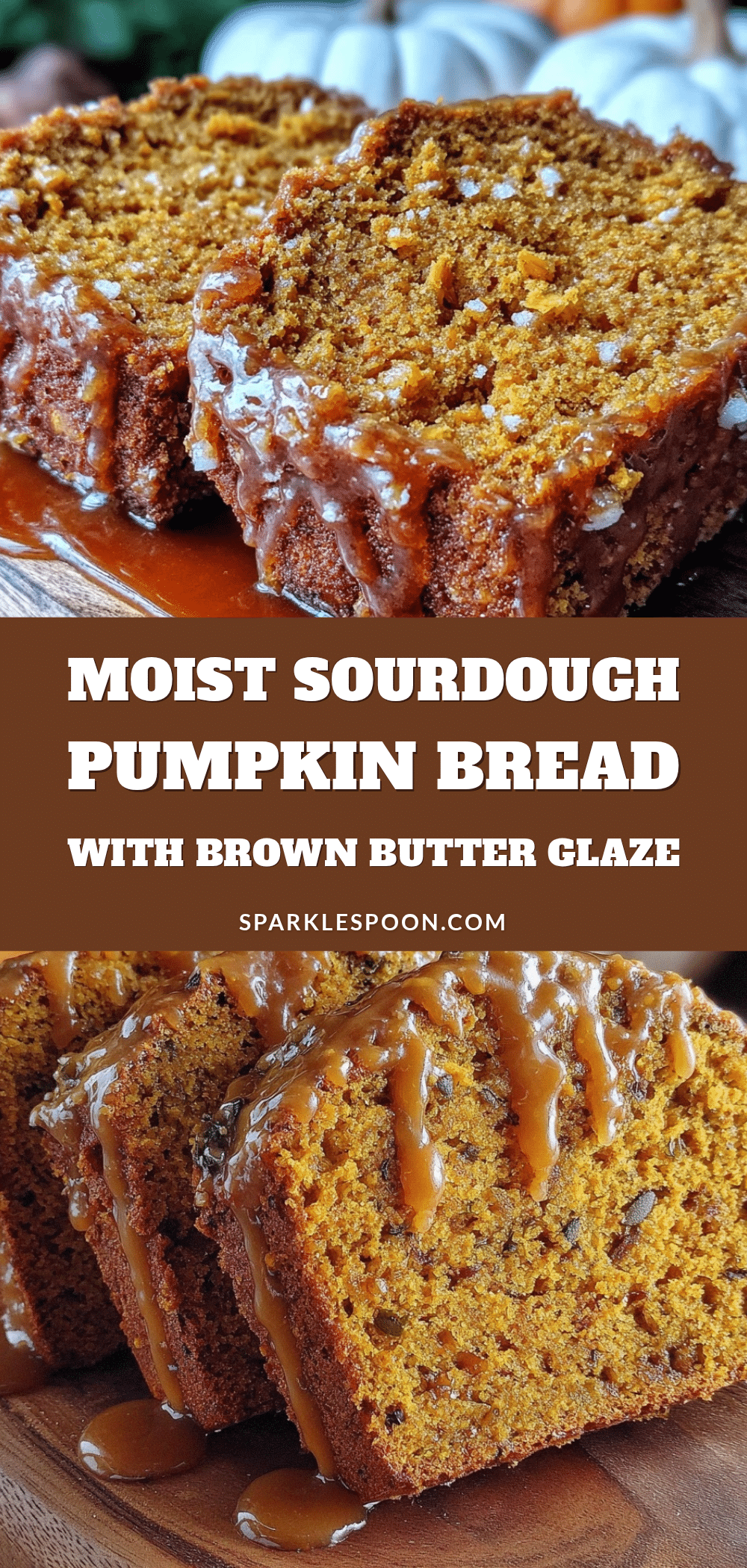
Cozy Sourdough Pumpkin Bread Recipe with Easy Brown Butter Glaze
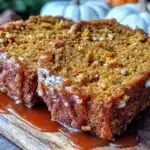
A cozy sourdough pumpkin bread that combines the tangy flavor of sourdough with the warm sweetness of pumpkin, topped with a nutty brown butter glaze. Perfect for fall gatherings and easy to make with simple pantry ingredients.
- Prep Time: 20 minutes (plus 4-6 hours for starter activation)
- Cook Time: 50-60 minutes
- Total Time: 3 hours (including proofing and cooling, excluding starter activation)
- Yield: 10 servings 1x
- Category: Bread
- Cuisine: American
Ingredients
- 100g active sourdough starter (about 3.5 oz)
- 250g all-purpose flour (about 2 cups)
- 50g whole wheat flour (about 1/3 cup)
- 200g pumpkin puree (about 3/4 cup), canned or fresh roasted
- 100g brown sugar (1/2 cup), packed
- 2 tsp ground cinnamon
- 1/2 tsp ground nutmeg
- 1/4 tsp ground ginger
- 1 tsp salt
- 1 tsp baking soda
- 2 large eggs, room temperature
- 60 ml vegetable oil or melted coconut oil (1/4 cup)
- 1 tsp vanilla extract
- 50g unsalted butter (about 3.5 tbsp) for the brown butter glaze
- 100g powdered sugar (about 3/4 cup) for the glaze
- 2–3 tbsp milk or cream (use dairy-free milk if needed) to thin the glaze
Instructions
- Activate your sourdough starter: Ensure your 100g starter is bubbly and active by feeding it 4-6 hours before starting.
- Mix dry ingredients: In a large bowl, whisk together all-purpose flour, whole wheat flour, salt, baking soda, cinnamon, nutmeg, and ginger.
- Combine wet ingredients: In a separate bowl, beat eggs with pumpkin puree, brown sugar, vegetable oil, and vanilla extract until smooth.
- Incorporate the starter: Stir the active sourdough starter into the wet ingredients until fully combined.
- Mix wet and dry: Gradually fold the dry ingredients into the wet mixture using a spatula, mixing just until combined.
- Prepare the loaf pan: Grease an 8.5 x 4.5 inch loaf pan with butter or oil and lightly dust with flour. Pour in the batter and smooth the top.
- Proof the dough: Cover the loaf pan loosely and let rest at room temperature for 1 to 1.5 hours until slightly puffed but not doubled.
- Bake: Preheat oven to 350°F (175°C). Bake the loaf for 50-60 minutes, checking doneness with a toothpick.
- Cool: Let the bread cool in the pan for 10 minutes, then transfer to a wire rack to cool completely.
- Make the brown butter glaze: Melt butter in a small saucepan over medium heat until golden brown and nutty (3-4 minutes). Remove from heat.
- Glaze the bread: Whisk together brown butter, powdered sugar, and milk or cream until smooth. Drizzle over cooled loaf and let set for 15 minutes before slicing.
Notes
Use a ripe, bubbly sourdough starter for best rise. Do not overmix the batter to avoid a tough crumb. Brown butter glaze should be made while bread cools and poured on cooled bread for best finish. Tent bread with foil if crust browns too quickly. For vegan adaptation, replace eggs with flax eggs and use plant-based oil and milk. Nuts like pecans or walnuts can be added for crunch.
Nutrition
- Serving Size: 1 slice (1/10th of t
- Calories: 210
- Sugar: 12
- Sodium: 300
- Fat: 8
- Saturated Fat: 3
- Carbohydrates: 30
- Fiber: 3
- Protein: 5
Keywords: sourdough pumpkin bread, pumpkin bread, sourdough bread, brown butter glaze, fall baking, easy pumpkin bread, cozy bread recipe