Love this? Save it for later!
Share the inspiration with your friends
“Last summer, I found myself standing in the middle of my local farmer’s market, juggling a tote bag that was bursting with fresh peaches, heirloom tomatoes, and vibrant zucchinis. Honestly, I wasn’t planning anything fancy—just trying to eat cleaner and feel better in the heat. Then my neighbor, Joan, who’s famous for her no-fuss, wholesome meals, leaned over and whispered, ‘You know, I’ve got this summer meal plan that keeps things simple and fresh for a whole month. It’s all about whole foods, nothing complicated.’ I was skeptical at first—30 days of clean eating sounded like a huge commitment—but something about her easygoing vibe made me say yes.”
Joan handed me her handwritten meal plan, a bit smudged from kitchen spills and grocery shopping trips. It wasn’t fancy, but it was packed with recipes that used ingredients I already loved and trusted. I remember one afternoon when I was halfway through the plan, and a sudden thunderstorm knocked out the power. Cooking felt impossible, but having a plan meant I could whip up a no-heat salad that still felt like a proper meal. That’s when I realized this wholesome clean eating summer meal plan isn’t just about the food—it’s about feeling grounded and nourished, no matter what life throws at you.
If you’ve ever felt overwhelmed by complicated diets or spent way too much time hunting for exotic ingredients, maybe you’ll appreciate this plan as much as I do. It’s simple, seasonal, and honest. Plus, it’s designed to keep you energized and satisfied during those long, sun-soaked days. Let me tell you, after a few weeks of following it, I felt lighter, more vibrant, and actually excited to eat my meals. So whether you’re a seasoned clean eater or just trying to bring more whole foods into your life, this 30-day summer meal plan might just be the fresh start you need.
Why You’ll Love This Recipe
Honestly, this wholesome clean eating summer meal plan is one of those recipes—or well, meal plans—that I keep coming back to because it simply works. After testing and tweaking it across multiple summers, here’s what makes it stand out:
- Quick & Easy: Most meals come together in under 30 minutes, perfect for busy days when you want something nourishing without the fuss.
- Simple Ingredients: No need to hunt down rare superfoods—this plan relies on fresh, seasonal produce and pantry staples you probably already have.
- Perfect for Summer: Light yet satisfying, these meals keep you cool and energized during warm days and balmy evenings.
- Crowd-Pleaser: Whether you’re feeding family, friends, or just yourself, these dishes get rave reviews for flavor and freshness.
- Unbelievably Delicious: The balance of vibrant veggies, whole grains, and lean proteins means every bite is packed with texture and flavor.
What really sets this meal plan apart is how it respects the natural rhythms of summer—fresh herbs, ripe fruits, and colorful veggies take center stage. I’ve blended traditional whole food principles with a few modern twists, like swapping heavier grains for quinoa or bulgur, which keeps things light but filling. Plus, it’s flexible: you can swap ingredients based on what’s available or your personal preferences, making it uniquely yours.
For me, this plan isn’t just about eating well—it’s about reconnecting with the season and feeling good in my own skin. I mean, who doesn’t love the idea of meals that make you close your eyes and savor every bite? This is comfort food with a clean, fresh soul.
What Ingredients You Will Need
This wholesome clean eating summer meal plan uses simple, wholesome ingredients to deliver bold flavor and satisfying textures without any fuss. Most ingredients are pantry staples or seasonal finds from your local market. If something isn’t in season, there are easy swaps to keep you on track.
- Fresh Vegetables: Cherry tomatoes, zucchini, bell peppers, cucumbers, kale, spinach, carrots, and summer squash — all vibrant, crisp, and full of summer flavor.
- Fresh Fruits: Ripe peaches, berries (fresh or frozen), watermelon, lemons, and avocados — great for salads, snacks, and light desserts.
- Whole Grains & Legumes: Quinoa, brown rice, bulgur, lentils, chickpeas — these provide the hearty base without heaviness.
- Lean Proteins: Skinless chicken breasts, wild-caught salmon, tofu (firm or extra-firm), and eggs — versatile and easy to prepare.
- Healthy Fats: Extra virgin olive oil, avocado oil, raw nuts (almonds, walnuts), seeds (chia, pumpkin), and nut butters — these add richness and keep you satisfied.
- Dairy & Alternatives: Plain Greek yogurt, cottage cheese, or coconut yogurt (for dairy-free options) — creamy elements that brighten dishes.
- Herbs & Spices: Fresh basil, cilantro, parsley, garlic, ginger, cumin, smoked paprika, sea salt, and black pepper — simple seasonings that pack a punch.
- Citrus & Vinegars: Fresh lemon juice, apple cider vinegar, balsamic vinegar — essential for dressings and marinades.
For best results, I recommend choosing organic produce when possible, especially for leafy greens and berries. I like using Bob’s Red Mill quinoa for its consistent quality, and when it comes to olive oil, a cold-pressed extra virgin variety like California Olive Ranch brings the best flavor. And if you’re looking for substitutions, almond flour works great if you want to make some snacks gluten-free, and swapping in coconut aminos is a neat trick for a soy-free twist in marinades.
Equipment Needed
You won’t need anything fancy to make this wholesome clean eating summer meal plan come together. Here’s what I find essential:
- Chef’s Knife: A sharp knife makes chopping fresh veggies a breeze. I’ve tried budget options, but a quality knife like a Victorinox lasts longer and stays sharp.
- Cutting Board: Preferably wood or bamboo to keep your knives happy.
- Mixing Bowls: For tossing salads, mixing grains, and whisking dressings.
- Medium Saucepan: Perfect for cooking quinoa, rice, or lentils.
- Non-stick Skillet or Grill Pan: Great for sautéing chicken, tofu, or veggies with minimal oil.
- Measuring Cups and Spoons: Precision matters when balancing dressings and spices.
- Salad Spinner: Optional but highly recommended to dry leafy greens thoroughly.
If you don’t have a salad spinner, a clean kitchen towel works well to pat greens dry. For grilling, if you don’t own a grill pan, a cast-iron skillet or even an outdoor grill will do the trick. I’ve found that investing in a good knife and sturdy cutting board really speeds up prep time, saving frustration and mess.
Preparation Method
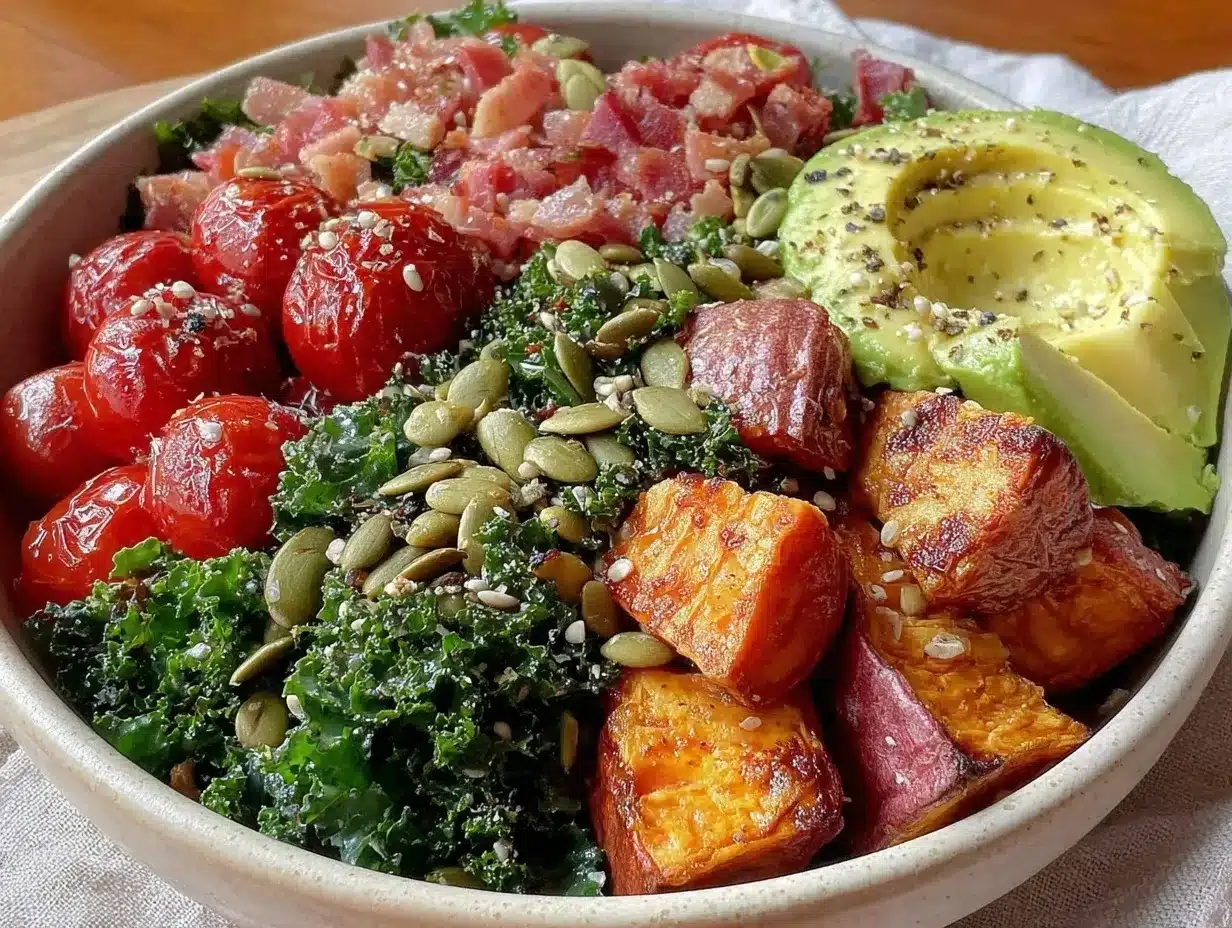
- Plan Your Week: Start by reviewing the meal plan for the upcoming week. Make a shopping list based on the ingredients needed, focusing on fresh produce and proteins. Allow about 20 minutes for this step.
- Grocery Shopping: Visit your local farmer’s market or grocery store—try to pick the freshest, in-season items. This usually takes about 45-60 minutes, depending on your store.
- Batch Cook Grains and Legumes: Cook quinoa, brown rice, and lentils in advance. For quinoa, rinse 1 cup (170g) under cold water, then combine with 2 cups (475ml) water in a saucepan. Bring to a boil, reduce heat, cover, and simmer for 15 minutes until water is absorbed. Fluff with a fork. Repeat similar steps for rice and lentils. Allow grains to cool before storing.
- Prep Vegetables: Wash and chop veggies according to the plan. For salads, slice cucumbers and cherry tomatoes; for roasting, cut zucchini and bell peppers into chunks. Store prepped veggies in airtight containers in the fridge. This step typically takes 30 minutes.
- Marinate Proteins: For chicken or tofu, prepare simple marinades using olive oil, lemon juice, garlic, and herbs. Marinate for at least 30 minutes or overnight for deeper flavor.
- Cook Proteins: Grill, sauté, or bake proteins as outlined in the plan. For example, grill chicken breasts over medium-high heat for 6-7 minutes per side until internal temperature reaches 165°F (74°C). Tofu should be pressed, sliced, and pan-fried until golden on both sides.
- Assemble Meals: Combine grains, proteins, and veggies into bowls or plates. Drizzle with homemade dressings or sprinkle with fresh herbs. Taste and adjust seasoning with salt and pepper if needed.
- Store Leftovers: Portion out meals into containers for easy grab-and-go options during the week. Label with dates and refrigerate.
- Enjoy: Serve meals chilled or at room temperature, depending on the dish. Some salads taste even better after the flavors meld overnight.
One thing I learned the hard way: don’t skip rinsing quinoa well—it can taste bitter if the saponins aren’t washed off. Also, when marinating, if time’s tight, even 15 minutes still adds noticeable flavor. And yes, sometimes I forget to press the tofu, and it turns out a bit soggy, but hey, that’s part of the fun experimenting with whole foods.
Cooking Tips & Techniques
Cooking clean and wholesome meals can feel straightforward, but I’ve picked up a few tips that really make the difference:
- Use Fresh Herbs Liberally: They add brightness and depth without extra calories. Just tear basil or cilantro leaves by hand instead of chopping to preserve their flavor.
- Master the Art of Layering Flavors: Start with sautéed garlic or shallots, add spices early, then finish with citrus juice or vinegar for punch.
- Don’t Overcook Vegetables: Keep them crisp-tender to preserve nutrients and texture. For example, blanch green beans for 2-3 minutes then shock in ice water.
- Press Tofu Properly: Wrap tofu in a clean towel and place a heavy pan on top for 15-30 minutes to remove excess moisture—this helps it crisp up beautifully.
- Balance Textures: Combine creamy (avocado, yogurt) with crunchy (nuts, seeds) for satisfying mouthfeel.
- Save Time with Multitasking: Cook grains while prepping veggies and marinating proteins to streamline your workflow.
- Mind Salt Levels: Whole foods often need just a pinch of salt. Taste as you go to avoid over-seasoning.
One mistake I made early on was underestimating how much olive oil to use for roasting—too little and the veggies dry out, too much and it feels greasy. I found that about 1-2 tablespoons per tray works best. Also, I’ve learned that letting dressings sit for at least 10 minutes helps meld flavors, so don’t be in a rush to pour them on right away.
Variations & Adaptations
This summer meal plan is flexible enough to fit various dietary needs and flavor preferences. Here are a few ways I’ve adapted it:
- Vegetarian or Vegan: Swap chicken or fish with grilled tempeh, chickpea patties, or hearty roasted mushrooms. Use coconut yogurt instead of dairy-based options.
- Gluten-Free: All grains used are gluten-free, but if you want extra variety, try amaranth or millet instead of bulgur.
- Spice it Up: Add chopped fresh chili or a dash of cayenne to dressings and marinades for a kick.
- Seasonal Swaps: In cooler months, swap fresh tomatoes for roasted root vegetables or winter squash.
- Personal Favorite: I love adding a sprinkle of toasted sesame seeds and a drizzle of tamari for an Asian-inspired twist on grain bowls.
Adjusting portion sizes is simple too—double the quinoa or protein for bigger appetites, or add extra greens if you want lighter meals. The idea is to keep it wholesome but not rigid, so you feel free to make it your own.
Serving & Storage Suggestions
Most meals in this plan shine when served fresh or chilled. Here are some tips to get the best out of your wholesome clean eating summer dishes:
- Serving Temperature: Salads and grain bowls are best served cool or at room temperature. Protein can be warm or cold depending on preference.
- Presentation: Use colorful bowls and plates to highlight the vibrant veggies and fruits. A sprinkle of fresh herbs or a wedge of lemon adds a nice finishing touch.
- Storage: Store leftovers in airtight containers in the refrigerator for up to 4 days. Grains and proteins hold up well, but fresh herbs and avocado are best added just before eating.
- Freezing: Some cooked grains and legumes freeze well, but avoid freezing fresh salads or avocado-based dressings.
- Reheating: Reheat proteins gently in a skillet or microwave, adding a splash of water or broth to keep them moist.
- Flavor Development: Many of the salads taste better after sitting overnight, as flavors meld and soften. Plan ahead to enjoy this benefit.
One time I packed quinoa salad for a picnic, and by lunchtime, it had soaked up all the dressing—still delicious but a bit softer than I expected. Lesson learned: keep dressings separate if you want crunch! Also, storing ingredients separately when meal prepping keeps everything fresh and vibrant.
Nutritional Information & Benefits
This wholesome clean eating summer meal plan is packed with nutrients to keep you energized and satisfied:
- Calories: Approximately 400-550 calories per serving, depending on protein and grain portions.
- Macronutrients: Balanced with lean proteins (20-30g), complex carbohydrates (40-50g), and healthy fats (10-15g).
- Vitamins & Minerals: Rich in vitamin C from fresh fruits, fiber from whole grains and veggies, and omega-3s if including salmon or chia seeds.
- Dietary Considerations: Naturally gluten-free options available, and easy to adapt for vegetarian, vegan, or low-carb diets.
- Allergens: Contains nuts and dairy in some recipes; substitutions available.
Eating whole foods like these supports digestion, boosts immunity, and promotes sustained energy. From a wellness perspective, I’ve noticed that sticking with this type of plan helps reduce that sluggish feeling summer heat sometimes brings. Plus, the emphasis on fresh, real ingredients aligns well with mindful eating habits—and who doesn’t want that?
Conclusion
This wholesome clean eating summer meal plan is a simple, effective way to nourish your body and enjoy the season’s best flavors without stress. It’s flexible enough to suit your tastes, quick enough for busy days, and satisfying enough to keep you coming back for more.
Personally, I love how this plan encourages me to slow down, savor fresh ingredients, and feel connected to the food I eat. Maybe you’ll find it just as refreshing and doable, especially when the summer sun is shining and you want meals that match that easygoing vibe.
If you try this meal plan, I’d love to hear how you make it your own—drop a comment or share your favorite swaps. Here’s to wholesome summer eating that feels good and tastes even better!
FAQs
Can I use frozen vegetables instead of fresh in this meal plan?
Absolutely! Frozen veggies can be a great alternative when fresh produce isn’t available. Just thaw and drain them well to avoid sogginess.
Is this meal plan suitable for people with gluten intolerance?
Yes, many meals are naturally gluten-free, especially if you swap bulgur for gluten-free grains like quinoa or millet.
How can I meal prep if I don’t have much time during the week?
Batch cooking grains and proteins on the weekend and prepping veggies ahead of time helps speed up weekday meal assembly.
Can I adjust portion sizes for weight loss or muscle gain?
Definitely. Increase protein and reduce grains for muscle gain, or reduce overall portions for weight loss, while keeping meals balanced.
Are there dairy-free options included in this plan?
Yes, you can swap Greek yogurt for coconut or almond-based yogurts and omit cheese or use plant-based alternatives.
And if you enjoyed the wholesome simplicity here, you might appreciate how I approach crispy garlic chicken for quick weeknight dinners or my ideas for a colorful summer grain salad that celebrates similar fresh ingredients.
Pin This Recipe!
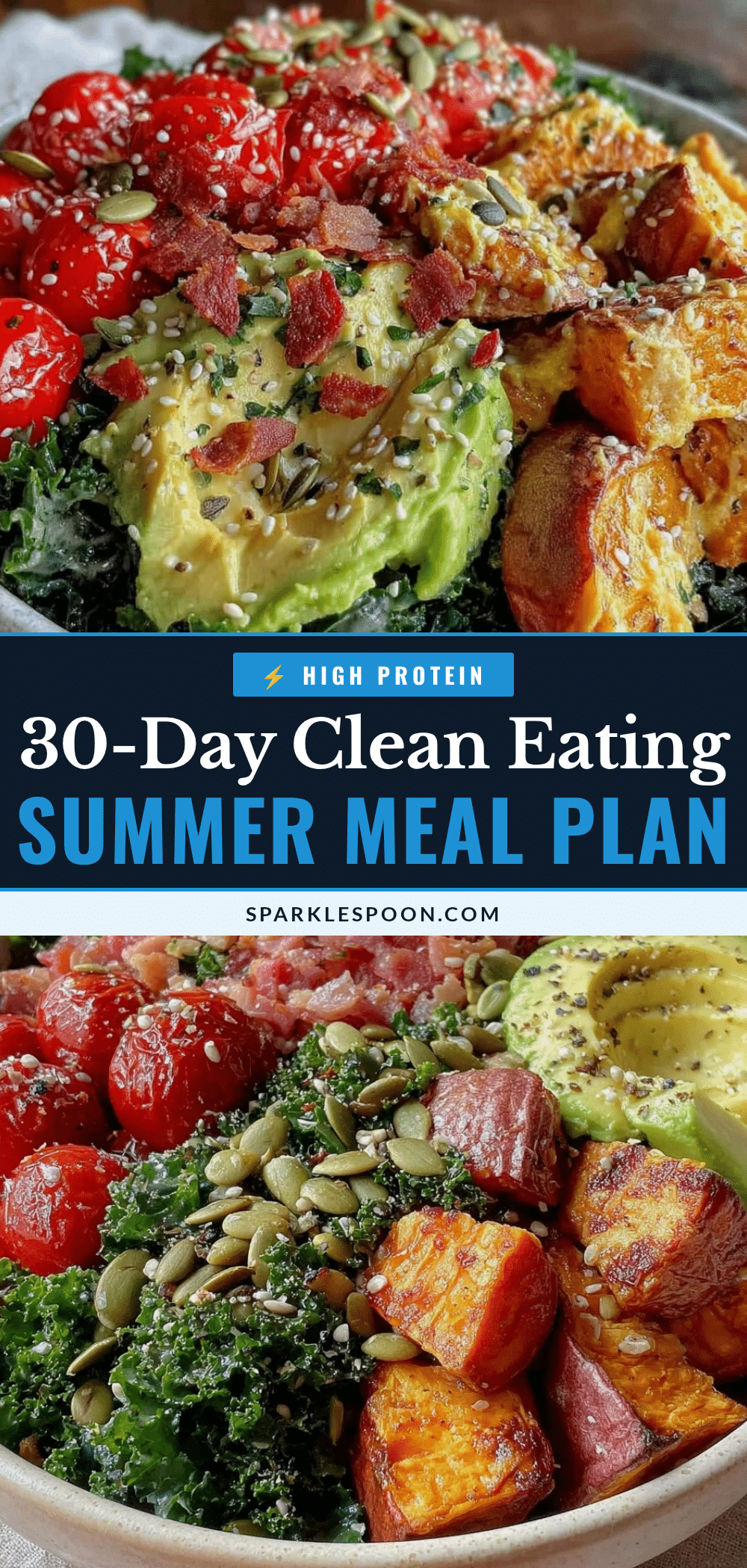
Wholesome Clean Eating Summer Meal Plan 30 Days of Easy Whole Foods

A simple, seasonal, and honest 30-day summer meal plan focused on whole foods that keeps you energized and satisfied with quick, easy, and fresh meals.
- Prep Time: 1 hour 15 minutes
- Cook Time: 15 minutes
- Total Time: 1 hour 30 minutes
- Yield: Varies per meal, plan designed for multiple servings over 30 days
- Category: Main Course, Meal Plan
- Cuisine: Whole Foods, Clean Eating, Seasonal
Ingredients
- Cherry tomatoes
- Zucchini
- Bell peppers
- Cucumbers
- Kale
- Spinach
- Carrots
- Summer squash
- Ripe peaches
- Berries (fresh or frozen)
- Watermelon
- Lemons
- Avocados
- Quinoa
- Brown rice
- Bulgur
- Lentils
- Chickpeas
- Skinless chicken breasts
- Wild-caught salmon
- Tofu (firm or extra-firm)
- Eggs
- Extra virgin olive oil
- Avocado oil
- Raw nuts (almonds, walnuts)
- Seeds (chia, pumpkin)
- Nut butters
- Plain Greek yogurt
- Cottage cheese
- Coconut yogurt (for dairy-free options)
- Fresh basil
- Cilantro
- Parsley
- Garlic
- Ginger
- Cumin
- Smoked paprika
- Sea salt
- Black pepper
- Fresh lemon juice
- Apple cider vinegar
- Balsamic vinegar
Instructions
- Plan your week by reviewing the meal plan and making a shopping list focusing on fresh produce and proteins (about 20 minutes).
- Grocery shop at your local farmer’s market or store, selecting the freshest in-season items (45-60 minutes).
- Batch cook grains and legumes: rinse 1 cup quinoa under cold water, combine with 2 cups water, bring to boil, reduce heat, cover and simmer for 15 minutes until water is absorbed; fluff with a fork. Repeat similar steps for rice and lentils. Allow to cool before storing.
- Prep vegetables by washing and chopping according to the plan; slice cucumbers and cherry tomatoes for salads, cut zucchini and bell peppers into chunks for roasting. Store in airtight containers in the fridge (about 30 minutes).
- Marinate proteins such as chicken or tofu with olive oil, lemon juice, garlic, and herbs for at least 30 minutes or overnight for deeper flavor.
- Cook proteins by grilling, sautéing, or baking as outlined. Grill chicken breasts over medium-high heat for 6-7 minutes per side until internal temperature reaches 165°F (74°C). Press and pan-fry tofu until golden on both sides.
- Assemble meals by combining grains, proteins, and veggies into bowls or plates. Drizzle with homemade dressings or sprinkle with fresh herbs. Adjust seasoning with salt and pepper as needed.
- Store leftovers in airtight containers, label with dates, and refrigerate for easy grab-and-go options.
- Enjoy meals served chilled or at room temperature; some salads taste better after flavors meld overnight.
Notes
Rinse quinoa well to remove bitterness. Marinate proteins for at least 15 minutes if short on time. Press tofu properly to avoid sogginess. Use fresh herbs liberally and avoid overcooking vegetables to preserve texture and nutrients. Dressings taste better after sitting for 10 minutes. Store dressings separately to keep salads crunchy.
Nutrition
- Serving Size: One meal bowl or sal
- Calories: 400550
- Sugar: 510
- Sodium: 150300
- Fat: 1015
- Saturated Fat: 23
- Carbohydrates: 4050
- Fiber: 68
- Protein: 2030
Keywords: clean eating, summer meal plan, whole foods, easy recipes, healthy meals, seasonal produce, gluten-free, vegetarian options, meal prep