Love this? Save it for later!
Share the inspiration with your friends
“It was the summer of last year, the weekend before the 4th of July, when my neighbor, Luis, invited me over for what he called a ‘gut-friendly BBQ.’ Honestly, I was skeptical. You know that feeling when you expect typical heavy, greasy fare at a summer cookout, but instead, you’re greeted with vibrant colors and fresh, tangy flavors that somehow make you feel lighter and more energized? That afternoon, between the tang of homemade kimchi and the fizz of probiotic-rich kombucha, I realized that celebrating with gut-healthy recipes doesn’t have to be boring—or complicated. Luis shared his secret: infusing classic summer dishes with probiotic summer foods that keep your digestion happy and your taste buds delighted.
There was this one moment when I accidentally knocked over a jar of spicy sauerkraut while reaching for a plate (classic me, right?), but the laughter that followed made the day even brighter. Since then, I’ve been hooked on crafting fresh, gut-loving recipes perfect for the 4th of July and beyond. Maybe you’ve been there too—wanting to enjoy festive foods without the post-feast sluggishness. Well, this collection of recipes is just for that. Let me tell you, once you try these probiotic summer foods, your cookouts will never be the same.
Why You’ll Love This Recipe Collection
After testing countless variations and tweaking seasoning balances, these gut-healthy 4th of July recipes have become my go-to for summer celebrations. Here’s why you’ll want to keep them in your repertoire:
- Quick & Easy: Most recipes come together in under 30 minutes, making them perfect for last-minute plans or laid-back gatherings.
- Simple Ingredients: No exotic shopping trips needed—these dishes rely on fresh, seasonal produce and accessible pantry staples.
- Perfect for Summer Celebrations: Whether it’s a backyard BBQ, picnic, or firework viewing, these recipes fit the vibe and keep you feeling great.
- Crowd-Pleaser: From kids to adults, the balance of tangy probiotics and fresh flavors wins over even the pickiest eaters.
- Unbelievably Delicious: The combination of crisp textures, vibrant herbs, and probiotic goodness makes every bite satisfying and refreshing.
What sets these recipes apart is the gentle incorporation of probiotic summer foods—think fermented pickles, tangy yogurt dressings, and crunchy kimchi—that add depth and health benefits without overpowering traditional flavors. It’s not just a twist; it’s a way to keep your gut happy while still indulging in all the joys of summer food. Honestly, you’ll find yourself closing your eyes after the first bite, savoring the perfect harmony of freshness and funkiness.
What Ingredients You Will Need
These fresh gut-healthy 4th of July recipes rely on wholesome, probiotic-rich ingredients alongside garden-fresh produce. You’ll find most items are easy to source and versatile for substitutions.
- Fermented Vegetables: Sauerkraut, kimchi, or pickled cucumbers (choose a brand like Bubbies for authentic flavor)
- Probiotic Dairy: Plain Greek yogurt or skyr (I prefer Fage for creaminess), kefir for dressings or dips
- Fresh Summer Produce: Heirloom tomatoes, cucumbers, corn on the cob, bell peppers, and summer squash
- Herbs & Aromatics: Fresh dill, cilantro, basil, garlic, and scallions for bright flavor
- Whole Grains & Legumes: Quinoa, chickpeas, or lentils for hearty salads
- Healthy Fats: Extra virgin olive oil, avocado, and nuts like toasted almonds or walnuts
- Citrus & Vinegars: Lemon juice, apple cider vinegar (great for dressings and enhancing probiotic activity)
- Seasonings: Sea salt, cracked black pepper, smoked paprika, cumin, and a touch of chili flakes
For substitutions, use coconut yogurt or dairy-free kefir if you need a vegan option. For gluten-free choices, quinoa and legumes work beautifully. When choosing fermented veggies, opt for small-cultured, unpasteurized varieties to get the best probiotic benefits. I learned the hard way once when I grabbed a pasteurized jar—it tasted fine but didn’t pack the punch I wanted.
Equipment Needed
- Large Mixing Bowls: For tossing salads and combining ingredients. Glass or stainless steel preferred.
- Sharp Chef’s Knife: Essential for chopping fresh herbs and crisp veggies cleanly.
- Cutting Board: A sturdy wooden or bamboo board helps keep things steady.
- Measuring Cups & Spoons: Accurate measurements keep flavors balanced, especially with vinegars and spices.
- Salad Spinner: Not mandatory, but helpful to dry leafy greens quickly and avoid soggy salads.
- Glass Jars or Bowls with Lids: For storing fermented ingredients or dressings.
- Grill or Grill Pan: For quick charring of corn and veggies, adding smoky notes to dishes.
- Blender or Food Processor: Optional for creamy dressings or smooth dips; I often use a high-speed blender for effortless emulsification.
If you don’t have a grill, a grill pan or cast iron skillet works just as well to get those signature char marks. For budget-conscious cooks, a simple sharp knife and a good mixing bowl are the bare essentials to get started. I remember when I first tried making probiotic slaws, just tossing everything by hand, and it worked great!
Preparation Method
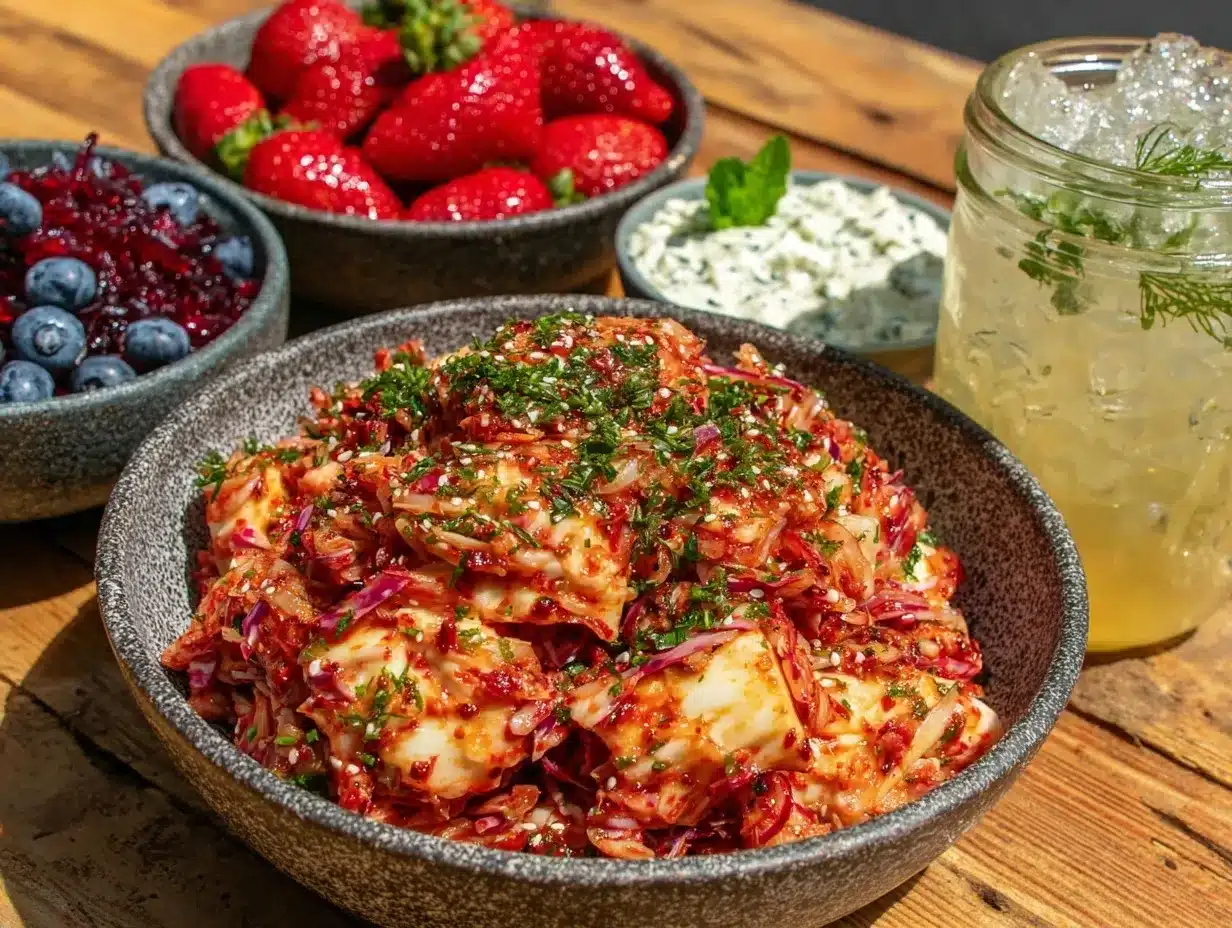
- Prepare the Fermented Vegetables: Open your jar of sauerkraut or kimchi and drain any excess liquid if desired. Use about 1 cup (240 ml) per recipe serving. This adds the probiotic kick and tangy flavor. If homemade, ensure fermentation smells pleasantly sour, not off-putting.
- Grill the Corn: Preheat your grill to medium-high heat (about 400°F / 200°C). Husk and clean 4 ears of fresh corn. Place directly on the grill and cook for 10-12 minutes, turning every 3-4 minutes, until kernels are charred with blackened spots but still tender. Remove and let cool.
- Chop Fresh Vegetables: Dice 2 cups (300 g) of heirloom tomatoes, slice 1 large cucumber, and finely chop 1 bell pepper. Place in a large mixing bowl. Add ¼ cup (10 g) chopped fresh dill and 2 tablespoons (8 g) chopped scallions for freshness.
- Cook & Cool Whole Grains: Rinse 1 cup (170 g) quinoa under cold water. Cook with 2 cups (480 ml) water, bring to boil, then simmer for 15 minutes. Fluff with fork and cool completely before mixing. This prevents sogginess.
- Make the Dressing: In a small bowl, whisk together ½ cup (120 ml) plain Greek yogurt, 2 tablespoons (30 ml) lemon juice, 1 tablespoon (15 ml) apple cider vinegar, 1 minced garlic clove, 1 teaspoon (5 ml) honey, salt and pepper to taste. Adjust acidity to balance tanginess. The yogurt adds creaminess and probiotics.
- Combine Salad Components: Add cooled quinoa and grilled corn kernels (cut from the cob) to the vegetable mix. Toss gently with the fermented veggies and pour over the dressing. Mix thoroughly but carefully to keep textures distinct.
- Final Seasoning: Taste and adjust salt, pepper, or lemon juice. Garnish with extra fresh herbs or a sprinkle of toasted almonds for crunch.
Pro tip: If you want a little extra zing, add a pinch of smoked paprika or chili flakes to your dressing. Also, don’t rush the cooling of grains; warm quinoa wilts the fresh veggies. I learned that the hard way when my first batch turned soggy. Patience really pays off here.
Cooking Tips & Techniques
When working with probiotic summer foods, timing and freshness are everything. Here are some tips from my trials to keep your recipes vibrant and gut-friendly:
- Pick the Right Fermented Foods: Avoid pasteurized options—they lack active probiotics. Look for jars labeled “raw” or “live cultures.”
- Balance Acidity: Probiotic foods tend to be tangy, so balancing with a touch of sweetness or creaminess (like yogurt) helps mellow flavors without dulling them.
- Chop Uniformly: Even-sized vegetables ensure even mixing and pleasant texture contrasts.
- Cool Grains and Cooked Veggies: Hot ingredients can kill beneficial bacteria and lead to mushy salads. Cool completely before combining.
- Store Properly: Keep probiotic dishes refrigerated and consume within 2-3 days for peak freshness.
One mistake I made early on was over-dressing the salad, which drowned out the delicate probiotic notes. Start light, then add more if needed. Multitasking tip: while quinoa cooks, prep your veggies and ferment your dressings. That way, you’re not waiting around, and everything comes together smoothly.
Variations & Adaptations
- Vegan Version: Swap Greek yogurt for coconut yogurt and use nutritional yeast for a cheesy note. Use chickpeas instead of quinoa for protein.
- Spicy Kick: Add sliced jalapeños or a dash of hot sauce to the dressing. Incorporate spicy kimchi instead of mild sauerkraut.
- Seasonal Twist: In late summer, swap tomatoes for roasted sweet corn or add grilled peaches for a sweet contrast.
- Low-Carb Option: Replace quinoa with cauliflower rice for a lighter base.
- Personal Favorite: I love adding fresh watermelon cubes and minted yogurt dressing for a refreshing touch that surprises guests every time.
Adjust cooking methods by roasting or lightly steaming veggies before assembling for softer textures. For allergen-free versions, omit nuts or replace with seeds like pumpkin or sunflower. The flexibility here is honestly what keeps me coming back to these recipes.
Serving & Storage Suggestions
Serve these probiotic summer recipes chilled or at room temperature for the best flavor experience. Present in colorful bowls or mason jars for an inviting look that’s perfect for picnics or backyard parties. Pair with light grilled proteins like chicken or fish, or enjoy as a standalone festive side dish.
Store leftovers in airtight containers in the fridge up to 3 days. Flavors often deepen overnight, so leftovers can be even tastier the next day. Reheat gently if desired, but avoid microwaving fermented ingredients to preserve probiotics.
For outdoor gatherings, keep salads cool in an ice bucket or cooler to maintain freshness. A squeeze of lemon just before serving brightens flavors and revives any dulled notes. Honestly, these dishes taste like sunshine on a plate—perfect for the 4th of July vibe.
Nutritional Information & Benefits
Each serving (about 1 cup / 240 ml) of these gut-healthy recipes provides roughly:
| Calories | 180-220 kcal |
|---|---|
| Protein | 7-10 g |
| Fat | 5-8 g (mostly healthy fats) |
| Carbohydrates | 25-30 g (mostly from whole grains and veggies) |
| Fiber | 5-7 g |
The probiotic ingredients support digestion and immune health by introducing beneficial bacteria to your gut flora. Fresh herbs add antioxidants and anti-inflammatory compounds. Using whole grains and legumes boosts fiber intake, aiding satiety and blood sugar regulation. Plus, these recipes are naturally gluten-free and can be adapted for dairy-free diets, making them accessible for many dietary needs.
Conclusion
Fresh gut-healthy 4th of July recipes with easy probiotic summer foods offer a delicious way to enjoy your celebrations without the usual post-meal slump. These dishes bring together crisp textures, tangy flavors, and nourishing ingredients that make you feel good inside and out. I love how they transform traditional summer cookouts into vibrant, healthful feasts that everyone can enjoy.
Feel free to customize these recipes to fit your taste and dietary preferences—trust me, a little experimentation can lead to some unforgettable combinations. If you give these recipes a try, I’d love to hear how you make them your own. Drop a comment below, share your favorite probiotic summer food, or tell me about your own gut-friendly 4th of July creations. Here’s to a happy, healthy, and flavorful summer!
FAQs about Fresh Gut-Healthy 4th of July Recipes
What are probiotic summer foods?
Probiotic summer foods include fermented or cultured items like sauerkraut, kimchi, yogurt, and kefir that contain live beneficial bacteria supporting gut health, perfect for refreshing summer dishes.
Can I prepare these recipes ahead of time?
Yes! These salads and sides can be made a few hours ahead and stored in the fridge. Just add fresh herbs or dressings right before serving for the best flavor.
Are these recipes suitable for kids?
Absolutely. The flavors are fresh and approachable, and you can adjust spice levels or omit fermented foods if your kids are sensitive to tangy tastes.
How do I know if fermented vegetables are good quality?
Look for jars labeled “raw,” “live cultures,” or “unpasteurized.” They should smell pleasantly sour, not off or moldy. Always store them refrigerated.
Can I freeze these probiotic recipes?
Freezing is not recommended as it can kill the beneficial bacteria in fermented ingredients and alter the texture of fresh veggies. Best to enjoy fresh or refrigerated within a few days.
For those interested in more vibrant summer dishes, the crispy garlic chicken pairs wonderfully with these gut-friendly sides, or try the roasted veggie quinoa salad to round out your picnic spread.
Pin This Recipe!
Fresh Gut-Healthy 4th of July Recipes with Easy Probiotic Summer Foods
A collection of vibrant, gut-friendly summer recipes featuring probiotic-rich ingredients like fermented vegetables and yogurt, perfect for 4th of July celebrations and beyond.
- Prep Time: 15 minutes
- Cook Time: 25 minutes
- Total Time: 40 minutes
- Yield: 4 servings 1x
- Category: Side Dish
- Cuisine: American
Ingredients
- 1 cup sauerkraut, kimchi, or pickled cucumbers (fermented vegetables)
- 4 ears fresh corn on the cob
- 2 cups heirloom tomatoes, diced
- 1 large cucumber, sliced
- 1 bell pepper, finely chopped
- 1/4 cup fresh dill, chopped
- 2 tablespoons scallions, chopped
- 1 cup quinoa
- 2 cups water
- 1/2 cup plain Greek yogurt
- 2 tablespoons lemon juice
- 1 tablespoon apple cider vinegar
- 1 garlic clove, minced
- 1 teaspoon honey
- Salt and pepper to taste
- Extra virgin olive oil (optional)
- Toasted almonds or walnuts (optional for garnish)
- Optional seasonings: smoked paprika, chili flakes
Instructions
- Open your jar of sauerkraut or kimchi and drain any excess liquid if desired. Use about 1 cup per serving.
- Preheat grill to medium-high heat (about 400°F). Husk and clean 4 ears of corn. Grill for 10-12 minutes, turning every 3-4 minutes until kernels are charred but tender. Remove and let cool.
- Dice 2 cups heirloom tomatoes, slice 1 large cucumber, and finely chop 1 bell pepper. Place in a large mixing bowl. Add 1/4 cup chopped fresh dill and 2 tablespoons chopped scallions.
- Rinse 1 cup quinoa under cold water. Cook with 2 cups water by bringing to a boil, then simmer for 15 minutes. Fluff with a fork and cool completely.
- In a small bowl, whisk together 1/2 cup plain Greek yogurt, 2 tablespoons lemon juice, 1 tablespoon apple cider vinegar, 1 minced garlic clove, 1 teaspoon honey, salt, and pepper to taste.
- Add cooled quinoa and grilled corn kernels (cut from the cob) to the vegetable mix. Toss gently with the fermented veggies and pour over the dressing. Mix thoroughly but carefully.
- Taste and adjust salt, pepper, or lemon juice. Garnish with extra fresh herbs or toasted almonds for crunch.
Notes
Use small-cultured, unpasteurized fermented vegetables for best probiotic benefits. Cool quinoa completely before mixing to avoid soggy salad. Adjust seasoning lightly to preserve probiotic flavors. Store leftovers refrigerated up to 3 days and avoid microwaving fermented ingredients to preserve probiotics.
Nutrition
- Serving Size: About 1 cup (240 ml)
- Calories: 200
- Sugar: 4
- Sodium: 300
- Fat: 6.5
- Saturated Fat: 1
- Carbohydrates: 27.5
- Fiber: 6
- Protein: 8.5
Keywords: gut-healthy, probiotic, 4th of July, summer recipes, fermented vegetables, quinoa salad, healthy fats, gluten-free, dairy-free option