Love this? Save it for later!
Share the inspiration with your friends
Introduction
“You know that moment when you open your fridge late on a Thursday night, and it’s a jumble of half-used veggies and a few lonely pasta noodles? Well, that’s exactly where this Easy One-Pot Pasta Primavera with Fresh Vegetables was born. I wasn’t aiming for a culinary masterpiece that evening—honestly, I was just trying to avoid a sad takeout order after a long day. The kitchen was a bit chaotic (I even dropped a bowl—classic me), but somehow, the combination of cherry tomatoes, zucchini, and bell peppers simmered with pasta in one pot turned into something unexpectedly fresh and satisfying.
It was a simple dinner, but it hit the spot—a little bit bright, a little bit comforting. Maybe you’ve been there: juggling work, family, and somehow still wanting a meal that feels homemade and wholesome. The best part? This recipe stays true to its promise: easy cleanup, fresh ingredients, and a meal that feels like spring on your plate no matter the season. I mean, who doesn’t love a dish that’s as colorful as it is tasty, without a mountain of dishes to wash afterwards? This pasta primavera quickly became my go-to weeknight savior, and I’m betting it’ll sneak into your regular rotation too.”
Why You’ll Love This Recipe
From my many test runs in the kitchen, this Easy One-Pot Pasta Primavera with Fresh Vegetables is a keeper for so many reasons. It’s not just about convenience; it’s about making something healthy that doesn’t feel like a chore. This recipe has earned its place in my weeknight lineup because of:
- Quick & Easy: Ready in under 30 minutes, perfect for those busy evenings when you’re racing the clock.
- Simple Ingredients: No exotic items here—just fresh seasonal vegetables and staple pantry pasta, so you can whip it up anytime.
- Perfect for Casual Dinners: Great for a laid-back meal with family or friends, yet impressive enough to serve for an unexpected guest.
- Crowd-Pleaser: The gentle garlic and herb notes, combined with fresh veggies, win over even the picky eaters in my house.
- Unbelievably Delicious: The veggies cook right alongside the pasta, soaking up all the flavors and creating this rich, comforting bite each time.
What really sets this one apart is the technique of cooking everything in one pot—no draining, no fuss. The pasta absorbs the vegetable juices, garlic, and broth, making it tender and flavorful without being mushy. And the fresh vegetables keep their vibrant color and a slight crunch that makes every bite exciting. Honestly, it’s like comfort food that feels light and fresh at the same time. So, if you’re looking for a recipe that’s healthy but full of heart, this pasta primavera will not disappoint.
What Ingredients You Will Need
This recipe uses simple, wholesome ingredients to deliver bold flavor and satisfying texture without the fuss. Most of what you need is probably already sitting in your kitchen or can be grabbed on a quick trip to your local market.
- Pasta: 12 ounces (340 grams) of your favorite pasta shape, such as penne, fusilli, or farfalle (I prefer Barilla for consistent texture).
- Fresh Vegetables:
- 1 cup cherry tomatoes, halved (adds a juicy burst)
- 1 medium zucchini, sliced into half-moons (for mild sweetness and crunch)
- 1 red bell pepper, thinly sliced (brings color and subtle sweetness)
- 1 cup fresh green peas (frozen works fine too)
- Garlic: 3 cloves, minced (for that aromatic base)
- Onion: 1 small yellow onion, finely chopped (adds a gentle savory note)
- Olive Oil: 2 tablespoons extra virgin olive oil (I like Colavita for its fruity flavor)
- Vegetable Broth: 4 cups (950 ml) low sodium (helps cook the pasta and infuse flavor)
- Fresh Basil: A handful of leaves, torn (for freshness and a pop of green)
- Parmesan Cheese: ½ cup grated, plus extra for serving (optional but highly recommended)
- Salt and Pepper: To taste
- Red Pepper Flakes: Optional, a pinch for some subtle heat
Feel free to swap out any of the vegetables depending on what’s in season or what you have on hand. For example, asparagus or snap peas are great spring substitutes, while roasted butternut squash works beautifully in fall. You can also use gluten-free pasta if needed, and swap Parmesan with a plant-based cheese alternative for a dairy-free version. The key is fresh, high-quality ingredients to keep the flavors bright and satisfying.
Equipment Needed
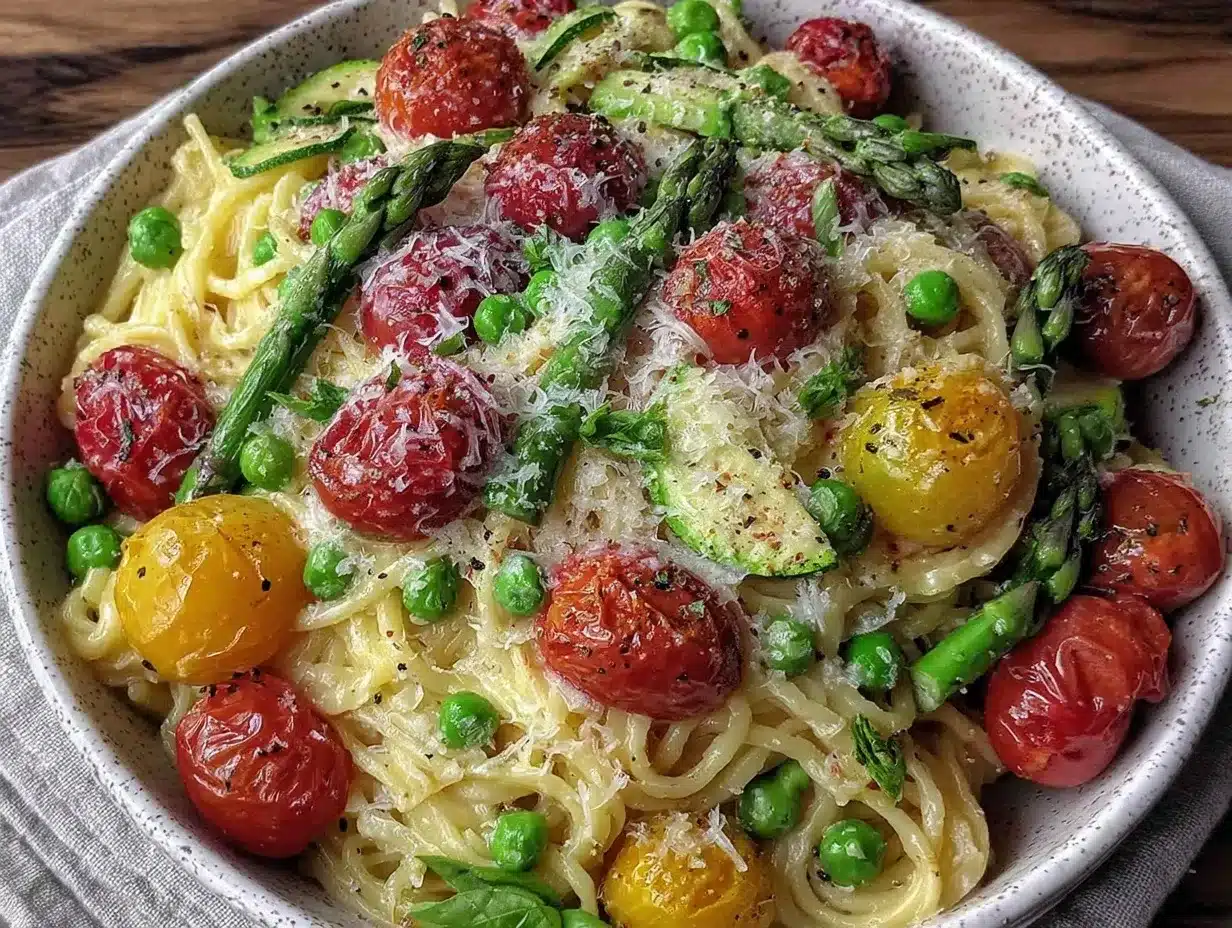
- Large Deep Skillet or Wide Pot: A 12-inch skillet or a wide pot with a lid works best to hold all the ingredients and allow the pasta to cook evenly. I usually use my trusty non-stick skillet because it makes cleanup easier.
- Wooden Spoon or Silicone Spatula: For stirring the pasta and vegetables gently without scratching your cookware.
- Measuring Cups and Spoons: For accurate broth and seasoning measurements.
- Knife and Cutting Board: To prep the fresh vegetables efficiently.
If you don’t have a wide skillet, a regular large pot will do just fine—just make sure it’s deep enough to hold the broth and pasta without boiling over. Personally, I avoid using aluminum pots here because they can affect the flavor; stainless steel or non-stick is my recommendation. For budget-friendly options, any large saucepan with a lid can work well. After cooking, a good colander is handy if you want to drain excess liquid, but usually, the broth cooks down nicely.
Preparation Method
- Prep your vegetables: Start by washing and slicing the zucchini, halving the cherry tomatoes, slicing the bell pepper, and chopping the onion. Mince the garlic cloves. This should take about 10 minutes.
- Heat the oil: Place your large skillet or pot over medium heat and add the 2 tablespoons of olive oil. Once shimmering, add the chopped onion and sauté for 3-4 minutes until translucent and soft, stirring occasionally to avoid browning.
- Add garlic and veggies: Toss in the minced garlic, bell pepper slices, and zucchini. Sauté for another 3 minutes, until the garlic is fragrant and the vegetables start to soften.
- Add pasta and broth: Pour in the dry pasta (12 oz / 340 g) and then immediately add the 4 cups (950 ml) of vegetable broth. Stir everything gently to make sure the pasta is submerged and evenly distributed.
- Cook uncovered: Bring the mixture to a boil over medium-high heat. Once boiling, reduce heat to medium-low and let it simmer, stirring frequently to prevent sticking. This will take about 10-12 minutes. You’ll notice the pasta absorbing the broth and the liquid gradually reducing.
- Add peas and tomatoes: About 5 minutes before the pasta is done, stir in the peas and halved cherry tomatoes. Continue cooking until the pasta is al dente and the veggies are tender but still bright and fresh-looking.
- Season and finish: Season with salt, pepper, and, if you like, a pinch of red pepper flakes. Stir in the torn fresh basil and grated Parmesan cheese (about ½ cup) for a creamy finish. Give it a final gentle stir and remove from heat.
- Serve: Spoon into bowls, adding extra Parmesan and fresh basil leaves on top if desired. This dish is best enjoyed immediately while warm and fragrant.
Pro tip: If the pasta looks a little dry before it’s fully cooked, add a splash more broth or water. Keep stirring to avoid sticking. Trust your senses here—the pasta should be tender with a slight bite. And don’t rush the sauté step; that onion and garlic base makes a big flavor difference.
Cooking Tips & Techniques
Cooking one-pot pasta dishes is all about timing and balance, so here are some lessons I picked up:
- Don’t overcrowd the pot. Using a wide, deep pan gives the pasta room to cook evenly. If it’s too cramped, the pasta tends to clump and cook unevenly.
- Stir often but gently. Frequent stirring prevents the pasta from sticking to the bottom but be gentle to avoid mashing the vegetables.
- Watch your liquid levels. The broth is your cooking medium, so don’t skimp on it. If it evaporates too quickly, add more warm broth or water.
- Choose the right pasta. Medium shapes like penne, fusilli, or farfalle hold sauce and bits of vegetables well. Thin pastas like angel hair can overcook too fast in this method.
- Fresh veggies matter. Use fresh, firm vegetables for the best texture. Frozen peas work great, but watery veggies like tomatoes should be added toward the end to keep their shape.
- Don’t skip the cheese. Parmesan adds a savory umami boost and creaminess that ties everything together beautifully.
When I first tried this recipe, I underestimated the sauté time and ended up with under-flavored veggies. Since then, I make sure to build flavor early on by properly softening the onions and garlic first. Also, multitasking by prepping veggies while the pasta simmers can save a lot of time. Honestly, this method has become my stress-free way to get a fresh, homemade meal on the table fast.
Variations & Adaptations
This Easy One-Pot Pasta Primavera with Fresh Vegetables is really versatile. Here are a few ways to make it your own or fit different needs:
- Protein Boost: Add cooked chicken, shrimp, or cannellini beans for some extra protein. Toss them in after the pasta is almost done to warm through.
- Seasonal Veg Swap: Use asparagus and peas in spring, roasted butternut squash and kale in fall, or sautéed mushrooms and spinach in winter.
- Dairy-Free Version: Skip the Parmesan or swap for nutritional yeast to keep that cheesy flavor without dairy.
- Spicy Kick: Add a teaspoon of smoked paprika or a pinch of red pepper flakes during cooking for a little heat.
- Gluten-Free: Use your favorite gluten-free pasta. Just keep an eye on cooking time as it can vary.
One of my favorite tweaks was adding a splash of lemon juice and zest at the end for a bright, tangy finish—especially refreshing in summer. I also tried folding in some sun-dried tomatoes for a richer flavor profile. Feel free to experiment; this recipe is forgiving and welcomes your creativity.
Serving & Storage Suggestions
This pasta primavera is best served hot and fresh from the stove, with a sprinkle of extra Parmesan and a few basil leaves for a simple but elegant presentation. Pair it with a crisp green salad or crusty bread for a complete meal. For a beverage, a chilled white wine or sparkling water with lemon complements the fresh veggie flavors beautifully.
If you have leftovers (which can be rare!), store them in an airtight container in the refrigerator for up to 3 days. The pasta will absorb more liquid as it sits, so when reheating, add a splash of broth or water and warm gently on the stove or microwave to revive the texture. Flavors often mellow and blend after resting, so the dish can taste even better the next day—just give it a quick stir and fresh basil before serving.
Nutritional Information & Benefits
This Easy One-Pot Pasta Primavera recipe is a balanced meal providing a good mix of carbohydrates, fiber, and vitamins from fresh vegetables. A typical serving has roughly 350-400 calories, depending on pasta type and cheese amount.
- Fresh vegetables: Rich in vitamins A and C, antioxidants, and fiber to support digestion and immunity.
- Olive oil: Provides heart-healthy monounsaturated fats.
- Garlic and onions: Known for their anti-inflammatory and immune-boosting properties.
This dish is naturally low in saturated fat and can be gluten-free or dairy-free with simple substitutions, making it accessible for many dietary needs. From a wellness perspective, I love that it’s a meal that feels nourishing and satisfying without being heavy or complicated.
Conclusion
This Easy One-Pot Pasta Primavera with Fresh Vegetables is exactly the kind of recipe I keep coming back to—simple, fresh, and totally doable on a weeknight. You get the bright flavors of garden-fresh veggies, the comforting texture of perfectly cooked pasta, and the ease of cooking everything in one pot (hello, minimal cleanup!).
Feel free to make it your own by swapping veggies, adding a protein, or turning up the spice. I love that it’s versatile but always hits that fresh, wholesome note. Honestly, it’s the kind of dish that makes you feel good about what you’re eating without needing to spend hours in the kitchen.
If you try this recipe, I’d love to hear how you customize it or what your favorite veggie combo is—leave a comment below and share your experience! Cooking should be fun, relaxed, and delicious, and this pasta primavera delivers just that. Happy cooking!
Frequently Asked Questions
Can I use any type of pasta for this recipe?
Yes! Medium-shaped pasta like penne, fusilli, or farfalle works best because they hold sauce and vegetables well. Avoid very thin pastas like angel hair as they can overcook quickly in this method.
How do I prevent the pasta from sticking to the pot?
Stir frequently and make sure there’s enough broth to keep the pasta submerged. If the liquid evaporates too fast, add a splash of hot water or broth during cooking.
Can I make this recipe ahead of time?
You can prep the vegetables ahead and store them in the fridge, but it’s best to cook the pasta just before serving for optimal texture and flavor.
What can I use instead of Parmesan cheese?
For a dairy-free option, nutritional yeast adds a cheesy flavor. You can also omit the cheese or use a plant-based Parmesan alternative.
Is this recipe suitable for meal prep?
Absolutely! Store leftovers in an airtight container in the refrigerator for up to 3 days. Reheat gently with a splash of broth to keep it moist.
For a delicious twist on fresh vegetable dishes, you might also enjoy my crispy garlic chicken that pairs well with vibrant sides, or try a fresh summer berry salad for a light complement to this primavera.
Pin This Recipe!
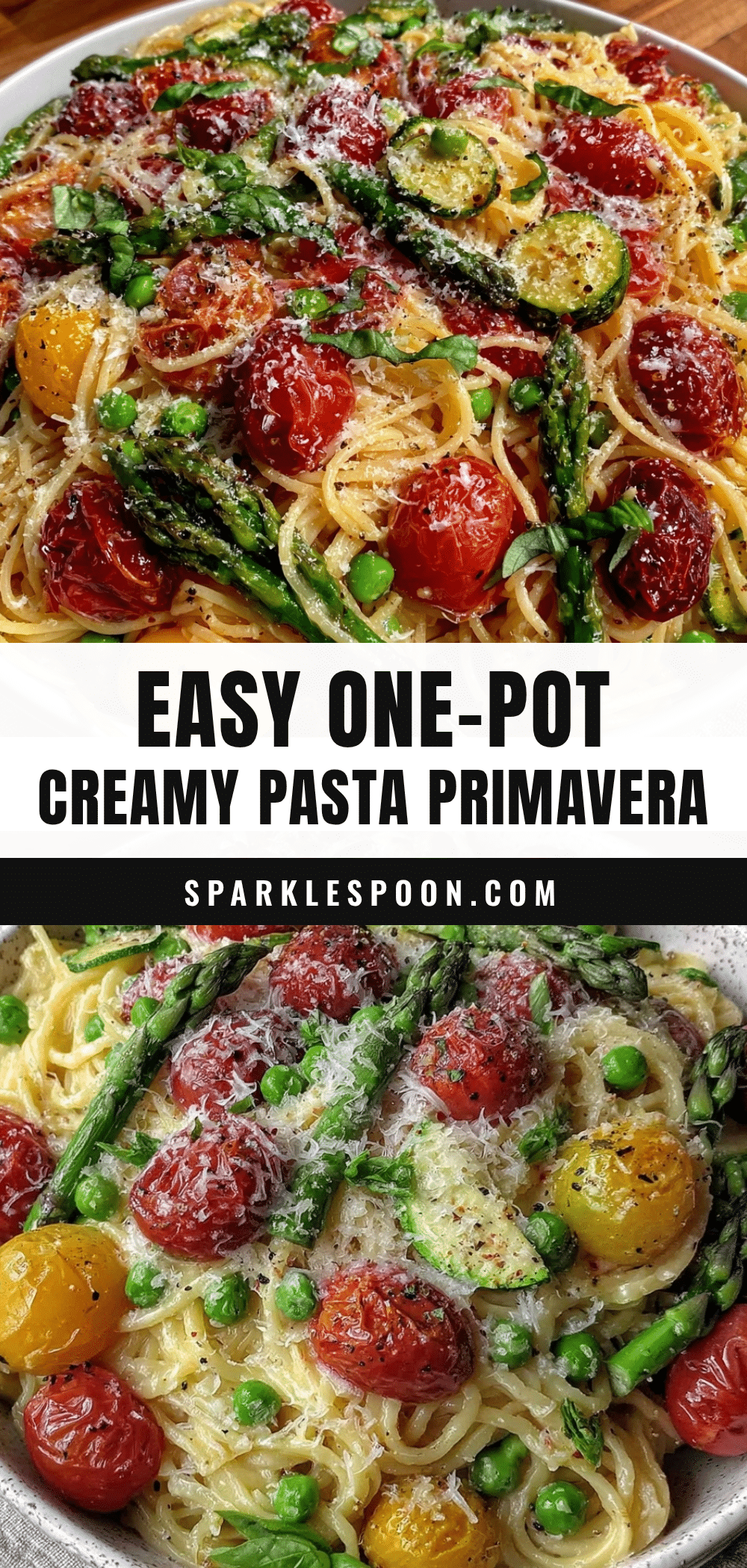
Easy One-Pot Pasta Primavera Recipe with Fresh Vegetables for Quick Healthy Meals
A quick and easy one-pot pasta primavera featuring fresh seasonal vegetables, perfect for a healthy and satisfying weeknight meal with minimal cleanup.
- Prep Time: 10 minutes
- Cook Time: 20 minutes
- Total Time: 30 minutes
- Yield: 4 servings 1x
- Category: Main Course
- Cuisine: Italian
Ingredients
- 12 ounces (340 grams) pasta (penne, fusilli, or farfalle preferred)
- 1 cup cherry tomatoes, halved
- 1 medium zucchini, sliced into half-moons
- 1 red bell pepper, thinly sliced
- 1 cup fresh green peas (frozen works fine)
- 3 cloves garlic, minced
- 1 small yellow onion, finely chopped
- 2 tablespoons extra virgin olive oil
- 4 cups (32 fl oz / 950 ml) low sodium vegetable broth
- A handful of fresh basil leaves, torn
- ½ cup grated Parmesan cheese (optional)
- Salt and pepper, to taste
- Red pepper flakes, optional pinch
Instructions
- Prep your vegetables: wash and slice zucchini, halve cherry tomatoes, slice bell pepper, chop onion, and mince garlic (about 10 minutes).
- Heat 2 tablespoons olive oil in a large deep skillet or wide pot over medium heat. Add chopped onion and sauté for 3-4 minutes until translucent and soft.
- Add minced garlic, bell pepper slices, and zucchini. Sauté for 3 minutes until garlic is fragrant and vegetables start to soften.
- Add dry pasta and immediately pour in 4 cups vegetable broth. Stir gently to submerge pasta evenly.
- Bring to a boil over medium-high heat, then reduce to medium-low and simmer uncovered, stirring frequently, for 10-12 minutes until pasta absorbs broth and liquid reduces.
- About 5 minutes before pasta is done, stir in peas and halved cherry tomatoes. Continue cooking until pasta is al dente and vegetables are tender but still bright.
- Season with salt, pepper, and optional red pepper flakes. Stir in torn basil leaves and grated Parmesan cheese for a creamy finish. Remove from heat.
- Serve immediately with extra Parmesan and fresh basil leaves if desired.
Notes
If pasta looks dry before fully cooked, add a splash more broth or water and keep stirring. Use medium-shaped pasta like penne or fusilli for best results. Fresh vegetables should be firm; add watery veggies like tomatoes near the end to keep their shape. Parmesan cheese adds a savory umami boost but can be omitted or replaced with nutritional yeast for dairy-free version. Leftovers store well for up to 3 days; reheat gently with added broth.
Nutrition
- Serving Size: 1 serving (approxima
- Calories: 375
- Sugar: 7
- Sodium: 350
- Fat: 10
- Saturated Fat: 2
- Carbohydrates: 58
- Fiber: 6
- Protein: 12
Keywords: one-pot pasta, pasta primavera, quick dinner, healthy meals, fresh vegetables, easy pasta recipe, weeknight dinner, vegetarian pasta